A Life Well-Lived

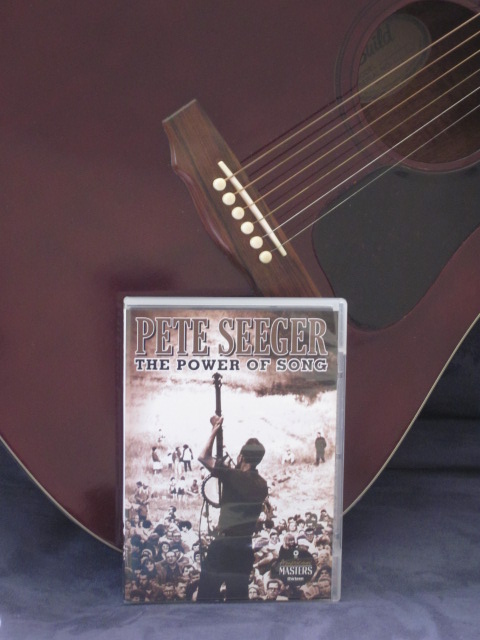
Photograph © 2014 Peggy Kornegger

When folk singer and political activist Pete Seeger died recently, at age 94, I was filled with great sadness. His larger-than-life presence and spirit, head thrown back in song, will be missed in this world. I also thought, though, that his was truly “a life well-lived,” as the saying goes. From the 1940s to the last years of his life, he spoke out and sang songs for peace (“Where Have All the Flowers Gone?”), civil rights (“We Shall Overcome”), workers’ rights, saving the environment (the Hudson River), and more recently, the Occupy movement. He was tireless, fearless, dedicated, and his heart and soul were in all he did, for human rights, community, and the Earth.

There are so many others who have lived long full lives: Nelson Mandela, Howard Zinn, Simone de Beauvoir, Adrienne Rich, to name only a few. Of course, not all well-lived lives belong to the famous. My own parents, who passed away at 81 and 94, lived long wonderful lives, deeply connected to the natural world around them and to the friends and family they loved. And age is not necessarily a factor either. My dear friend Michael, actor, poet, and musician, died at 39. His life had been creatively filled to the brim while he was alive.

However long they’re here on Earth, some people seem to embody full-out living, treating each moment as a glorious opportunity to experience all of life’s wonders. They stand out in our minds as vital and vibrantly alive. When Pete died, as I thought about the people I know and know of, it occurred to me that perhaps more and more of us are choosing to live our lives as he did. It is a time of great change on our planet, filled with transformation and evolution of all kinds. Many of us are struggling just to survive, but even within those struggles, there is often a deep desire for more than just the material. Our hearts long for human connection, for spiritual connection, and within community and shared experience, we are finding it. There is so much more to life than we can perceive with our physical eyes. Our souls know this, and as we awaken at that level, we will open up to all the possibilities of life, both imagined and beyond imagination.

So, let us take a page from Pete Seeger’s songbook. However long our life’s transit is, let’s live with our heads thrown back, singing, laughing, celebrating every single moment. No half-lives or shelf lives. No sitting on the sidelines and longing for a chance to dance in the circle of life. Let’s step forward fearlessly, heart open, eyes full of light, and fully embrace this precious gift of life we’ve been given. If time is an illusion, as we’re coming to realize, then it’s the quality not the quantity of the years that matters. Let’s make each moment an entire “life well-lived”—expansive, soaring, and full of sweet appreciation.

In memoriam, Pete Seeger, may your beautiful singing spirit continue to inspire us all:
http://www.youtube.com/watch?v=H4YwKPOgz5o

The Field

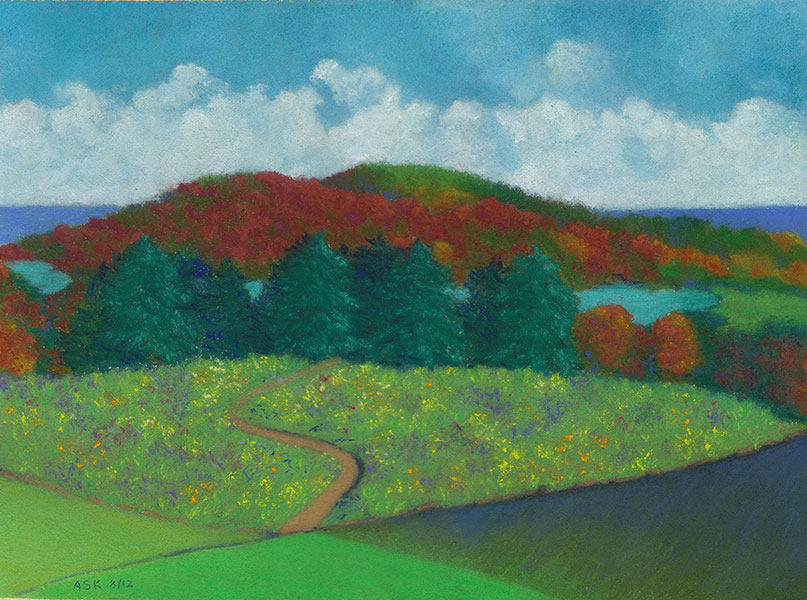
© 2012 Anne S. Katzeff / Artist
“Out beyond ideas of wrong-doing
and right-doing, there is a field.
I’ll meet you there.”—Rumi

This is one of my favorite Rumi quotes, and lately I’ve been thinking it would be the perfect engraved quotation to appear at the entrance to all government buildings in Washington, D.C.—or in all government buildings everywhere, throughout the world. Better yet, abolish the buildings and just meet in the fields! Something needs to change, that’s for sure. Entrenched attitudes and political posturing are part of the old paradigm of separation and irreconcilable differences. The new paradigm, which we are living into day by day, calls for these to dissolve and make way for open hearts and open minds. And for listening instead of nonstop talking.

Politicians are not the only ones caught in this trap. When people identify heavily with their personalities, they frequently find themselves stubbornly clinging to being right and finding others wrong. Beneath the personality and egoic roles, however, lives the individual spirit or soul who sees commonality and connection instead of “otherness.” Here is found the oneness and peace we all seek. My soul doesn’t care if my personality is irritated by someone else’s beliefs or behavior. My soul doesn’t care if my ego feels wronged by another person’s opinion of me. My soul is just witnessing all of my life experiences, without comment, without attitude. In that place of pure spacious being within, there are no opposing sides—all is one.

If we could pause, breathe deeply, and drop into that space periodically throughout the day, our lives would flow with greater ease, and our relationships would become more flexible. To live from an open heart and a peaceful spirit is to find true happiness in each moment—and common ground for collective decision making in our communities and in the world at large. Give up right; give up wrong. Consider the possibility that there really is a field out there where we can meet and learn from our differences instead of fight over them.

In Lynne McTaggart’s book The Field, she writes of the space within and between everything on Earth and in outer space, which scientists have heretofore labeled “dead.” McTaggart makes a convincing case that this space is alive with energy and vibration, the very basis of the universe. This is ancient knowledge within the realm of spiritual masters, and today many quantum physicists also agree that a “unified field” of intelligence or infinite consciousness does indeed exist, and we are part of it. If I am not mistaken, Rumi’s field and McTaggart’s field are one and the same. The silent space of spirit within is connected to the space between all forms on Earth and in the cosmos. The energy within and between vibrates a web of light that is pure oneness. When we consciously “step into” that rainbow field of light, hardened conflicts soften, and you and I recognize each other as we.

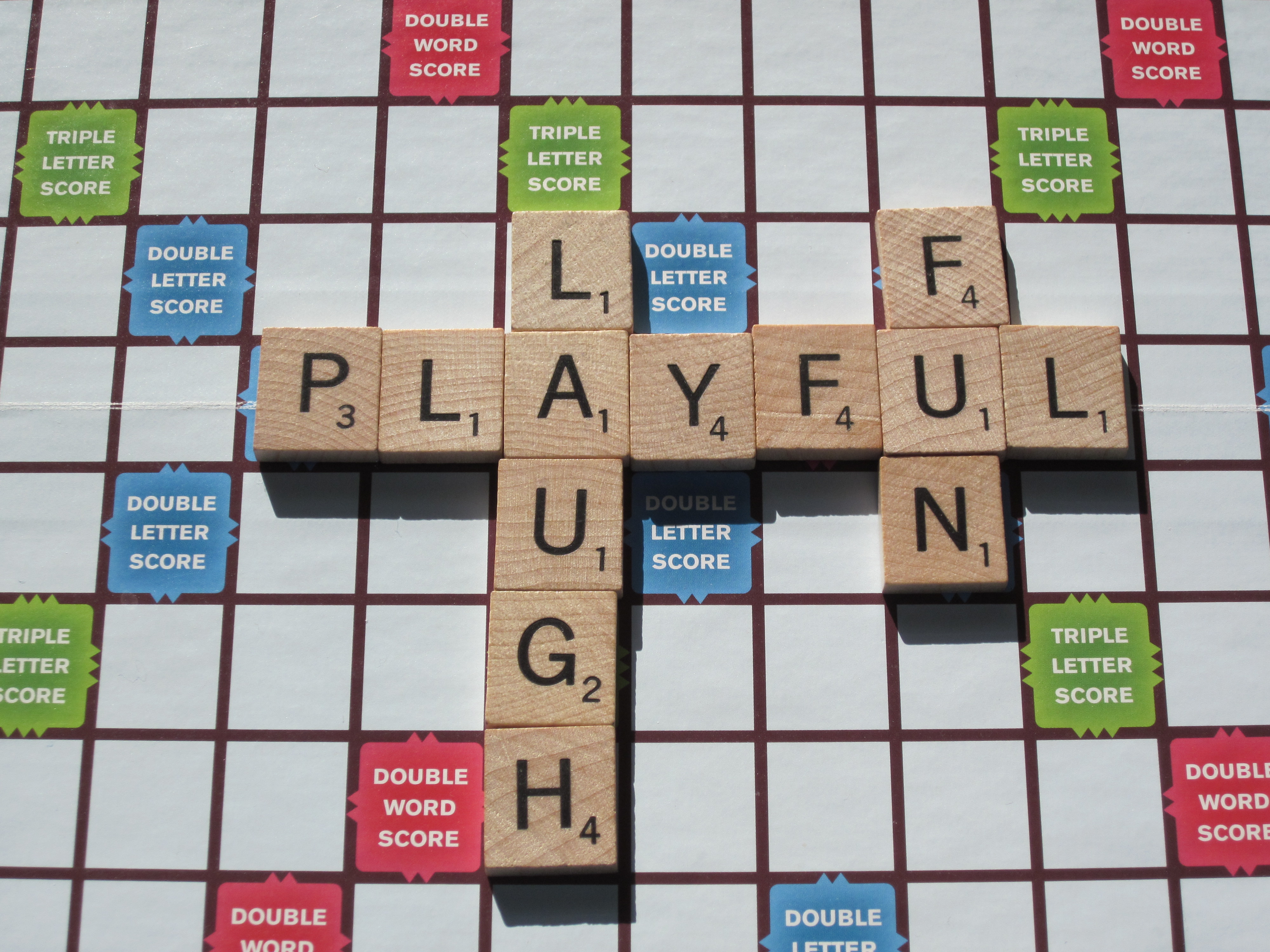
Child’s Play

Photograph © 2013 Peggy Kornegger
Over the holidays, I received a very interesting tutorial from Spirit in the form of a New Year’s Eve game of Scrabble. Instead of strategizing and studiously mulling over possible letter combinations and words, I found myself just being present, doing nothing in particular. As if by magic, letters began to form themselves into words that I would effortlessly place on the board. My partner could barely finish her turn before I had a new word ready to go. This continued throughout the game, and I ended up with the highest score I had ever made (hers not far behind). But it wasn’t really about winning; it was about playing. The entire experience was almost surreal—I felt as if Scrabble was being played through me, and I was just the vehicle to allow the playing. Thus, the larger life lesson: When you let go and stop trying so hard, life flows through you. And everything becomes more play-full.

Effort, trying, has always been my approach to the world (I was born pushing hard to emerge from the womb, breaking my mother’s tailbone in the process). Only recently have I learned to slow down, breathe, and allow my life to be lived through me instead of trying to plan every single event and experience in my reality. It’s not as if I’ve never lived spontaneously—I was, after all, a flower child in the 1960s! Nonetheless, there has always been some part of me that believed that living life meant working hard to make it happen (write down a list of those intentions, and act on them—now!). Really, the greater truth is that life is meant to be played. And playing is the opposite of work. It’s being, letting go and flowing with the energies. Of course, that flow comes from an open heart, unblocked emotions, and trust in something greater than your individual life.

All part of human evolution at this time. As babies, we were easily playful, but we lose it within a social construct that demands serious effort from us at an early age. Now, as that old paradigm starts to disintegrate, we are beginning to reacquaint ourselves with that wise child within, that soul self more aware of what’s really important in life. Our soul knows that, first and foremost, we are here to love (the world and life itself), and that everything is a vehicle for that—a way to reach greater and greater levels of loving and harmony with our fellow beings. How do we do that? Play. Allow life to play with you. Let it be an adventure and a game, one that you are not here to win but just to play—with everyone in your life. Play it forward!

To Do or to Be?

Recently, a friend and I were talking about how to handle the polarity between doing and being that many of us carry inside of us. We’ve been raised in a culture that emphasizes effort, trying, achievement, and success in material terms. The work ethic and the drive to constantly do pervade our society. On the job, unpaid overtime has become routine, and low-paying positions often force people to work at two jobs to make ends meet. Multi-tasking, email, and social media fill up all our “free” time, and friends and family are seen on the fly.

Even outside of mainstream culture, among those who are seeking to change the status quo to something more humane and truly livable, there is a certain push to be active, busy, involved in something. During the current period of major Earth changes, people’s experience of accelerating time also contributes to the frenetic need to keep moving—just to keep up with the hours that are rushing by!

Yet cracks in this compulsive busyness are appearing—possibly because we have run ourselves to the wall with the 24/7 modality. People are turning to things like meditation and yoga because they are quite literally burned out. Often their bodies stop them before their minds do. Headaches, injuries, and dis-ease of all kinds pop up in our lives to show us that all is not well. We are forced to slow down and find a way back to health. When we stop filling our lives with events and activities and instead focus on self-healing, doing takes a backseat to being and allowing.

Regular meditation or yoga practice helps individuals make this mental shift. The breath is of prime importance in both. Students learn to allow the breath to flow in and out without effort, without holding. In some traditions, they learn to watch the breath and just be in the quiet inner stillness. Eventually, with practice, people learn to carry that letting go to their daily lives, allowing events and emotions to pass through them without judgment or clutching, just as the breath does. Doing in this context arises from the quiet, centered space of being, not from polarized trying or effort.

The key, of course, is reaching that balance in a world that is skewed to emphasize just the opposite. But that’s why we’re here. The world is evolving, and we are evolving. We’re living the transition, learning how to embody the new human BE-ing, how to be conscious spirit in physical form, effortlessly flowing with the energy of life.