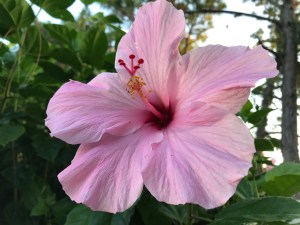
Middle Earth

Photograph © 2019 Peggy Kornegger

In Lord of the Rings, J.R.R. Tolkien used the term Middle-earth to describe the land where his stories took place. Situated somewhere between angelic and demonic realms, the inhabitants struggled to hold to the light. Sometimes I feel that is where we live now. Opposing forces are mobilized on all sides. All around are compelling reasons to believe that “evil” is on the rise and that “good” people are increasingly victimized by those in power. Yet holding to the light within darkness means we cannot succumb to what the prevailing belief systems would have us accept as truth. We may live in Middle Earth now, but it is just a way-station on the way to the New Earth. The challenge and balancing act is to accept and live in the present moment while also embodying a new vision for the future.

When I was in my 20s, I began to catch glimpses of this “New Earth.” Like many others of my generation, I envisioned where we were meant to evolve and how we were meant to get there. The where and the how were both Love. It sounds like a Beatles song (and it was), but it was/is so much more. “All You Need Is Love” is the oldest wisdom on Earth, handed down in every spiritual tradition for thousands of years. Compassion, loving-kindness, generosity of spirit, oneness—all names for love, for living as if there were no separation between any of us (and there isn’t, at the soul level). If “otherness” falls away, fear and suspicion also fall away. War and violence fall away. Hatred and abuse fall away. If you see every being as just like you on the inside, then how could you hurt them or turn away in aversion and rejection? If you look in another person’s (or animal’s) eyes without preconceptions or guardedness, there is only God looking back at you.

That is the vision we had so many years ago, and I still hold it in my heart. It is a dream that becomes real as we live it. Equality; respect for all ages, abilities, races, and religions; gender fluidity; shared resources and abundance; love for and protection of nature and the environment. Kindness, compassion, and gratitude as the basis of all interactions. No privileged classes served by others or elite groupings that exclude the “undeserving.” No higher and lower. No kings or presidents or top dogs. No hierarchy. All remnants of the patriarchy will fall away, to be replaced by ever-evolving circular structures that support both individual and collective creative growth and flowering. A living social agreement that changes with the always changing awareness and potential of those who are part of it. Our lives will be defined by infinite possibility and vision, not dead-ended rules and laws that only benefit those who make them.

Some may consider all this utopian fluff, not grounded in the real world. But every dream is considered unrealistic and impossible before it manifests into reality. We begin with the dream and we dance it into existence. Right now, we are in Middle Earth, seemingly stuck somewhere between the old and new paradigms. We haven’t yet crossed the line of “critical mass,” at which point, momentum picks up and impossibility gradually becomes possibility, becomes “reality.” The key, the secret, the incentive, is to live now as though it has already happened. Because it has—in our hearts. Every single one of us was born with love at our core. When the layers get peeled back and the masks fall away, that’s all there is. At some point, we will stand soul-naked before one another and realize at the deepest level who we are and why we are here.


 

The End of Philanthropy: A Re-Vision

Photograph © 2019 Peggy Kornegger

In U.S. history books, well-known philanthropists such as Carnegie and Rockefeller are described as generous and charitable. They donated part of their great wealth to good causes such as building schools and libraries. However, what is often overlooked in this version of history is that the very basis of their philanthropy was inequality. Their fortunes were built on the backs of working people, whose labor and minimal wages allowed those at the top to accumulate large amounts of money, which they used to build mansions for themselves filled with extravagant possessions. They gave a portion of their money to good causes. Meanwhile, those who were the actual source of their wealth often could barely afford to feed themselves and their families. This scenario continues today.

The United States was created as a radical departure from the rigid hierarchy of kings, queens, and royalty, and the accompanying servant class. Democracy, an equal society based on individual freedom and shared resources, was an experiment that many thought would fail. It hasn’t failed, but it hasn’t fulfilled its promise either (perhaps because slavery was part of it). We still have hierarchies in place, not based in bloodlines but in fierce competition that pits individuals against each other to garner a place at the top of the economic and social pyramid. We don’t have kings, but we have billionaire entrepreneurs and entertainment moguls instead. And we have a collective consciousness, promulgated by those in power, which encourages the average person to admire the rich and famous and strive to be like them.

The cards, however, are stacked against ordinary citizens because of an unequal economic system that rewards individuals who climb to the top at the expense of others. These individuals (mostly white and male) build organizations that garner them profit and those who work there a minimum wage. They often have two or more homes and an excess of possessions while their employees struggle to make ends meet. This is not democracy. This is self-centeredness disguised as freedom: the “right” to make money—so-called free enterprise.

Some would argue that philanthropists have made major contributions to crucial causes that affect our lives, such as protecting the environment. Here in Southwest Florida, a vast expanse of coastal estuaries and mangroves was saved almost single-handedly by philanthropic contributions. Certainly a wonderful accomplishment, but these areas wouldn’t have needed to be saved in the absence of big business and land development. In an egalitarian social structure, the well-being of all, including plants, animals, and ecosystems, would be paramount in every decision that affects the collective. Isn’t it about time to flip the dominant paradigm?

How about a society based on sharing, reciprocity, and environmental awareness? One where people together build organizations, schools, libraries, and parks and then share them; where everyone has a part in creating the world they live in and everyone has equal access to its benefits. Collective social wealth in which each person has a place to live and enough to eat instead of individual wealth that gives a very few a life of privilege while many are homeless and hungry. This was the possibility that democracy promised, and finally we are evolving to the point of fulfilling it. The extremes of wealth and privilege are becoming glaringly visible, and people are beginning to see alternatives: the circle instead of the pyramid, an equal society in which philanthropy would be obsolete because everyone would have enough.

This transformation is what we are living into now, and it involves a shift in awareness—from self alone to self among others, from me to we. If people were truly compassionate and their hearts and minds were completely open, they couldn’t even imagine having an excess of anything while others had virtually nothing. The process of giving and receiving would be part of daily life. Generosity would be second nature, not an afterthought. And no one would be held back or forced into mediocrity. Each person would live their best life in close connection with others living their best lives, in alignment with the natural world.

Looking around, we see a huge division between the haves and have-nots and ruthless and calculated attempts to keep that division intact. However, these extremes are destined to die out. Underneath the surface of inequality and separation is a movement toward something different: a truly equal and shared life for all beings on this planet. It is a transformation in consciousness and an opening of the heart, which is the source of all love and generosity, engendering a total re-visioning of our world.


The Power of “We”

Photograph © 2018 Peggy Kornegger
Human beings came to this planet to learn how to live together in peace. To realize and express the love in their hearts through compassion and kindness. It’s a simple as that. We didn’t come here to accumulate wealth and material possessions while others have nothing. We didn’t come here to distrust and hate everyone who is not an exact carbon copy of our beliefs and physical appearance. We didn’t come here to build walls and wage wars against difference. While those may be the polarities the human species experiences along the way, our final destination is beyond all those divisions and separations. Ultimately, we came here to recognize that “I” alone is incomplete; only in “we” do we find strength and commonality in being alive. Only in loving ourselves and others are we made whole. As the song says: “We are the world…”

Sometimes I feel overwhelmed by external global events—the self-centeredness and cruelty that pervades so much of our social construct and that is spread through the media’s focus on acts of hatred and violence instead of love and inclusiveness. There are alternative sources of information that are positive rather than negative, and we need to pay attention to these. When I hear how so many people are coming together instead of being torn apart, I am uplifted and encouraged. The seeming chaos is happening for a reason: to clear out obsolete belief systems and centuries-old histories and divisions. We are living at a time that is taking us to the end of separation, judgment, and suffering.

All around us there are those who are making a difference in the status quo by living lives of caring and compassion. They reach out to others at times of crisis—whether global, regional, or individual—and help them in any way they can, with physical support (money, food, clothes, shelter) or a listening ear and kind word when it is most needed. This is the power of “we” that is gradually shifting the global balance to love instead of hate. People suffering in isolation are finding support and connection in community.

Those who live in fear talk of building walls; those who live in love talk of building bridges. If we live from our hearts, there is only one choice really: to reach out to our fellow beings (and I mean animals, plants, insects, as wells as humans) and share the love inside us. We were not meant to love only those who are exactly like us or to try to make others adopt our beliefs and lifestyles. We were born on this planet to come together and live compatibly in all our diversity.

Humanity is a rainbow tapestry of different races, sexes, ages, cultures, and religions. Yet we all came from the very same loving Source, which some call God. Our soul essence is love, so when we are being our authentic soul-selves instead of the “self” superimposed on us by social norms, we are living that love. It is a compassionate and inclusive love, and a small shift in awareness from “I” to “we” can make a huge difference in the world. That is why we are here, to celebrate and live the power of “we.”

Service to Others, Service to God

Photograph © 2018 Peggy Kornegger
Service to God, in spiritual or religious terms, can become a grandiose, almost inaccessible concept. Something only great mystics and masters can fully live out. Possibly forsaking all worldly possessions and moving to another country. We think of Gandhi and Mother Teresa. Or Martin Luther King Jr. and Peace Pilgrim. Lives of dedication and deep compassion. Yes, this is definitely service to God. But we don’t really have to be a saint or monk to be of service to others and God. Perhaps we need to simplify the definition itself.

So what exactly is service? The dictionary says “help, assistance, kindness.” A good turn or helping hand. It’s when we add God to the mix that everything gets a bit daunting. It becomes about life purpose and serving all of humanity in order to relieve suffering in the world. Almost nothing can live up to that tall order. People start to tune out and turn away because they feel inadequate to the task: “What could I as one individual human do to alleviate the pain of all humankind?” So, very few consciously choose service as a way of life. But what if service begins at a very basic level of a helping hand and kindness? What if my human purpose is just to be present to another when they are feeling most alone or lost?

I have asked myself what my life purpose is more times than I can count. Sometimes I think I know part of it, but I usually feel there is much more than what I think. I too have been intimidated by the larger sense of service to God, the purpose-of-life sense. My mind engages with the word purpose, trying to figure out what it is I’m supposed to be doing. However, as I grow and evolve on my spiritual path, I am finding that it has absolutely nothing to do with my mind’s ideas about any of it. It’s completely a heart issue. And it’s not necessarily a schematic that involves single-handedly eradicating world poverty or global warming. Maybe it’s less sweeping than that, something everyone can handle.

Volunteering one day a week at a food bank or donating regularly to an environmental cause are key individual contributions, but it is also more than those. Maybe our greatest gift to others and to God is day-to-day, moment-to-moment, heartfelt caring. The small gesture: the hand held, the loving smile, the encouraging word when someone is hurting. Perhaps that is the essence of service, available to each of us in every moment. Mother Teresa and Martin Luther King Jr. lived a lifetime of small gestures of kindness to others that became their larger service to God. When I think of service this way, it becomes more accessible, doable, all-inclusive. Something that, as each person responds to another with caring and empathy, shifts the collective balance from selfishness to generosity, from suffering to well-being, from fear to love. From one to many.

Service is actually not something outside of us that we have to aspire to. It is who we are at our core. We came from the heart of God, and our souls are pure love. When we remember that, kindness flows from us easily and effortlessly. We become the light-filled human beings we were born to be. In truth, service to others and service to God are one and the same. Hold out your hand and open your heart to those who cross your path each day—that’s all it takes.

Your Compassionate Heart

Photograph © 2018 Peggy Kornegger
You have one. We all do. It just gets covered over with a protective shell of fear about your own survival. Or it is buried and forgotten in a busy and sometimes frantic daily life. We get lost in our own worries and concerns and forget about the others we share the world with. We lose sight of the fact that everyone else around us is living lives very similar to our own at the most basic level, beginning with birth and ending with death. Yet isn’t life about more than that really? Aren’t we greater than the events of our lives? Isn’t there a thread that ties us together, in spite of our differences?

That thread is compassion. We were born with a compassionate heart, and it is repeatedly awakened whenever we experience someone else’s pain or joy as our own. Today, on this planet, there is a quiet but universal awakening occurring in which we are finding the compassion deep in our hearts. At times of crisis or catastrophe, the shell of self-protection breaks open, and we feel deeply for our fellow human beings, often giving money, food, clothing, or whatever is needed to help. We feel that way too when we share in someone else’s happiness or good fortune. Our compassionate heart is always ready to shine its light of love outward. It’s a natural part of being a human soul in physical form. That’s why we are here, really: to become aware of our individual separateness as an illusion, and oneness as the greater truth.

Selfishness and lack of compassion are habits. Ones we learn from a very early age in this culture. We are frequently taught that when someone else wins, we lose, and that “on top” is the best place to be. In spite of countless spiritual or religious teachings about love and sharing with others, the overriding voice of this society insists “look out for yourself” and “don’t let anyone else take advantage of you.” It becomes a habitual trigger response to the world, and you lose your connection to that thread of compassion that ties you to other beings on this planet. And to your self as well. Because if you don’t love and have compassion for yourself, you are incapable of having it for others.

The key to stepping out of your conditioning and awakening compassion is patience, with others and with yourself: patience as a daily practice that is cultivated with each conscious breath you take. This opens the door to peaceful loving relationships in all parts of your life. It may take time to reverse the collective trend toward mistrust and separation, but it is possible if we are patient and committed. The kind and gentle child who lives within us is just waiting for acknowledgment and encouragement. Each time one of us is generous or caring in word or deed to another on this planet, we are shifting the energy for all of us. In that shift, the silent message is: “You are not alone.”

Compassion is the reason you were born: love creates life. Divine love and compassion created the universe and lives in your very cells. When we open to the compassion within us, we find the true meaning of life. It’s not about money or fame or accumulating possessions, as we are so often told. It’s about sharing love with others. It’s about generosity of spirit. Caring for self and others with equal gentleness and understanding. Compassion is a circle really. And we are all part of it, at the deepest level. The love you give returns to you and fills your compassionate heart with joy, overflowing into greater and greater expressions of love in the world.