Accentuate the Positive, My Mother’s Gift

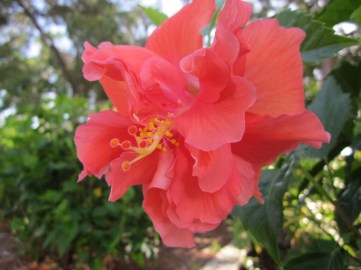
Photograph © 2018 Peggy Kornegger
A song written and recorded in 1944 that was popular with my parents’ generation had the refrain: “Accentuate the positive; eliminate the negative.” Those who lived through the Great Depression and World War II often developed one of two responses to life: fear or hope, or perhaps a mix of both. You can see hope in songs like this one. And I definitely saw it in my mother when I was growing up in the 1950s and 1960s. Without fail, she always looked for the positive in any situation, person, or event. If someone behaved in an unpleasant manner, my mother’s response was inevitably, “She means well.” And then she would find something nice to say about the person.

She looked for the good in the world around her on a daily basis—the beauty of the sky, birdsong in the backyard, music and poetry, my dad’s sense of humor. She framed life this way. It wasn’t just a coping mechanism for the times; it arose from deep in her soul. I came to realize this fully later in her life when she was hospitalized and had to have a serious operation. I flew to my Illinois hometown from San Francisco, where I lived at the time. I sat by her side for three days and nights, our hands inseparably clasped in a lifetime of mother-daughter love. I watched her face, pale and drawn with pain, light up when she turned and looked at me: “You’re always there,” she whispered.

And I watched her eyes scan a basically ugly hospital room and finally light on the one thing she could honestly see beauty in: “Isn’t that a lovely walnut door?” That was the essence of my mother. That was who she was at the deepest level, beyond pain, beyond medication, beyond hospitals. From her soul, in every waking moment of her life, she looked around to find beauty—and she always found it. This was her legacy to me; I carry that positivity in my genes. I carry the memory of her waking me each morning with “Good morning, merry sunshine” and then at breakfast: “Another beautiful day!” From the beginning of my life, I was imprinted with that ability to love life fully under any circumstance.

My mother didn’t live a life free of all pain and difficulty; like all of us, she faced challenges. But she lived a life of appreciation and gratitude for the moments of love, beauty, and connection that are always present if we but open our eyes (and hearts) to see them. My mother lived with an open heart. She found happiness in loving the people and the world around her. At this time of great change and great challenge on the planet, I look to her wisdom to sustain me and uplift me through the rest of my life. I know I was born for a reason, and I know she was my mother for a reason. There is an ancestral line of positive energy that runs through our lives. She passed it on to me to sustain me—and as a reminder, so that I never forget that we all have positive energy within us.

We are each alive at this key transformational juncture in world history to remind each other of that. No matter what disturbing events in the external world show up each day, we still carry hope in our hearts and souls. We can listen to the voices that say “We shall overcome” and “All you need is love” instead of those that speak separation and hatred into the world. Whatever is occurring now is part of our evolution, as a species, as a planet, as a universe. We are not done yet. There is always, always possibility and positivity within us. We can breathe that into the world in all that we say and do. And that becomes our legacy of love…


Shining Light in Shadowland

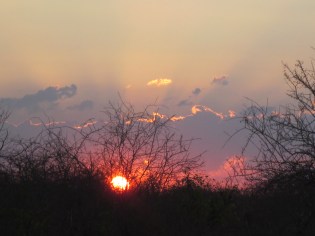
Photograph © 2016 Peggy Kornegger
Ever since the election, in spite of attempts to stay centered in a positive outlook, I often wake up in the morning with sadness and apprehension. As much as I try to avoid it, I find that I have to come to terms with a new presidential administration that is displaying the underside of human thought and behavior: racism, sexism, anti-Semitism, homophobia, elitism. Exclusion that sees “them” instead of “we.” This is the shadow of humanity that has existed for thousands of years as hatred of “otherness.” Yet, now it is in our faces, even more so than in past administrations, which were not exactly stellar either. Electing Barack Obama seemed a step toward inclusiveness and diversity, yet even then, the country was almost evenly split, as it has been for many years now. True, the electoral college is not a fair instrument for representing the will of the people, but changing that will not erase the shadow. We have to face the huge division that exists in this country.

The United States is not united. Nor has it ever been, really. This is a country that has always been made up of people from different countries, cultures, races, religions, and belief systems. The first explorers and colonists—the first “immigrants”—imposed their lives upon the people who already lived here, the Native Americans. The formation of a new country was rooted in exclusion and appropriation.* That shadow has always been there, even as waves of immigrants from countless countries came here seeking freedom and liberation from oppression. Slavery was the most extreme manifestation of the shadow, and racism continues in its wake. The United States has always embodied dual, contradictory aspects: open arms and closed doors; freedom and injustice.

This election has brought to the surface all the fear-based shadows in this country, shadows that exist worldwide as well: intolerance, separation, inability to accept difference. And here is the hard part: As the shadow of humanity is on full display all around us, we have to look at its presence within us as well. Where do we see “other” instead of brother or sister? Where do we judge, condemn, or exclude people from our lives? In what ways do we tell ourselves that the world would be so much better if certain people just didn’t exist? Do we live with an open heart or a closed mind? Do we live in love or in fear?

On the morning after the election, I was traveling to Florida to attend Panache Desai’s annual global gathering. My state of mind was heavy, to say the least. As I found my seat on the plane to Charlotte, where I would change planes, the woman next to me whispered, “Governor Romney is over there.” “Who?” I asked, still in my own thoughts. “Mitt Romney,” she answered, pointing a few rows up, to first class. Finally, it registered, and in exasperation, I replied, “Oh, great, that’s just what I need today.” The woman looked a bit puzzled, and suddenly, it all struck me as very funny, and I began to laugh. (She chuckled a little, but I’m sure she had no idea why I was laughing.) Encountering yet another conservative former presidential candidate seemed to me like a comical cosmic wink or wake-up call. The message: “There will always be someone you disagree with on the plane of life.” In this out-of-the-ordinary occurrence, I was being reminded that from the perspective of global oneness, there is no “other.” No one is excluded.

And that is precisely why we are here on the planet at this time: To break the toxic habit of “otherness.” To find common humanity even when there appears to be none. To love in the face of hate, hope in the face of despair, have courage in the face of fear. You and I are being called to shine our own peaceful light ever more dynamically in the world, no matter what else is going on. To speak out for human rights and universal sister/brotherhood as we hold unconditional love for all in our hearts. (This is the basis of many nonviolent movements for social change.) In seeing every single “other” as another “one” in oneness, we come into greater balance and harmony, both individually and collectively.

Even when it seems unrealistic or emotionally impossible, take a deep breath and express the truth of your soul, which is love, which is kindness. Find the inner strength and compassion to keep expanding your heart until the shadow of separation falls away and you see yourself reflected in every face you encounter. That is the loving connection that holds our very diverse humanity together, in spite of the conflicts that pull us apart. In the wise words of Mahatma Gandhi: “Love is the strongest force the world possesses.”

______________________

*This continues today at Standing Rock Reservation in North Dakota, where Native Americans are protesting a proposed oil pipeline as an environmental hazard and a threat to their sacred lands.

Inconsolable Loss

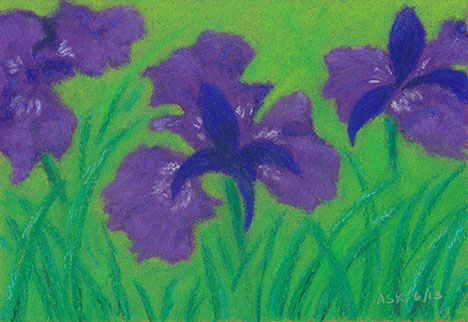
© 2013 Anne S. Katzeff / Artist *
Robin Williams’ death two weeks ago has reminded us all of how devastating deep depression can be and of how thoughts of suicide plague so many individuals. The death of a close friend or loved one—or in this case, a beloved well-known comedian/actor—is never easy, but suicide is particularly difficult to take in and assimilate. I know this firsthand because a dear friend of mine died by his own hand 25 years ago. There is no real consolation for that kind of death. To say that his “time on Earth was complete” sounds hollow and meaningless, even though on one level it may be true. Those left behind are often haunted by feelings of horrified shock, disbelief, and helplessness. In our heartbreak and grief, we feel robbed of years of that person’s living presence in our lives. Such feelings never disappear entirely. We just learn to live with inconsolable loss as part of life.

Robin was a comic genius—unscripted, outrageous, wildly clever and ridiculous at the same time. You couldn’t keep up with his rapid-fire humor: if you laughed out loud, you missed the next hilarious gem. He could take any interviewer’s questions and turn them into a comic riff so packed with spontaneous unrehearsed one-liners that listeners became dizzy from the nonstop barrage of funniness. Robin was the master of on-the-spot improv that took audiences on a rocket ride through his high-speed, ultra-connected mind. Yet, that same mind took him to painful, sad places that he struggled to come back from. Perhaps it was that inner sorrow that informed his deeply moving portrayals of complex characters in films like Dead Poets Society and Good Will Hunting. He was a man of extraordinary, multifaceted talent, loved by millions, yet on the inside, he suffered. The joy he brought to the world was not enough to dissolve his pain.

My friend Michael was multitalented too—an actor, poet, and musician who excelled at all three. He was also one of the funniest people I’ve ever known. From the moment we met, we were instant friends, as if we’d experienced many lifetimes together and were picking up where we left off: “Oh, there you are….” We worked as proofreaders at the same company for seven years, both of us finding ways to express our creativity elsewhere but making our work life an occasion for constant back-and-forth joking all day long. Michael was just so silly and physically funny—like the schoolroom class clown who makes you laugh uncontrollably. Still, like Robin, Michael had his demons, and ultimately they got the best of him. Perhaps his deep sensitivity, which made him such a great actor and poet, also made him especially vulnerable to inner insecurities, fears, and mental anguish. After his death, we all tried to understand why it had come to that, but ultimately, there were no real answers to the questions we asked ourselves over and over.

Both Robin and Michael ended their lives to end the terrible suffering they were experiencing. Sometimes the pain of living is just unbearable. We have all probably felt that to some degree. Life on this planet is filled with reasons to wish you were elsewhere, and there is no safe harbor or respite from the constant turmoil of a changing world. We are all at risk for toxic overload from global events, coupled with personal challenges or tragedies. We feel the tension in our physical bodies and in our psyches. Yet, hope exists. It quietly appears every time we reach out to a friend or stranger in distress. It becomes stronger when we hold hands and hearts in our families, in our communities, and around the world. In time, perhaps the love we share will shift the balance, and those tottering on the edge will be able to step away from the precipice and return to the center of life. May we all find comfort, compassion, and loving connection in our lives. And may Robin’s and Michael’s sweet souls rest in peace.

*The flower iris is named for the Greek goddess Iris, who was seen as a link between heaven and earth.