Only Child, Only Parents

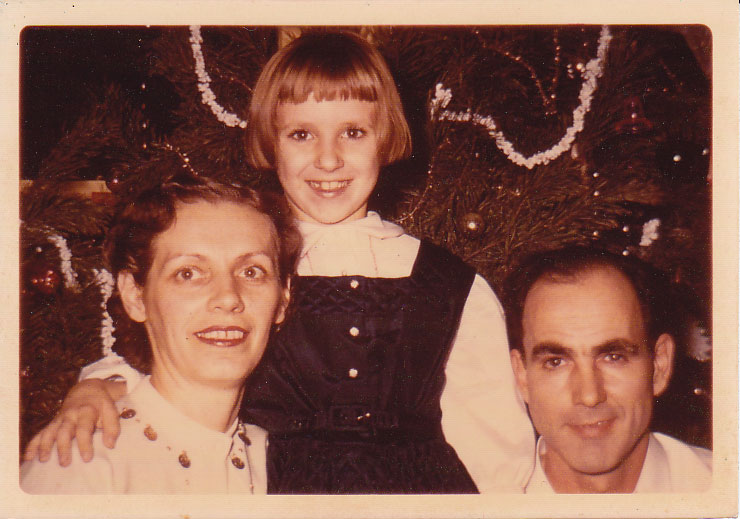
Photograph © Peggy Kornegger
My parents were both born in the month of October. My mother would have been 100 years old this year, my father, 105. I was their only child, born nine years after they met and married, one of the baby-boomer generation. Although they have been gone for a long time (my mother died 19 years ago; my dad, 10), I still miss them. As an only child, I dreaded their deaths, fearing I would lose my mind without them. Of course I did not. In fact, their transitions were profoundly loving and spiritually uplifting experiences, partly because I was able to be with each of them as they passed. Sitting by their sides, I felt connected to them and to the spiritual realm beyond and intersecting this one. That connection was a great comfort to me for months and years afterward.

It was during those years that my spiritual journey and quest for the meaning of life (and death) began in earnest. My exploration was intentionally eclectic, and I worked with many different teachers. Perhaps I inherited that tendency from my parents, both of whom were also eclectic and nonaligned religiously. They were free thinkers who read widely and attended philosophical discussion groups that pondered the mysteries of life. They encouraged me to make my own choices with regard to religion and spirituality. Over and over throughout my life, they gave me that gift of freedom and unconditional, uncritical love in every area. Whatever paths I took (and I took many—personally, politically, spiritually), they loved me without question.

Their love—for me and for life—is what has stayed with me beyond their lifetimes. It is interwoven with all that I am. As I searched for my own “meaning of life,” my evolving beliefs have always been grounded in love, as were theirs. I can still hear my dad reading aloud a poem by William Blake and choking up at the beautiful words: “To see a World in a Grain of Sand/And a Heaven in a Wild Flower/Hold Infinity in the palm of your hand/And Eternity in an hour.” Reading those lines now makes me cry too, recalling that shared moment of love and gratitude for life. It was music that touched my mother’s heart, the voices as well as the lyrics: Italian tenors, Paul Robeson, Willie Nelson, Barbra Streisand, Judy Garland—she loved them all. We used to listen to all kinds of music together (including birdsong), often with tears in our eyes at some particularly moving musical expression. I am so grateful that my parents passed on their emotional openness to me. As my friends and my partner well know, I cry all the time at life’s beauty and poignancy.

An only child experiences the loss of parents a bit differently because there are no siblings with which to share family memories. No one alive today remembers my parents in all the ways I do. Consequently, I carry their lives within me, where they are present in spite of absence. My backyard flower garden is one of the places I feel them most strongly. They were both gardeners—my dad, vegetables, bushes, and trees; my mother, flowers. I grew up on five acres in rural Illinois, so living with this small piece of nature right outside my door now has been like “coming home” for me—to my childhood home, to myself, and to my parents. Along with so much else, my mother and father gave me a deep appreciation for nature’s miracles. Each time I stand in awe, gazing into the delicate heart of a flower or at a sleeping bee or dancing butterfly, they are with me. They live on within the love in my heart.
Life’s Mystery

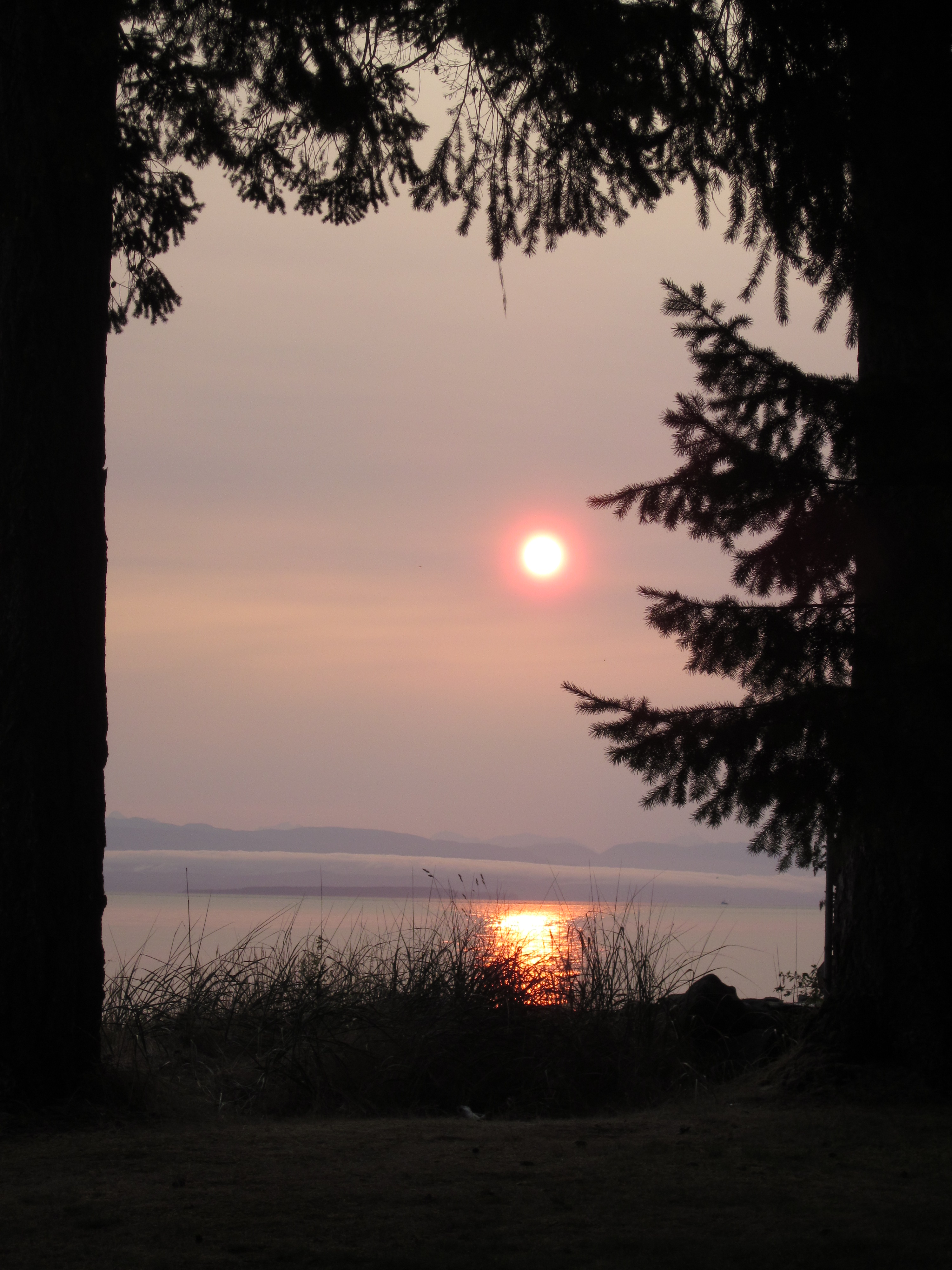
Photograph © 2014 Peggy Kornegger

Some Native Americans use the term “The Great Mystery” to refer to the concept of God or Source energy. It’s such a wonderful usage because within it, humans step back and allow the unknown to be just that—unknown. Many religions spell out the specific attributes of God, the heavenly realm, and its relation to living beings on Earth, including sets of rigid moral codes, laws, and commandments. How much more open-ended is the idea of a mystery that we will never understand with the human mind? Our hearts can experience God or the Divine, but we cannot solve the enigma of existence. Perhaps the greatest wisdom lies in acknowledging that and allowing the Mystery to live within and through us without trying to understand it.

To live in alignment with this mystery involves dissolving identification with thoughts and ideas; then awareness flows freely without conceptual distortion. Buddha mind. Baby mind. The innocent eye. At the beginning of life, we see the world this way—pure perception with no distorting language filters. Toward the end of our lives, words and memories may begin to fall away as we prepare to return to the oneness of pure divine consciousness, in which human language plays no part. In the middle years, we struggle to understand the seeming contradictions and unfairness of life—and the inevitability of death.

Not all of us are driven to figure out the meaning of life and death. I am one of those who has always tried to do so, from early childhood on. Only in recent years have I found my spiritual journey less burdened by inquiry and more open to possibility. This past summer, in particular, I began to let go into “not knowing.” This came out of a weeklong program with Panache Desai in which he challenged me to drop my questions and live from a place of experiencing instead of trying to understand everything. For someone who has perpetually had cosmic questions spinning around in her head, this was indeed difficult, even painful. Finally, though, in the weeks after the program, something in me opened to not knowing as the most peaceful way to go through my daily life. Basically, I surrendered to the Mystery.

I have surrendered in the past, of course, but there are layers to letting go, and humans are never finished with it. We have to keep being reminded, again and again: Relax your fingers; stop clutching. Relax the mind; stop questing. The wider, higher perspective opens up when we allow everything to unfold with awe and wonderment instead of “What’s going on? Why is this happening? How can I change it?” The “control” trap keeps us stuck on a hamster wheel of trying/failing/trying again. Ultimately, surrendering to mystery may be the wisest and least painful path to take in life. Human existence can be miraculous or a curse. We can suffer or we can celebrate. Celebration involves embracing everything, the sadness as well as the joy. We don’t know the meaning or the outcome, but we can fully experience every incredible moment of the journey.