Lost and Found

This morning I am looking out my window at green and gold woods, blue skies, and white clouds. Blue jays fly from oak tree to oak tree, gathering acorns for the winter; a red-tailed hawk circles overhead. The sound of crickets fills the air, day and night. I live now on the opposite side of Boston from where I lived two months ago. A move from northwest to southeast of the city, one we had pondered for a while, not sure exactly where but knowing it was time, because of rising rents.

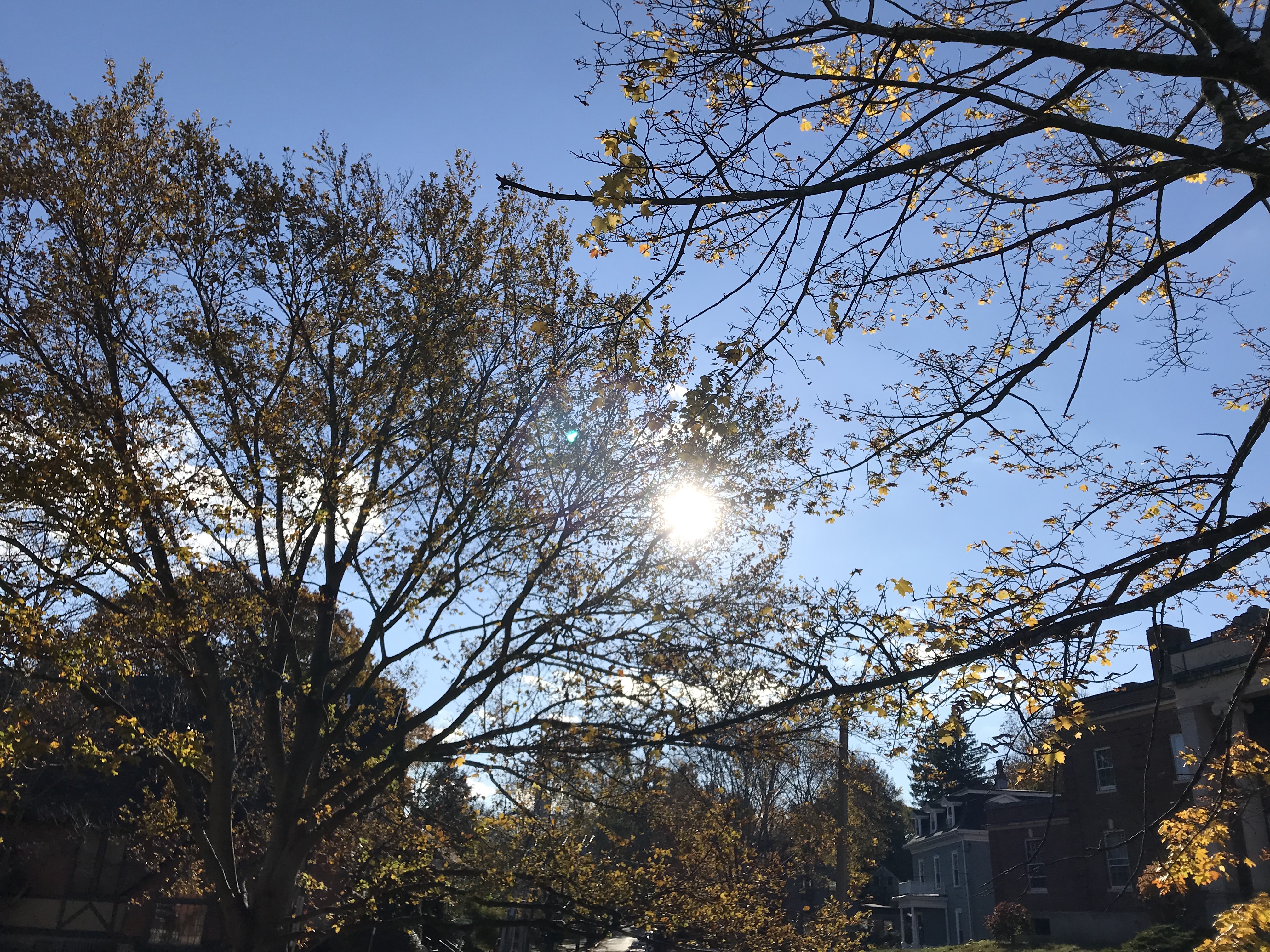
So now the trees and sky I viewed in the summer are completely different, leaves changing color in the autumn, sun setting sooner. Our lives change in just these ways. One day we call one place home; the next it is a memory, and we live elsewhere. A memory, though, that tugs at my heart in this moment, separated from an area that was familiar for so many years (40+). Within that frame, I sometimes feel “lost.”

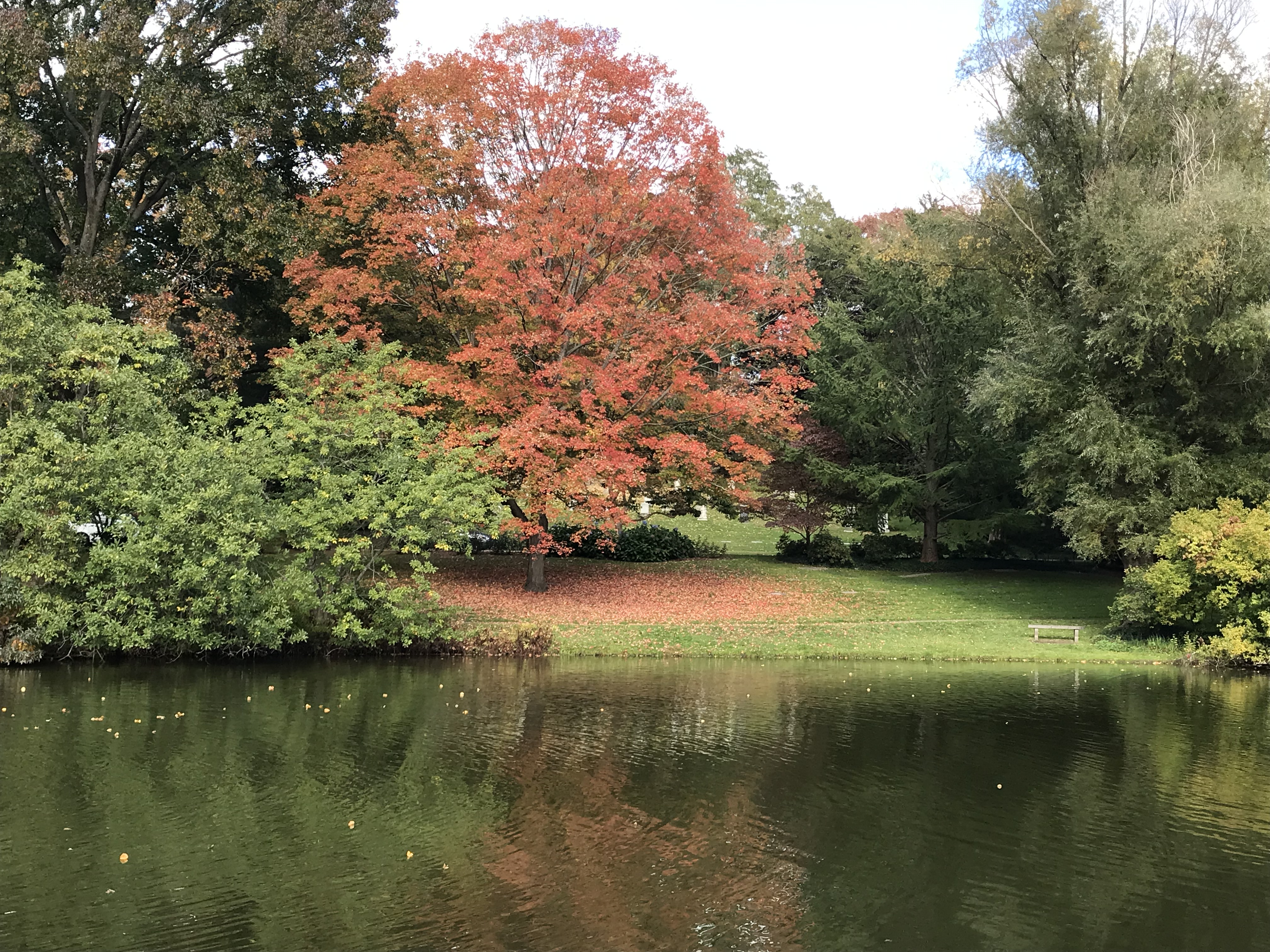
We don’t detach so easily from a place felt at our core as home. We carry the ache within us, even as we step decidedly on a new path. I greatly loved the town I lived in, my favorite “home” from all the years of living coast to coast in various cities and towns. I was one with Nature there in a way I hadn’t been since my childhood in the Illinois countryside. I gardened daily (hands in the earth, flowers all around) and walked in beautiful sanctuaries like Mt. Auburn Cemetery, where the seasons, animals, and birds dance through the year with a vividness and light beyond description.

So what do you do if you feel lost? Do you try to be found, or try to find—yourself? Words and language can sometimes trick us into believing there is something missing in our lives. Perhaps it’s not about losing and finding but just about being. Fully present, fully alive. If I think I am lost, I look for what is missing, when actually everything is always present all the time! Home is in my heart if I recognize it there.

So here I am, gazing out at a forested landscape. The sky and clouds are stunning. My heart may not feel completely one with what my eyes see—yet. It takes time to find and feel connection, with people and with places. So I wait patiently, with a mix of feelings, knowing that all it takes is a single moment of shining brilliance to fall in love with what you are seeing and experiencing.

These are the moments we live for. And they always come at the most unexpected times. You can’t orchestrate them or wish them into being. You can only repeatedly remind yourself to remain open and that no matter what you are doing or not doing, or where you are, your soul is at home and experiences the miracle of living spirit everywhere. Even now, the blue jays are calling, their silhouettes bright among the trees….

Love, Peace, and Flower Power?

My generation was born in the years after World War II and the Holocaust. The horrors and suffering of that time were still in our parents’ consciousness when we were conceived. If cellular memory can be transferred parent to child, then we emerged with our own unique consciousness that was a mixture of the pain of the past and hope for the future. We carried that through the years of our growing up and coming of age as we witnessed the Civil Rights Movement and the Vietnam War on our TV screens. At a certain point, we ourselves birthed a new awakened awareness, informed by global events but also infused with a positive vision for humanity that we had come to Earth to express. We became the activists and flower children of the late 1960s and 1970s. In the midst of the world’s conflicts and hatred, we spoke our simple truth: Love, Peace, and Flower Power.

In 1969, “in the streets of San Francisco,” I wore flowers in my hair, moved by a belief in loving connections beyond my one individual lifetime. I, and so many others, held that belief in our hearts for decades, working individually and collectively for a more compassionate world based in loving-kindness and equality. We may not use those words now in the 21st century, but the sentiment still rings true for many of us. The question is: Is it still relevant?

What is the state of human consciousness and inter-relationships on this planet? Is love of others and peace on Earth really possible? Many would say No, humans hate and kill one another again and again. Yet, that’s not the whole story. In so many places, what continues to flower (!), in spite of all odds, is kindness and mutual support among people in diverse communities, as well as the courage and strength to persist and survive. Perhaps balance is slowly being restored.

In singing, in speaking, in sharing, we express our humanity, heart and soul fully engaged and interactive with others and with the positive energy of connection and love. We come together in unity for the common good. The deeper truth is that the future is being lived now. This moment is all we have, according to the wisdom of elders in so many cultures. What you sow, you shall reap, moment to moment. Live love, and love moves through you in circles of reciprocity and expansion within your lifetime and beyond. Together we are a living breathing mandala of possibility and wonder. We are colorful bits of light dancing within a cosmic kaleidoscope. We are Spirit in human form.

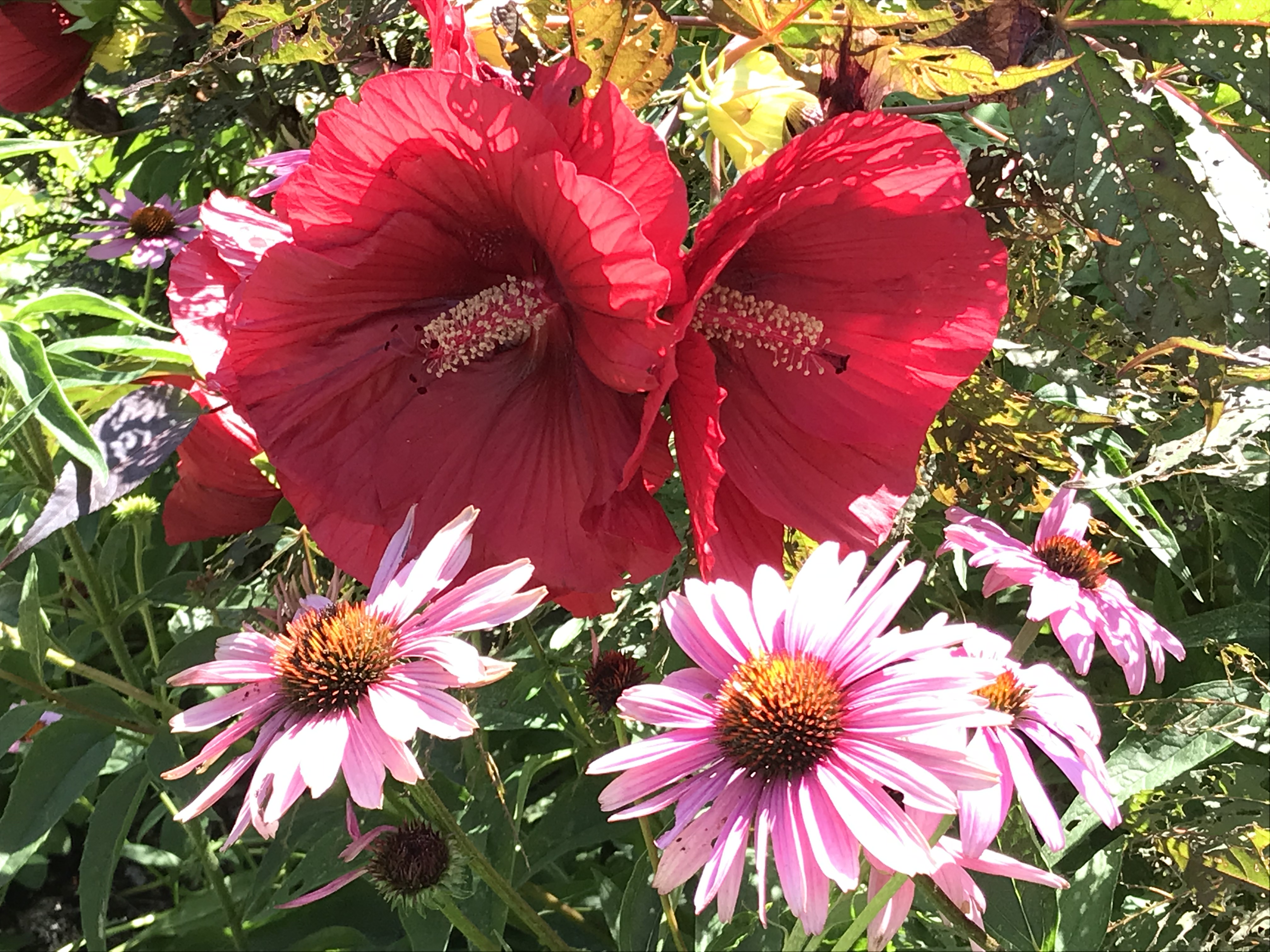
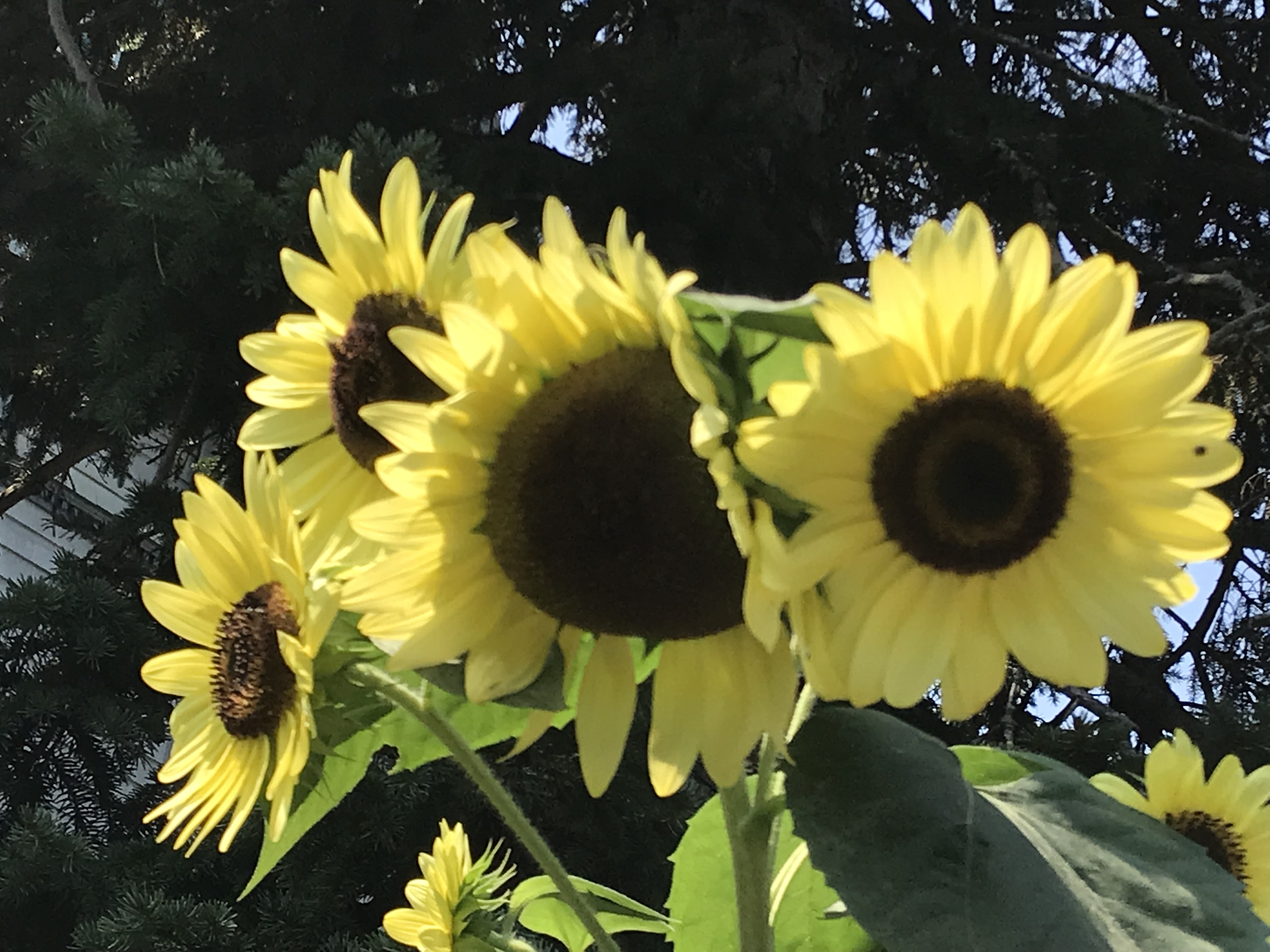
So perhaps “love, peace, and flower power” never becomes obsolete, outdated. The specific words may change, the clothing and hairstyles differ, but the living spirit of humanity always holds within it a seed of compassion and care for others. Love is timeless, peace is within us, and nature reflects back to us the beauty of our own beingness in every flower that blooms. This is the vision I have held all my life.

No Where

If you walk or sit in silence long enough, you blend with everything. You are no longer separate from the world around you, gazing outward, because there is no out or in. The mind stops grasping and relaxes into blankness. You are no where—because where ceases to exist. This is infinity. Some call it Presence or universal consciousness. It is pure awareness without parameters or definitions. Just being.

I sometimes find myself there when I am walking in Nature or deep in meditation (and once as I was coming out of surgery). But even there is a misnomer because how can there exist in no where? I assure you I am not trying to trick you with word games. I am attempting to move beyond words to the silence of the soul. Of course, you can’t really find your way to silence with language. To describe the process of becoming completely silent seems almost contradictory.

Yet perhaps it is not entirely impossible to offer directional metaphors, as the poet Rumi did in all his work. Recently, a friend commented that the deep meditational experience of infinity was akin to being in the field Rumi describes, which is “out beyond ideas of wrongdoing and rightdoing,” judging. Remembering the words of that poem immediately opened the door of Presence even further for me. A field that is empty of everything but shared spirit.

That is exactly how I felt within the depths of the profound silence of no where. Separation completely fell away. No opinions, no judgments of others, just awareness without any definitions or language to infringe on the vision of the soul, pure and true. Perhaps this is the purpose of all life: to reach that experience of being completely immersed in the silence of the soul. Because within it there is no longer inner or outer conflict, only peace.

We humans often talk of peace on Earth and aspire to it. Yet it seems to drift further and further away. Maybe that distance is an illusion, and in truth we are moving closer to it whenever we reverse our gaze from outward to inward. Because that is where peace lies, undisturbed and eternal. Our inner vision can direct us every day to living in a peace that radiates outward to all those we meet. In spite of the conflicts of the times we are now living through, more and more people are being catapulted inward by outer discord.

Our souls are guiding us in this direction, to seek the harmony and oneness that lives at the center of all creation. The no where within the where. Perhaps we came to Earth for this very reason. To experience the extremes of separation and then stand in the field of infinity, recognizing all that we see as one heart, one spirit. Humanity and divinity as one. Home at last.

All I Need to Know

I have always loved the phrase that many Native Americans use to refer to God and all of life: “The Great Mystery.” There is such wisdom and spiritual surrender in those words, a quiet acknowledgment that the universe and our place in it cannot be fully understood by the human mind. This wondrous mystery is what I experience when I walk alone in Nature or stare up at the stars at night.

Wonder, and joy at the beauty. Yet, for me there has also always been an element of sadness in contemplating eternity and my place in it. As a child I felt great fear when thinking of my life within infinity and the “world going on forever.” It was only in my adult spiritual quest that I came to a deepening and expansion of my awareness and a loosening of the fear. In “accepting what is” I found solace for my sorrow. When I stopped trying to find an explanation for life, the closed doors of my perception opened to the experience of Spirit, my soul’s essence and what is at the heart of all existence.

Even at times of emotional and physical challenge (the death of my parents; treatment for breast cancer), the presence of Spirit has sustained me. There will always be a mixture of thoughts and feelings when I look at the world that surrounds me: love of life as well as grief at its transitory, impermanent nature. When sadness arises, I have learned over the years that the wisest response is surrender: accepting those sad feelings and realizing they are only one part of who I am. It is my human identity that feels fear or grief; my soul witnesses all of life peacefully, without question or judgment. Within that peace, I let everything go and live in the Mystery. I don’t need to know all the answers; I just remain open to experiencing the beauty and wonder available to me in every moment.

I recently had an experience that highlighted this wisdom. I am an avid birdwatcher, and every year I visit Mt. Auburn Cemetery in Cambridge, Massachusetts, for the spring bird migration. Hundreds of migrating birds come through the cemetery because of its beautiful habitat, and local birders are there to greet them. On one particular morning, after days of rain, I walked inside the front gate and paused to get out my binoculars. A man standing nearby enthusiastically commented on the beauty of the day and how he was certain the end of the rain would bring all the birds in. I agreed with him, and as I started to walk away, he added, “I don’t know much about science or exact bird identification, but I know how beautiful and special each one is.” “And that’s all you need to know,” I replied.

 At that, he burst, quite loudly, into song: “That may be all I need to know….” He laughed delightedly as he finished and asked me if I knew the song. I smiled and said, “Yes, I do.” So he sang it all over again, practically vibrating with joy. We then wished each other a wonderful day, and each went our way. As I turned to look back at him, he was still smiling and singing to himself. What sweet synchronicity in encountering this rather eccentric earth angel who reminded me of the wisdom of life’s beauty. I am surrounded by that beauty with every step. And, truly, that is all I need to know, ever.

Things

 In the Western world, we become accustomed to accumulating things in our lives. Possessions, or “stuff,” as the comedian George Carlin called it. We fill our drawers and our living spaces with things: clothes, shoes, gadgets, memorabilia. And then we go to the store or online to buy more. Many people end up with so much stuff, they rent storage units for what won’t fit in their homes. We saw these storage companies all over Florida when we lived there. Accumulations of a lifetime, perhaps, that people couldn’t part with when they retired.

This is a privilege not available to so many people, who may not be able to afford a house, let alone all the things to put in it. Yet advertising everywhere pushes that mindset: aspiring to owning and accumulating. Those who can’t achieve it are left feeling at a loss: outsiders in a culture that rewards those who have money and possessions. All we need at the most basic level is food and shelter, and the homeless live with that challenge daily while those who have both pass them by in the street.

Still, beneath the fullness of owning things, there is an emptiness. When you come to the end of your life, and you only have physical objects and a bank account to look back on, something feels not quite right. What about human relationships? What about love and the kindness of sharing with others (like those who struggle to survive)?

As I get older, I am finding my interest in buying things, which was always relatively minimal, has faded even more. I have little desire to buy anything and often think of it as potential clutter that will just have to be dusted or cleaned! The clothes I have are fine. I don’t need to own the latest devices or tech innovations. I get books and films from the library. Spending time walking outdoors in Nature is more important to me than what’s in my apartment. My friends and family mean more to me than my Mac or cell phone.

Over a lifetime, many individuals come to see that things have little meaning without the people they are close to—and the feeling of connection and love that is part of that. Sharing what you have in your heart as well as what you have in your wallet is an open door to a deeper experience of life. We came here not for the “things” but for the people. We came here to love—and to let go of everything else.