Forgiveness

We all do or say things at times that we regret afterward. Perhaps from thoughtlessness, impatience, or our own tightly held opinions. In one moment of anger or upset, we can hurt another with our words or actions. When we apologize later, we long for forgiveness. To sweep clean all pain, conflict, or guilt and begin again with compassion and kindness. Perhaps this is a universal wish, humanity’s greatest prayer, on so many levels.

Many years ago, when I was still in college, my dad and I had an argument over something, and in my anger, I said things that I immediately felt terrible about. Later, I went to him in tears and said how sorry I was, asking him not to hate me for my insensitive outburst. His answer was such a beautiful example of a parent’s unconditional love: “I could never hate you. It doesn’t matter what you say to me—I will always love you.” All my life, I have held his words in my heart as one of the most generous, tender gifts he ever gave me. Truly a guiding star of wisdom and kindness.

As we live our lives, we may repeatedly stumble over our own inability to see circumstances or individuals from a wider lens. So often, our minds convince us we are “right” and others “wrong.” We lash out in anger at another’s opinion or we stand in judgment of their behavior. Yet, if we knew their life story from the inside, we might suddenly see everything differently. A friend’s irritability may stem from a family member’s illness, that we know nothing of. A stranger’s rudeness may be a domino effect from someone else being rude to them. Others’ opinions and attitudes often arise from their life circumstances. If we pause for a moment, we can give them the benefit of the doubt and respond from empathy instead of antipathy.

No one is always upbeat and friendly, kind and generous. We forget our best intentions and say or do something that we wish we hadn’t. That moment is the perfect opportunity to remember the power of forgiveness. To be vulnerable enough to admit our mistakes and ask to be forgiven. And then to forgive others (and ourselves) as well. To let go of grievances and grudges and choose peace instead. If we could do that, so many of the walls between us would begin to crumble.

Much of the world is currently divided by conflict and adherence to single-minded views based in fear: defense against the threat of the “other.”  As individuals, we may not be able to solve all the world’s problems, but we can each live our lives in ways that may ultimately affect the whole. If we drop habitual defenses and live from acceptance and love instead of suspicion or hatred, then so much could begin to be healed on this planet. See another soul, not an adversary. No matter what someone says or does, hold them in your heart. Forgiveness is pure love; it is pure giving, and it touches the entire web of life.

Gender-Free God/dess

God is formless. Everything humanity has created to define God is both true and untrue. We are painting images on an invisible canvas; the colors disappear on contact. Only we don’t realize it. Over the centuries, various cultures and religions have constructed their own views of what God is. Each one differs somewhat: sometimes a male figure; sometimes the Divine Mother or Goddess. Or a multifaceted God with many forms and attributes. These beings become larger than life, seeming solid and “real,” rather than a reflection of our own human images and characteristics.

We humans form-alize the world, turning the formless into specific structures and concepts that we think we understand. Gender, for instance. Babies are assigned a gender at birth. Some languages give every noun a gender (la rue, le soleil; la paz, el tren ). In English, we don’t give nouns a gender but until recently, words like chairman and postman were commonly used, the patriarchal basis for social roles. And of course, many religions have defined God as male: a bearded, all-powerful man sitting on a throne among the clouds. Some religions have both gods and goddesses. All are attempts to make God relatable to humans within their particular cultural framework.

If we delve deeper, if we pull back the curtain, there is nothing there. Or everything. Ultimately, the universe, divinity, and life itself are mysteries. We don’t truly understand any of it. Yet we live it every day, trying to make sense of God and “reality.” The words we use often limit rather than expand our awareness. Perhaps it’s wisest to let go of it all, acknowledge the mystery, and live in a greater peace which allows all parts of life to just be.

Imagine yourself in a movie theater in which an endless series of films passes before you. You watch and react, but when you leave the theater, you don’t take the movies with you. You yourself are not those representations of reality, those people, places, and stories. Such is life. We are born, live lives full of images, experiences, and reactions—and then we transition to other realms, other experiences. On the other side of life as we know it here, everything is more fluid, without definition and boundary. The parameters we have set up on Earth—gender, mind/body, beliefs—dissolve and disappear. There is no “there,” only limitless Presence. And we are part of that. Indeed, we are all of that.

God, Goddess. Great Mystery. Universal Consciousness. Oneness. Every word we have invented to explain life is a story that is both real and unreal. Don’t get too invested in the outcome. It all turns out well. You will walk out of the theater and see infinity open up all around you. If you are fortunate, you may occasionally find yourself seeing glimpses of it now in your current lifetime. All you have to do is let go and accept the fluidity of all things, the gender-free God/dess that is everything, including you. The field beyond belief. Let’s meet there, shall we?

“If God is everything, then nobody is wrong.”—Panache Desai

Step Outside…

In the past couple of years, as the planet has been experiencing a frightening pandemic, intense political conflict, and extreme weather patterns (among other things), many of us have found ourselves hesitant to leave our apartments or houses. We learned to work at home and avoid crowded public places, which held potential dangers. Even now, as we begin to venture out more, a kind of post-traumatic stress seems to linger in our consciousness. We have to break through a fear barrier just to go outdoors. It takes a real effort to walk to the corner store, let alone take a plane to another city.

We have collectively fallen into the habit of fear-based inertia, believing it is safer and easier to stay put in our living rooms than to go out into the risk-ridden world. We choose the simulated reality of Netflix or social media over the shining, ever-expanding world outside our doors. This scenario is unlike anything we have ever experienced in our lifetimes, and as we look into the future, we can’t foresee it changing. Perhaps it is we who have to change. Choose to open the door instead of lock it.

For example: On a winter’s day in February when cold or snow could trap you indoors, fearful of the icy sidewalks and the frigid wind, go outside anyway, even for ten minutes. Walk around your neighborhood or in a local park. Breathing the fresh air will clear your lungs—and your mind. So many things have kept us indoors recently. How about using a peaceful but invigorating walk as the daily movement challenge to get you beyond your door, whatever the weather? I promise you it will help break the stay-at-home inclination and also make you feel a lot better physically.

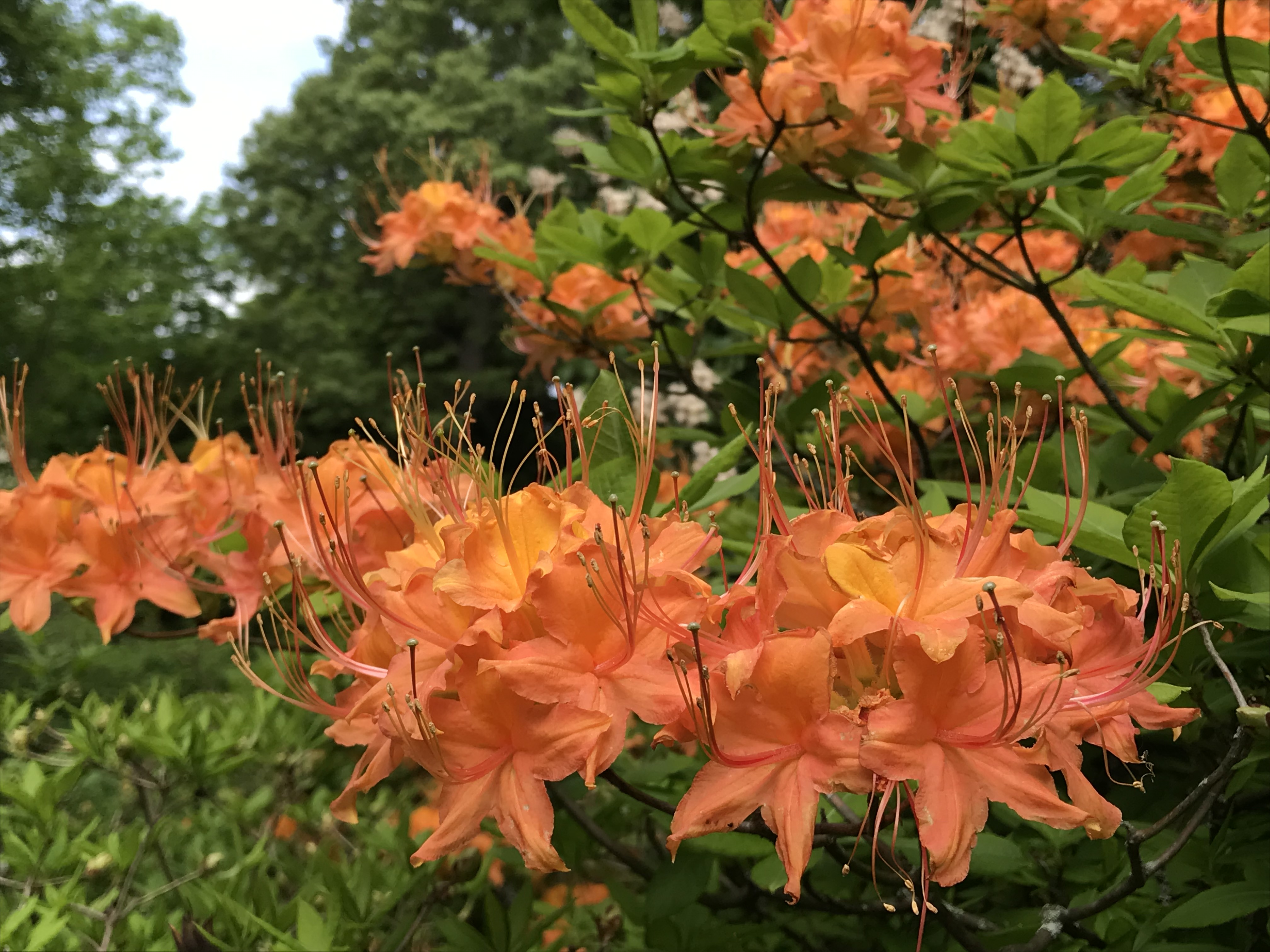
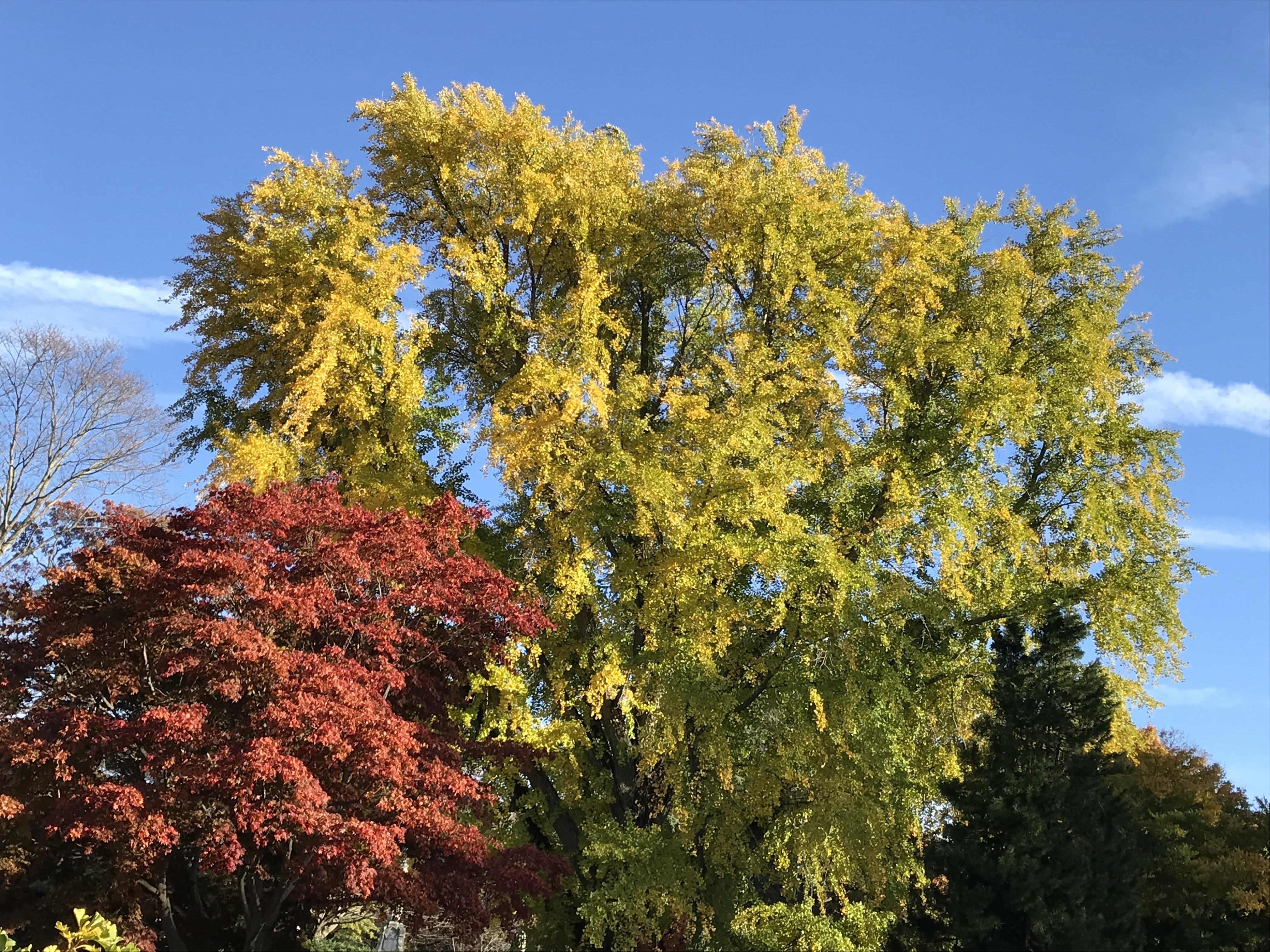
I am finding that when I begin to feel tired or depressed and unwilling to move, that is exactly the time when I need most to take a walk outdoors. If I consciously remind myself how much better I feel when I go outside, then I am able to make the extra effort to walk out the door. And every single time I am rewarded with some special moment in the world around me. In spring it is colorful flowers and newly green leaves; in winter, tree silhouettes and wild geese against brilliant blue skies. Always there are bird calls and the smell of fresh air. And the faces of individuals I pass on the street, who smile brightly if I say hello. All of this is a refresher jumpstart for my body and soul, which I would have missed entirely if I had stayed inside.

So next time you feel incapacitated by the gravity that keeps you immobile in your own living room, not fully engaged in life, make an effort to break free. Step outside and breathe in the beauty of the planet you live on. It’s not as scary as it might seem. In fact, it is still the wondrous place it always was, filled with a variety of climates, habitats, and people. We are just going through birthing pains on our beloved Earth. See them as temporary. Look up at the sun and the always changing sky, listen to the birds singing, smile at your neighbors, and you will start to walk with a sparkle in your eyes and spirit in your steps.

Practicing Peace

Based on my writings, you might think I am in a continuously peaceful outer state, untouched by life’s vacillations. Well, sometimes yes, sometimes no. Mostly, I find my way to it, again and again. Peace is a practice for me, a daily connection to my innermost being, which plays out as occasional reminders to myself when my mind or emotions wander into uncertain territory. It’s easy to get lost in worry with one anxious thought. For instance: “What if it is rainy and windy on the day I fly?” An entire chain reaction of worries can follow: turbulence, zero visibility, plane crash. In a split second, fear can vividly project an imagined end to my life. Unless I consciously intervene with a deep breath and a return to peace (an ever-present part of my soul), my thoughts/feelings can take me on a rocky ride with no return ticket. Best to nip it in the bud.

My life is the fulfillment of a soul plan, a divine design. I know that with everything in me. I am not the designated solo artist of the big picture. It actually reassures me to realize I can’t control every outcome, to trust that a greater Presence weaves the cosmic tapestry. Yet, human habits of fear arise. We inherit them, as a species and as a member of a particular human family. The only real solution is conscious awareness and acceptance. We came to this planet to experience all the emotions—and then to reach a point of realizing their lack of substance, their temporary status. If we don’t get stuck in them, emotions pass right on through. What remains is stillness, where peace itself resides. This is soul territory.

Each time I take a deep breath and receive that deep inner soul peace, my entire world is also peaceful. Inner = outer. That’s how it works. Breathe consciously. Be grateful. You then move through your day in a quieter, gentler state of mind. Your heart opens to everyone and everything. You radiate the peace that is an integral part of your being. If each one of us on the planet breathed peace into our lives, consciously connected to our heart and soul, a shift would occur at a global level.

Of course, it is an ongoing practice. And by practice, I don’t mean struggling, efforting. Rather, gentle reminders throughout the day; it’s as easy as breathing. Take a deep breath; let go; accept what is; live in gratitude. The world outside reflects your inner world. If you feel fear, that is what you will experience. If you see wonder and miracles, that is what you will experience. Sounds simple, and it is. Just remember the peace that dwells within you always. Life can be sometimes bumpy, sometimes smooth as silk, but it’s all worth it. The exquisitely beautiful living mural that is our life on Earth can be clearly seen through the eyes of peace.

Your Identity and Soul

Your identity and your soul dance with each other throughout your life. You are born as pure soul into a physical form and return to formless soul presence at death. Gradually, with each life experience, that form takes on an identity, made up of memories, thoughts, and feelings. The soul steps to the background as the identity experiences life in this way. It never disappears; it just allows the identity to follow the course of its destiny, the one the soul and God designed for you before birth. You chose to have certain life experiences, both joy and sadness, loss and celebration. Through it all your soul is a quiet voice whispering guidance. Sometimes you hear it, sometimes not. Either way, life continues.

Then at a certain point, your identity may reach a moment of awakening, perhaps through spiritual epiphany, perhaps through crisis. That crack in the seemingly solid form your identity has taken, opens the door for your soul’s more expansive presence. The wisdom of acceptance and surrender to the course of life events arises in your consciousness. You stop trying to control and begin to allow. A deeper love of life, of self, and of others comes to the fore. This is your soul’s greatest gift.

I have experienced much of this over the years, both through spiritual practice and through life’s challenges. A global pandemic and breast cancer were my greatest teachers about the inner peace that comes from acceptance. They occurred one right after the other in my life after many years of spiritual exploration and growth. With them, I felt my identity begin to recede a bit and my soul move to the fore. There was no sense of loss, but rather a profound peace and trust in all of life, as well as death and eternity. I had feared the latter since childhood. Perhaps it took actually coming face to face with the possibility of death for me to let go into trusting in an infinite consciousness that held me and all of the world in loving beingness.

This may sound like a fairy tale or wishful thinking, but I assure you this is what happened for me. It is not an instant transformation but rather a gradual opening to full soul awareness. Today, I feel more deeply aligned with my soul, trusting in the divine flow of the universe. Yet, my identity has not entirely disappeared. It is like a thread that tethers me lightly to this lifetime, present in a passing thought or feeling. I know my identity is not to be disregarded and discarded. It is to be loved along with everything else in my life. My soul gave me my identity so I could experience life fully. If I can remember that whenever I feel apprehensive about something, then soul trust arises and all is well.

Your identity and soul are partners, your life support system, linked in love. Your soul is eternal, your identity temporary, but together they fill your life with meaning and purpose. Acknowledging their interconnected presence allows you to experience life with full conscious awareness of the miracle and gift that is life on Earth.