Softening with the Years

I hope to soften as the years go by: my voice, my thoughts, my footsteps. My heart. More love, kindness, and gratitude; less worry, fear, judgment. More listening, less talking. Of course, I am already in the age bracket people refer to as “older.” Older than what or whom, I’m not sure. At any rate, I do feel softer now in my approach to life. Years of spiritual seeking and practice have laid the foundation for that. I stopped hanging on so tightly to my carefully crafted version of reality. I opted for meditation and inner peace over angry political disagreements and the need to be right. Of course, I am not always successful, but all in all, I am less attached to my reality as the ultimate Truth.

There are so many “truths” in this world. If we could only see them as ever-shifting variations on a theme instead of finalities that need to challenge one another. Every person we meet has a different perspective, a different voice. A different inner story. If we listen carefully, beneath the words, we can hear it. And that becomes one of the dearest gifts in life, hearing another’s life story. Because it takes softness, a receptive, tender heart, to hear what another carries within their heart. Often it is in being vulnerable ourselves that we find that others can be vulnerable with us. An experience shared opens the door to another’s sharing, which then unites us as one heart, beyond all stories.

All this comes with softening, realizing that we each are travelers in this life, finding our way step by step. As we age, our steps are sometimes slower, which is the perfect opportunity to see and hear more of the world around us. I’ve taken walks all my life: on city streets as I ran errands, in nature habitats as I watched birds and animals, in my own neighborhood as I appreciated others’ yards and gardens. Sometimes I walked fast to reach a destination or complete a task; other times I walked slower, or stopped entirely, to watch a butterfly or bumble bee or listen to a bird singing. Now I walk slowly most of the time because I find contemplative walking more fulfilling than rushing quickly without really seeing the beauty around me. It is a softer approach to life, available to us at any age, but perhaps life gives us more opportunities to receive this wisdom as we grow older.

I know that many people hate the idea of aging and fear the loss of their self-image and physical/mental abilities. Perhaps we could let go of some of our anxieties and trepidation if we saw each year as an open door leading to new experiences and ways of being in the world, possibly more expansive than anything we have ever known. No one can predict how their life will unfold or how long it will last, but we can appreciate each day we are given. I find that the more I soften the need to know what comes next, the more I can accept and love the present moment before me. I also have discovered that the softening of the passing years is a gift in itself, one filled with unexpected wisdom and the kindness of friends and strangers alike. 

Peace of Mind, Now

How do we find peace in troubled times? It can often feel impossible. Yet the soul is always at peace. The mind, on the other hand, can easily slip into recycling opinions about, or conflicts with, others or the world at large. Previous judgments or disagreements have laid down tracks in the mind, which facilitate high-speed train-of-thought trips if triggered by something from the outside. Perhaps a passing comment or behavior, the news, a memory. However it begins, the mental editorial debate continues and repeats in an almost unstoppable manner, unless we consciously intervene.

The nature of the mind tends toward problem-solving in which any perceived conflict is something that needs to be resolved by logical discourse. So the mind repeats and repeats potential responses meant to convince, change, or solve. At times, my mind-train travels down those tracks. A stranger’s seeming unkindness or a news item about some political discord can springboard my mind into action. I find myself in the midst of an imagined argument, trying to convince a nebulous or specific “other” of the necessity for (choose any or all) compassion, environmental protection, human rights, the end of guns and war, etc. The very idea of trying to convince others of the need for compassion seems fruitless and somewhat ridiculous if I pause for a moment. Actually, it all seems completely unnecessary in that paused moment. The Pause is key. As is repeating the Pause, one breath at a time, until the train is derailed.

How to do that? How to remember to invite the soul to take over instead, to bring peace to the mind’s agitation? It takes repetition and intention. And conscious interrupters, like walking outdoors, birdsong, music, yoga…whatever centers you in your heart (gateway to the soul) instead of the mind. The mind is useful for daily functioning in the material world, but it can get out of control, and it needs calming on a regular basis. Meditation serves that purpose as do quiet walks in Nature. Anything that silences the mind’s chatter and repetition of old recordings.

And the alternative to internal or external debate? Living the peace and compassion instead of arguing about it. When the mind is at peace, it is not moved to engage in disagreement, dissension, or judgment. A mind at peace is aligned with the soul, and the soul sees oneness not separation. In these turbulent times, we need every ounce of peace available—and it is always available when you remember to Pause.  In that moment, look up at the trees, the stars, the infinite universe around you—therein lies a soul peace that is beyond the mind’s understanding but will fill your heart and the hearts of all those you share it with.

Worry and Its Antidotes

Our minds often seem to be looking for something to worry about: “Who will be elected?” “Why is that person coughing?” “What’s that noise?” If we go online, we are continually bombarded with potential fears: a new COVID variant, rising costs, droughts, floods, shootings…. These stories feed right into the part of our brain that is a problem-solver. A useful attribute, but if the brain can’t find a solution to a problem, it gets diverted to the worry channel. The “What if” station, which seems to become particularly active at night when we are tired. Worries about yourself, your loved ones, and the whole world can take over your life if you let them. So don’t let them…..

What’s the antidote? you ask. Well, I find that there are many, and I have to remember to be open to them all. Remembering is key. In fact, that’s the number 1 step: Recognizing that you are caught in worrying. That puts a brake on and allows you to step sideways into another frame of mind (and heart). I say “heart” because often it’s the heart’s perspective that unlocks the closed door to the room where you are trapped with your worries running wild.

The heart is an optimist. It sees flowers when you might see poison ivy. It sees love when you are caught in fear or anger. How to connect to the heart? Take a walk outside in a park or anywhere else where you can see trees, hear birds, look up at the sky. Nature is a major heart connector. I take daily walks to keep myself centered in a positive frame of mind, to live from my heart and not from mental fears. If something difficult does arise, my heart’s spirit guides me through.

Friends and family can also be antidotes. Anyone close to you who is a good listener and can help you realize that your worries are not necessarily destined to materialize. In fact, most of the time they don’t. Mark Twain had a great saying, which I used to keep posted above my desk: “I have known a great many troubles in my life, most of which never happened.” Perfect description of how our minds make our worries seem real, when they aren’t. They are passing thoughts, which may or may not take form. Why waste time (and your life) focusing on them?

I’ve learned over the years (and keep learning) to find ways to divert my mind when it goes into worry overdrive. Music and poetry* help. Walking helps. Nature helps. Meditation** and yoga. A favorite sitcom rerun on TV. Eating healthy food I love (e.g., cherries, grapes, avocados). The kindness of those close to me who listen and reassure me with simple words like “Yes, I understand.” (My partner is very good at this.) There are countless ways to find positivity in your daily life and open your heart in the process. Because when your heart is open and really connected to life’s wonders and beauty, worries fade to the background and may disappear entirely.

And if they return tomorrow in different guises, you and I always have effective antidotes at hand. As the wise tell us, “Love is stronger than fear.” I’ve found that to be true, again and again.
————
*This song always lifts my heart: “I Am Light” by India.Arie: https://www.youtube.com/watch?v=l2E3dBtTtBw. And Mary Oliver’s poem “I Worried” is the perfect antidote: https://www.mindfulnessassociation.net/words-of-wonder/i-worried-mary-oliver/.
**Every morning I listen to Panache Desai’s free online meditation Call to Calm: https://www.panachedesai.com/.

Experience or Interpretation?

Philosophers, historians, and scientists spend their lives interpreting the world around them. We grow up seeing our world through the filters they have created with their interpretations. Even the language we use to describe the world reflects their views. Yet these very interpretations change from decade to decade, century to century. If we pause and step away from the filters, we realize that these ever-shifting, but seemingly solid “truths” may be keeping us from the immediacy of a life experienced without filters, sometimes called “Presence.”

If you are fully present within each moment, aware of each breath, filters fall away, and the need for interpretation falls away too. Yes, language is useful to human beings for communicating and connecting with one another, but an even deeper inner connection happens in silence. The stillness of your soul “speaks” wordlessly in that silence. This must have been what poet William Blake experienced when he wrote of seeing “a world in a grain of sand” and “eternity in a moment.” The poetry of Presence shows us an infinite interwoven tapestry of light that fills the multiverse beyond imagination. Language falls short as the heart overflows with wonder and awe. The only adequate response is, once again, silence.

This is what I experience every time I walk alone in Nature. There is nothing between me and Presence. Any interpretations I still carry with me dissolve in the stillness. I feel one with all beings and with pure Being itself. I am Presence. In those moments, I am aware that there is nothing else. How to remain centered in that space as I go through my day? Not always easy. Old interpretation filters remain within me and bombard my consciousness from every direction. The key is to keep bringing myself back to the direct experience in front of me.

To take a deep breath and see rather than think about what I’m seeing. To not get lost in my mind and its meanderings. We have a choice in each moment to fully focus on the experience before us or to sidetrack into the thought process it engenders. Distraction happens, it’s human, but we can bring ourselves back to the present moment and the present experience by remembering. Conscious awareness.

Will human beings continue to interpret the world around them in order to understand it better? Probably. Yet at a certain point in our lives, as we live year after year with changing reality filters, we may come to see constant interpretation as somehow falling short of a full experience of life. Interpretation can be fun at times (some might call this blog an interpretation—ha!), but perhaps as a side trip, not the entire journey. Interpretation as one experience in a vast spectrum of experiences.

The key is to keep returning to the conscious Presence within us, which connects directly to the experience before us. To shine the light of awareness on any potential filters and allow words to drop away, if even for a few moments. How can words possibly describe the extraordinary magnificence of the universe we inhabit without getting in the way of our direct experience of it? Silently inhale the stillness and you become one with it all.

The Most Beautiful Place on Earth

I’ve been visiting it regularly for more than 40 years: Mt. Auburn Cemetery in Cambridge, Massachusetts. Founded in 1831 as the nation’s first garden cemetery, it remains a place of natural beauty and peace for those mourning loved ones as well as those who come to walk quietly and appreciate the diverse landscape. Old oaks and maples, flowering trees and bushes, butterfly garden and wildflower meadow, ponds, dells, and hills all combine to create a vibrant habitat and nature sanctuary. To me, in every season, it truly is the most beautiful place on Earth: the deep greens of summer, the red/gold/orange leaves of fall, the sparkling snows of winter—but especially the rainbow colors in springtime.

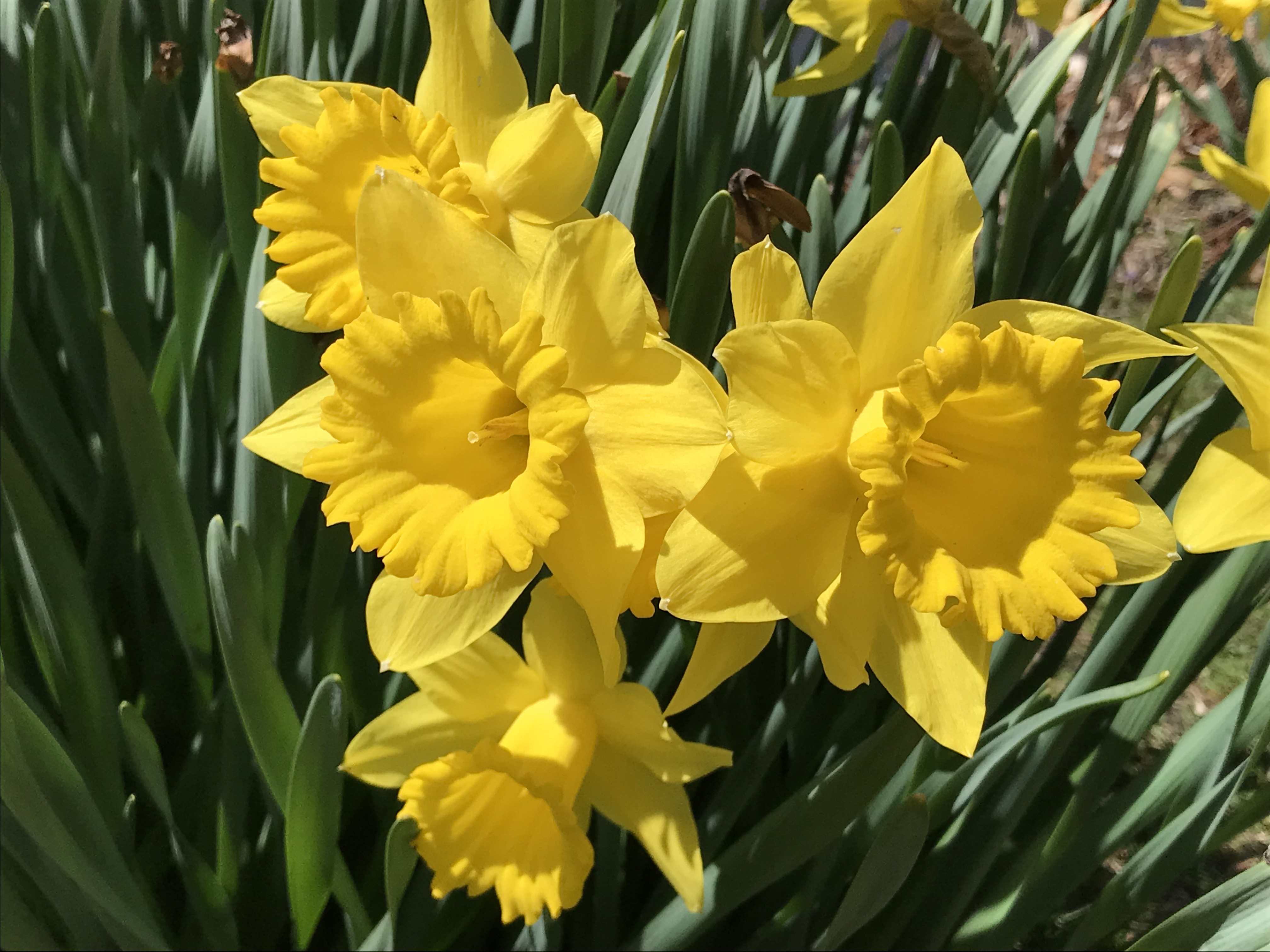
Spring! The word carries within it the feeling and the movement of the season. My heart literally springs with joy when I walk through Mt. Auburn’s gates and see the new yellow-green leaves on the trees and the daffodils and narcissus springing into bloom. These are special days of excitement and joy for me, too, because of the annual spring bird migration: a vast diversity of birds flying marathon miles from Central and South America to North America. Many of them I see only once a year as they stop on their flights north to nest and raise their young. Each sighting is a cause for celebration. Yay—you made it, sweet little being!

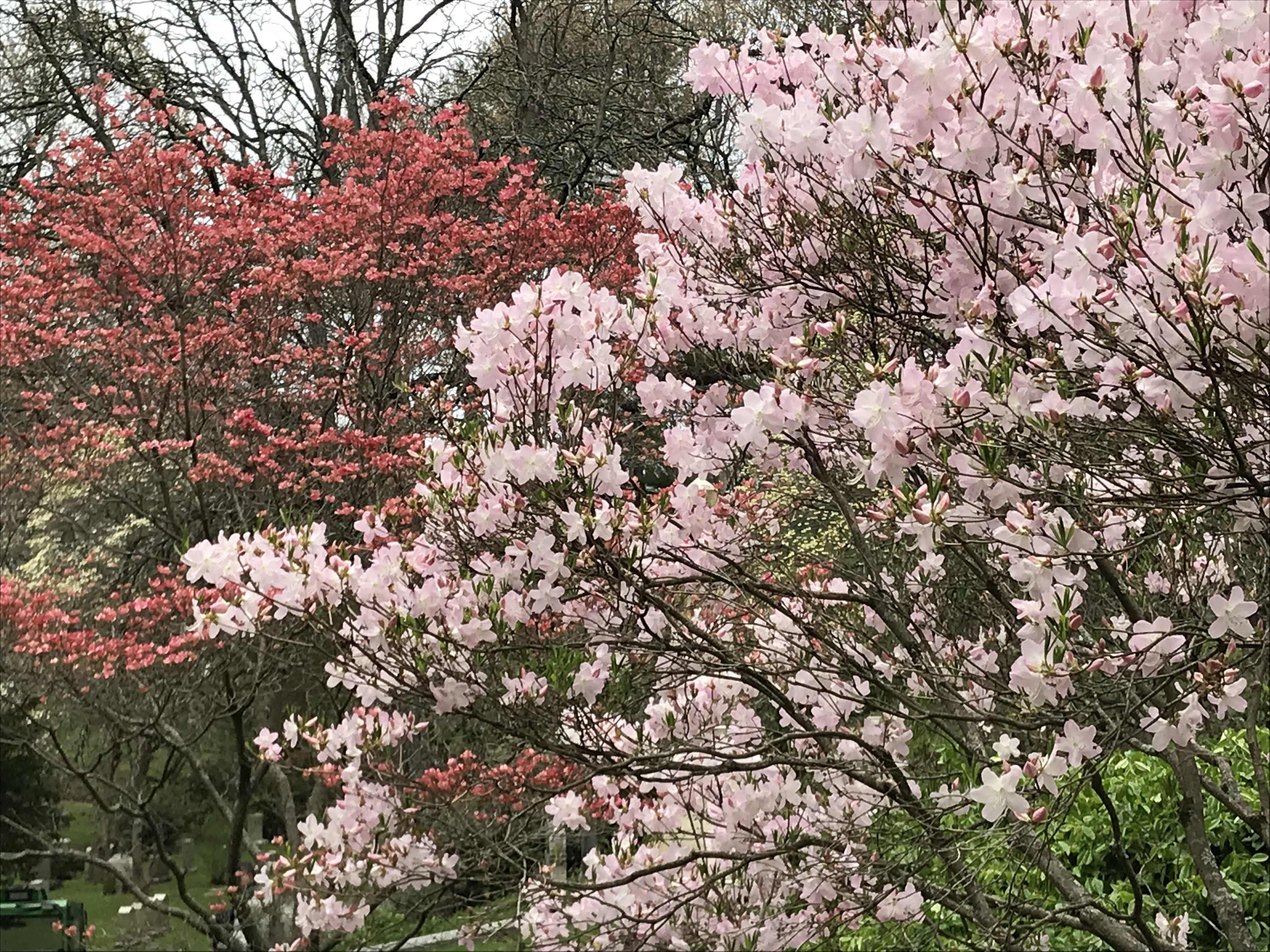
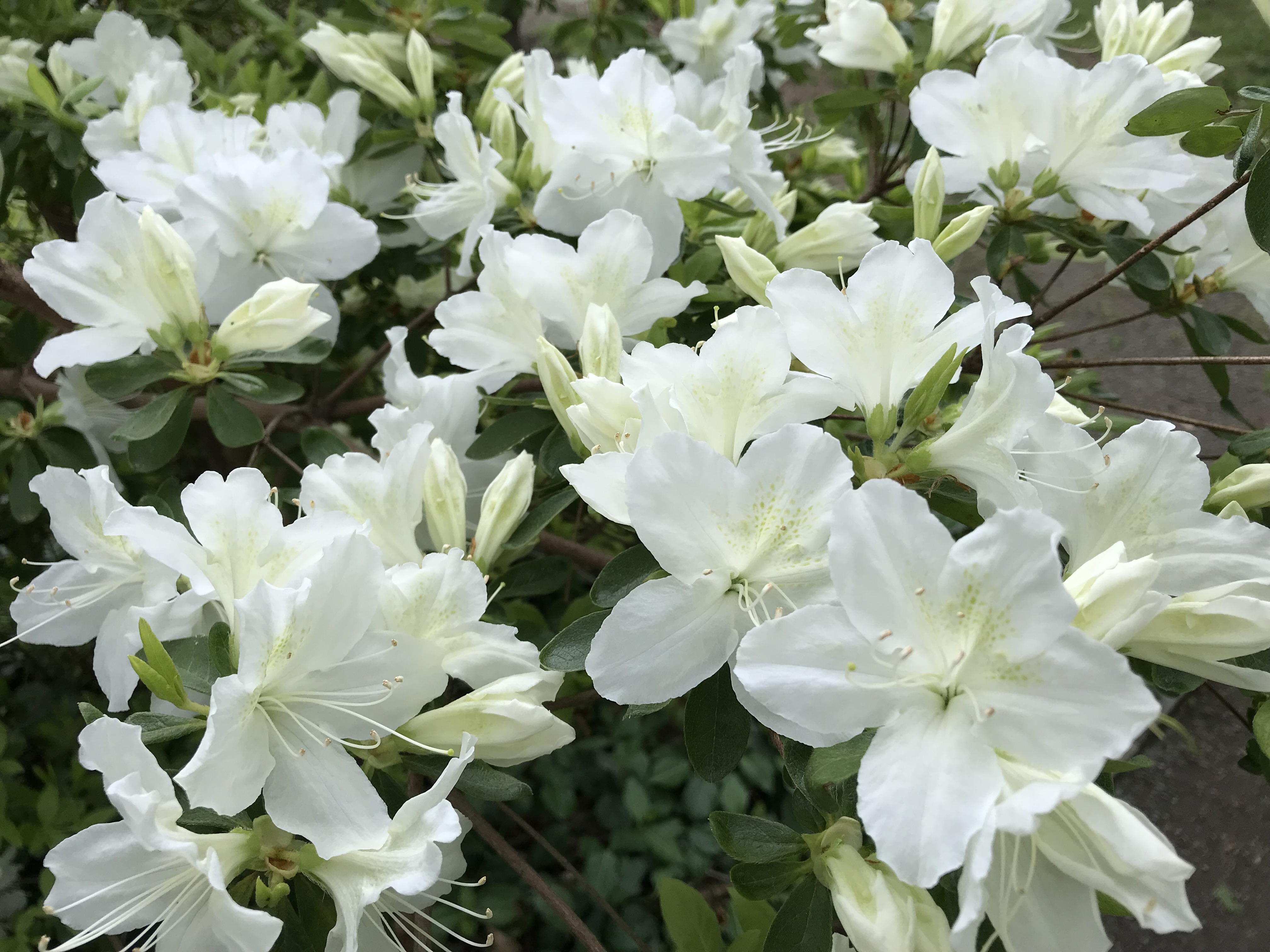
At the end of April this year, I made my first spring trip across town to Mt. Auburn, and as I walked along Indian Ridge to Auburn Lake (also known as Spectacle Pond), tears filled my eyes at the beauty of the azaleas bursting with red and white blossoms and the magnolias covered with huge pink blooms. And then the birdsong! Warblers, tanagers, thrushes, catbirds, and the whistling notes of the orioles, all of them virtuosos of song. No human symphony orchestra could be more varied and beautiful. Every year I feel this way. Every year I know I have walked into paradise on Earth, a gift of a lifetime.

Machu Picchu and the Napali Coast are spectacularly stunning, as are the Southwest’s red-rock deserts and the Caribbean’s turquoise seas. So many wonders in the world, all extraordinary—and yet, it is a small, quiet nature cemetery in Massachusetts that moves me most, heart and soul. I feel Spirit everywhere there. My parents are with me, as is every friend I’ve ever shared a walk there with. And every migrating bird I’ve seen in every year since the 1980s, each special and unrepeatable.

The memories are countless, all of them interwoven with the course of my life—and continuing into the future. One of the reasons that Anne and I moved back to Massachusetts after two years in Florida was for those longtime memories of people and places here. Including our wedding at Auburn Lake with friends and family present exactly ten years ago this June! The saying goes that “beauty is in the eye of the beholder.” True, but for me it’s in the heart of the beholder. There is no beautiful place on Earth that touches my heart more than Mt. Auburn Cemetery.