Spring Forward: Defrosting in Boston

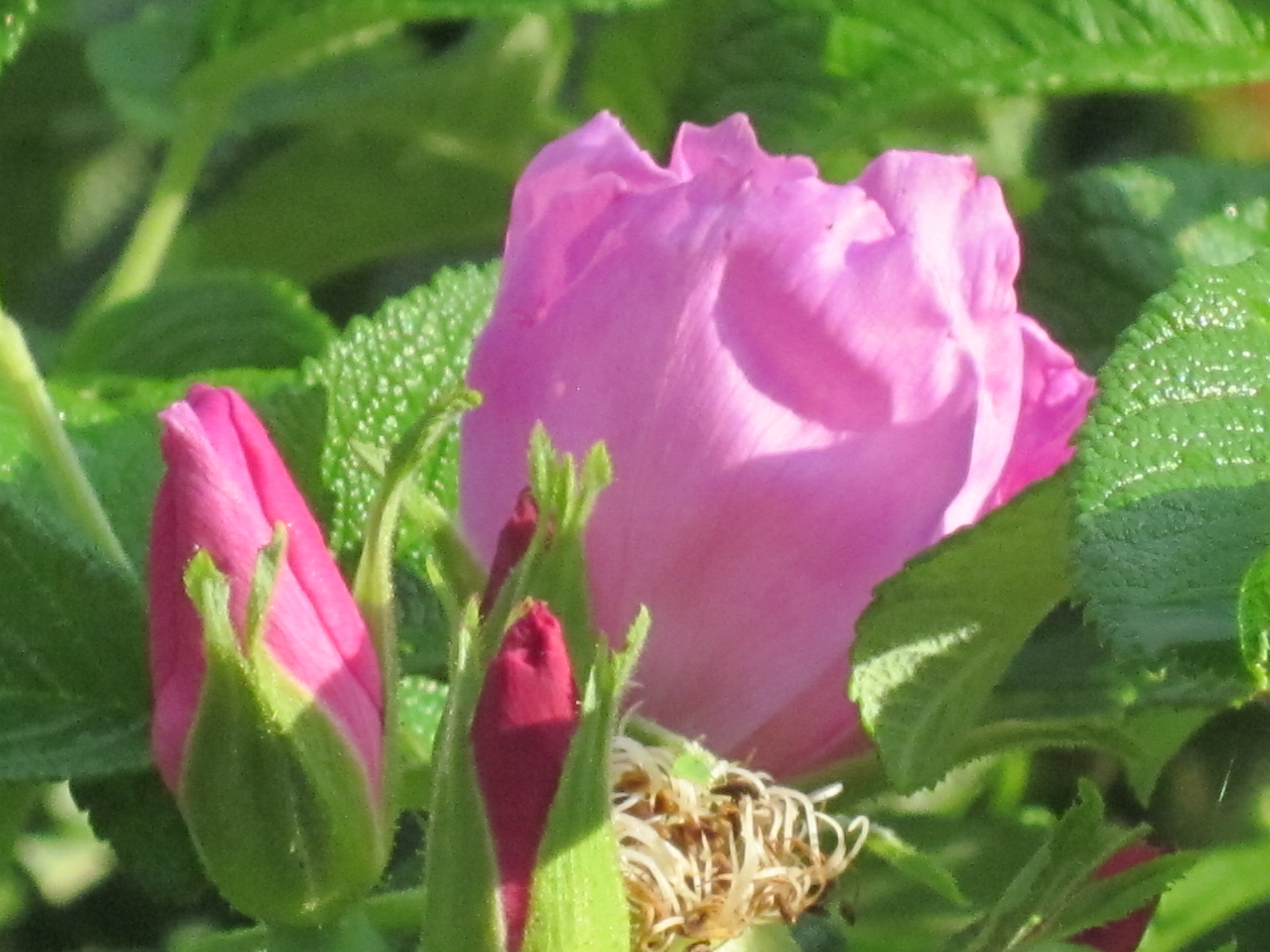
Photograph © 2015 Peggy Kornegger

Spring is officially here, but in the Boston area, we are still defrosting. After a record-breaking winter of more than nine feet of snow (most within a month’s time), coupled with bone-chilling temperatures, we can hardly believe that the frozen tundra outside our doors has finally disappeared. This winter has been a lesson in accepting everything, especially Mother Nature’s unpredictable extremes. Again and again in life, we are called to navigate unexpected blizzards and ice storms—inner and outer, human and environmental. The seasonal weather variations teach us to let go of expectation and just live with what is. If we struggle, we suffer. If we learn to face each moment with acceptance, we can live in peace and equanimity.

In addition, each season serves a purpose. In winter, the weather can shut everything down, and we are often forced to stay inside. Sometimes inactivity, the restorative pause, is necessary. In fact, it always is. (Animals hibernate; perennials die to the ground.) It doesn’t always feel good or “right” to us. We think we should be doing something, anything, to move forward, progress. Yet non-doing is crucial to nature’s, and our, cycles of life. The slowing down and dying away in autumn and winter allow for the rebirth and resurgence in spring. In the midst of the expansiveness and warmth of summer, we forget that those days of growth and flowering occur because of the days of rest and restoration that winter insists all living beings observe.

That includes humans. Within the stillness and solitude of a heavy all-day snowfall, with work cancelled, we can find a kind of inner peace as we gaze at the falling snow from our windows. Later, of course, we have to shovel that snow! But afterward we can drink hot chocolate and rest again for a while. Winter moderates our activities for us. If we resent the orchestration, we spend the winter angry and cold. If we allow for nature’s wild variations and interruptions, we are less stressed and can look forward to spring with a rested outlook.

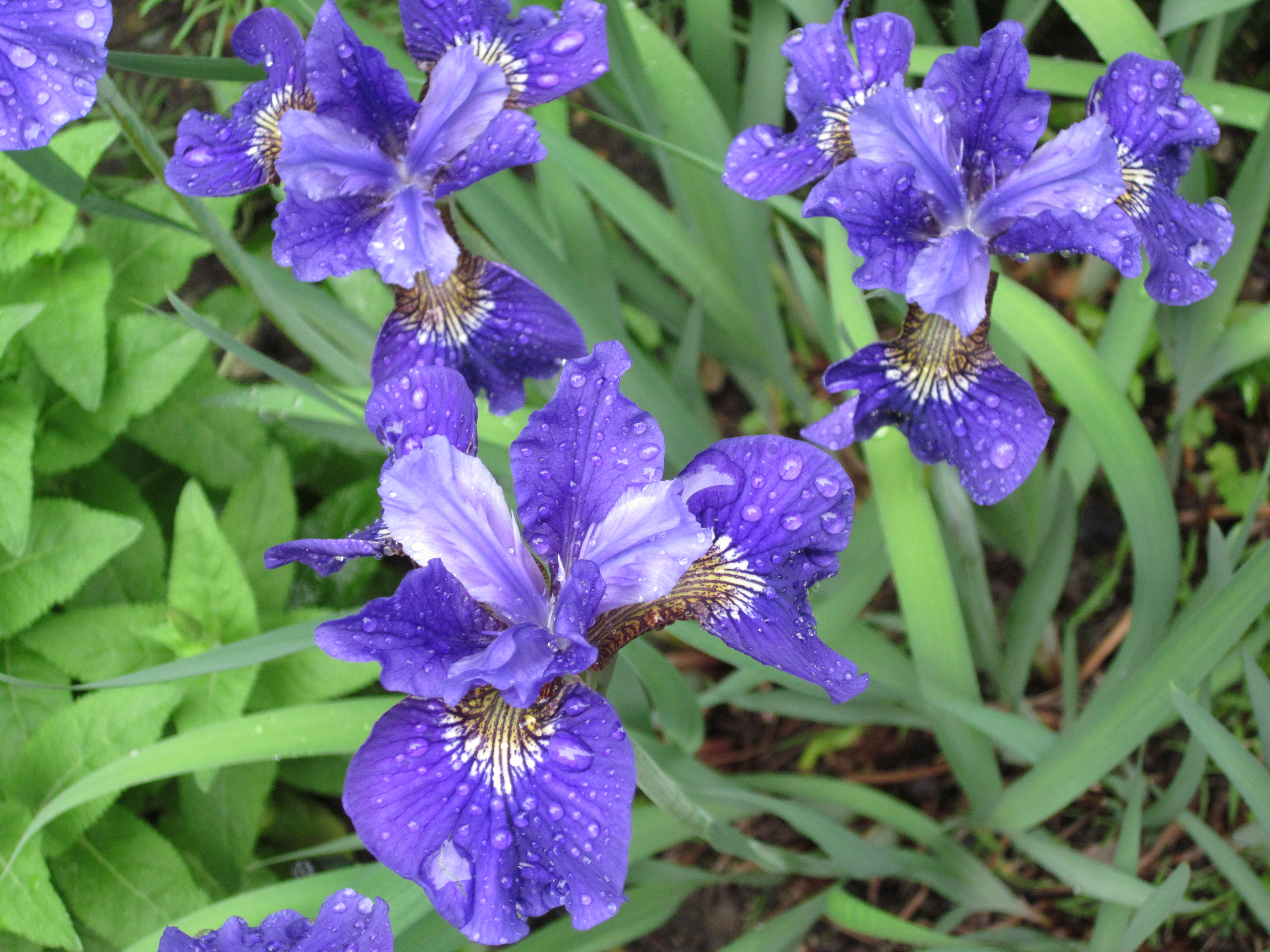
Photograph © 2015 Peggy Kornegger

This past winter has been a real challenge for me. My soul knows the wisdom of cycles of rest and renewal, but my mind forgets at times during the seemingly endless months of icy cold and early darkness. As the days gradually lengthen and the light fills my consciousness each morning, I feel my physical body reaching out to spring, yearning for warm air, green trees, and blooming flowers. And when they finally appear, I am filled with such intense gratitude—especially this year! The colors seem extraordinarily vibrant, almost unreal, after so many days of winter grays and whites. Perhaps this is another gift that the change of seasons brings: deep appreciation for the beauty of rebirth in nature.

We live on a planet of polarities. Even the warmer climates have their own seasonal changes. When I lived in California, winter brought weeks of rain. Now, of course, the people there are living with a severe drought. The extremes of life on Earth are part of the experience of being alive. We came here for this roller coaster ride. If everything were always the same, we would not be stimulated to grow and evolve as human be-ings–or to dig deep and find the blessing and miracle in every single remarkable moment we are alive.


Only Child, Only Parents

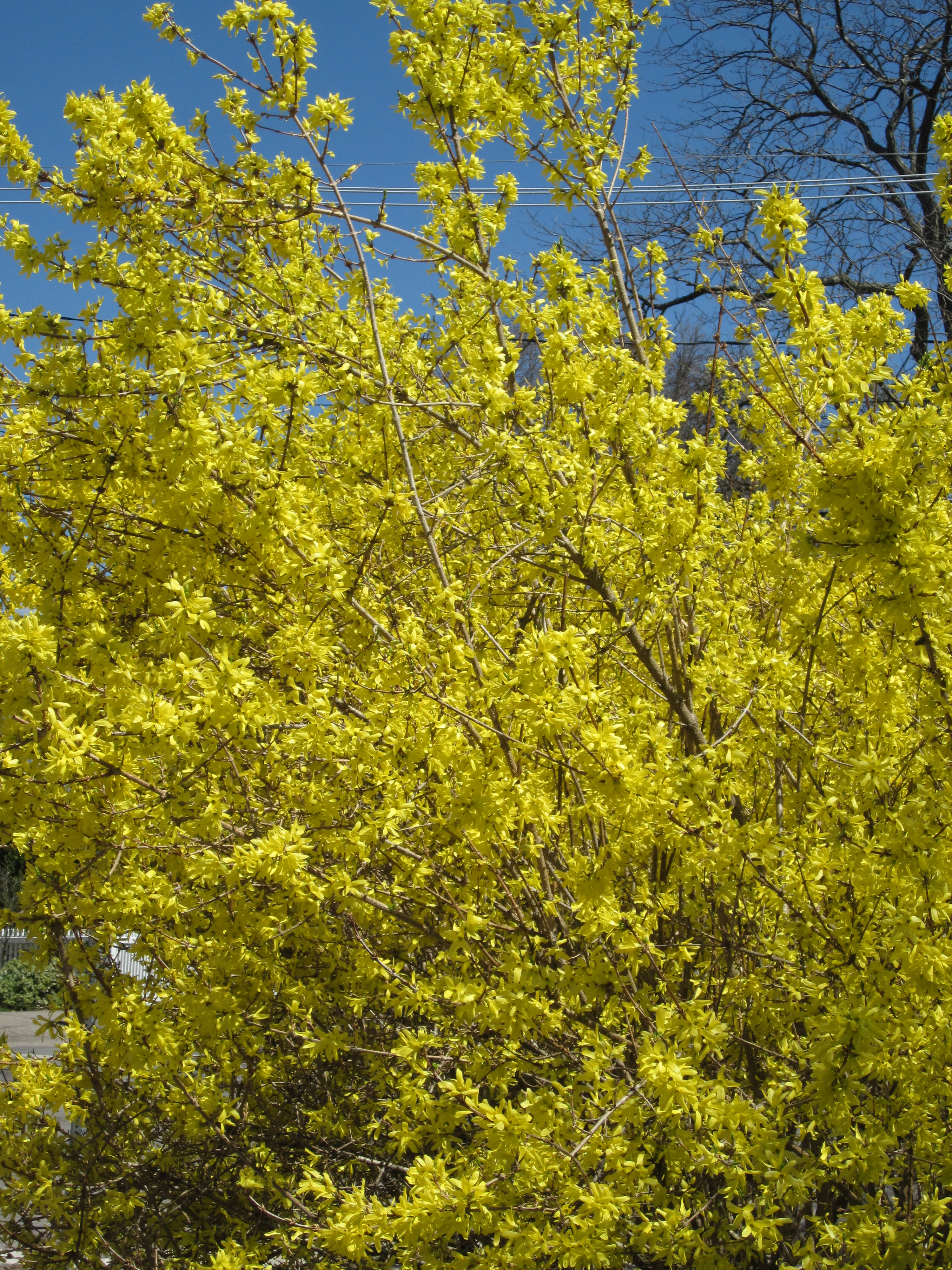
Photograph © Peggy Kornegger
My parents were both born in the month of October. My mother would have been 100 years old this year, my father, 105. I was their only child, born nine years after they met and married, one of the baby-boomer generation. Although they have been gone for a long time (my mother died 19 years ago; my dad, 10), I still miss them. As an only child, I dreaded their deaths, fearing I would lose my mind without them. Of course I did not. In fact, their transitions were profoundly loving and spiritually uplifting experiences, partly because I was able to be with each of them as they passed. Sitting by their sides, I felt connected to them and to the spiritual realm beyond and intersecting this one. That connection was a great comfort to me for months and years afterward.

It was during those years that my spiritual journey and quest for the meaning of life (and death) began in earnest. My exploration was intentionally eclectic, and I worked with many different teachers. Perhaps I inherited that tendency from my parents, both of whom were also eclectic and nonaligned religiously. They were free thinkers who read widely and attended philosophical discussion groups that pondered the mysteries of life. They encouraged me to make my own choices with regard to religion and spirituality. Over and over throughout my life, they gave me that gift of freedom and unconditional, uncritical love in every area. Whatever paths I took (and I took many—personally, politically, spiritually), they loved me without question.

Their love—for me and for life—is what has stayed with me beyond their lifetimes. It is interwoven with all that I am. As I searched for my own “meaning of life,” my evolving beliefs have always been grounded in love, as were theirs. I can still hear my dad reading aloud a poem by William Blake and choking up at the beautiful words: “To see a World in a Grain of Sand/And a Heaven in a Wild Flower/Hold Infinity in the palm of your hand/And Eternity in an hour.” Reading those lines now makes me cry too, recalling that shared moment of love and gratitude for life. It was music that touched my mother’s heart, the voices as well as the lyrics: Italian tenors, Paul Robeson, Willie Nelson, Barbra Streisand, Judy Garland—she loved them all. We used to listen to all kinds of music together (including birdsong), often with tears in our eyes at some particularly moving musical expression. I am so grateful that my parents passed on their emotional openness to me. As my friends and my partner well know, I cry all the time at life’s beauty and poignancy.

An only child experiences the loss of parents a bit differently because there are no siblings with which to share family memories. No one alive today remembers my parents in all the ways I do. Consequently, I carry their lives within me, where they are present in spite of absence. My backyard flower garden is one of the places I feel them most strongly. They were both gardeners—my dad, vegetables, bushes, and trees; my mother, flowers. I grew up on five acres in rural Illinois, so living with this small piece of nature right outside my door now has been like “coming home” for me—to my childhood home, to myself, and to my parents. Along with so much else, my mother and father gave me a deep appreciation for nature’s miracles. Each time I stand in awe, gazing into the delicate heart of a flower or at a sleeping bee or dancing butterfly, they are with me. They live on within the love in my heart.

Perfect Imperfections

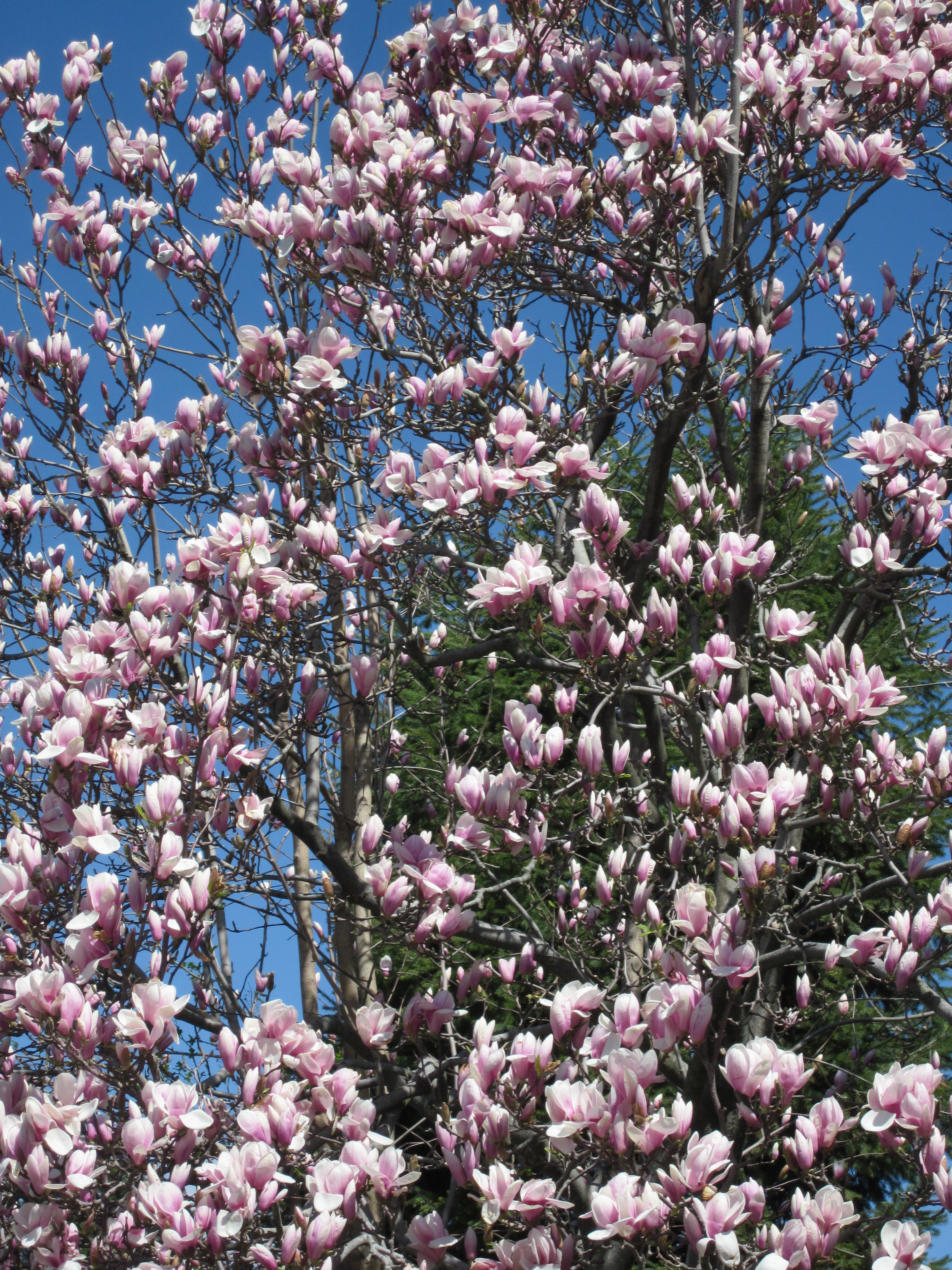
Photograph © 2014 Peggy Kornegger

The idea of perfection is something we all carry around in our heads, applying it to ourselves, our loved ones, strangers, and to every experience in our day-to-day lives. We want to live up to a standard we have set for ourselves—or someone else has set for us. We want others to live up to that same standard, and even more important, we want life to live up to this standard as well. Whatever the standard of perfection is, it involves judgment—and almost inevitably failure, disappointment, frustration, anger. People or events let us down, we disappoint ourselves, and life becomes an experience of disillusionment rather than joy. We have not yet learned to embrace “what is” as the true perfection of life.

Every day in my backyard flower garden, I learn this lesson over and over again. Reluctantly, and sometimes with great frustration, I am forced to give up my mind’s idea of a perfect garden with every flower and leaf intact: no violet leaves ragged with rabbit bites, no hyacinths bitten off by woodchucks, no potted coleus uprooted by squirrels, no rose buds eaten by worms. Each morning is a practice in letting go into loving what is, in seeing the perfection in everything. I prune dead flowers and chewed leaves, remove worms and aphids, but I also stand back and gaze at the beauty of what continues to bloom and flourish. Nature includes all living things (yes, rabbits too), and my role as a gardener is to find a way to live in balance with that wholeness. The curves and jagged edges; the perfect symmetry of inclusiveness. And after an hour or two in the garden, I am always more at peace, more accepting of all of life because I am surrounded by such incredible beauty. Beauty that is constantly changing, just as life is. Nothing remains the same, and that is the miracle of being alive.

Photograph © 2012 Peggy Kornegger

If God or Source energy is in all things and everything I see is shining with that inner divinity, then “what’s not to love?” as the saying goes. Same with animals, same with people. When I judge myself or others against some mental standard of what I think I or they should live up to, I am not appreciating the absolutely perfect creation that we each are. If I stand in judgment of people, life’s events, or my own “failure” to be as enlightened as I think I should be, then I am missing the miraculously orchestrated unfolding of all things in the universe. Nothing is out of place, and everything is evolving and expanding into more. Flowers, animals, insects, and human beings are all playing their parts. So this is a gentle reminder to celebrate all of life’s perfect imperfections as you go through your day—in the garden, in your home, and out in the world. Heaven is all around you, and everyone you meet is an earth angel—absolutely perfect.

Fractals of Life

Photograph © 2013 Peggy Kornegger
I became fascinated with fractals many years ago when I came across two wonderful photography books on nature: Patterns in the Wild and By Nature’s Design. Fractals, or fragments, display characteristics similar to a larger whole. In nature, fractals form repeating patterns that can be seen everywhere. One example is an oak tree, in which the branching pattern of a leaf is the same as the branch to which it is attached, which is the same as the tree itself. A leafless tree silhouetted against a winter skyline shows countless large and small fractals in its branching. The branching of blood vessels in the human body also looks very much like a tree’s branches, as does lightning in the night sky. The spiraling pattern in the center of a sunflower resembles a spiral-shaped shell on the beach, as well as a spiral galaxy in the heavens. Infinitely complex examples of fractals are visible throughout the natural world. These repeating patterns together make up the greater whole of the universe we are part of.

Photograph © 2014 Peggy Kornegger

My own backyard and flower garden are full of nature’s fractals. Perhaps that’s one reason why I love being in nature. I am continually in awe of the colorful patterns I see there, whether bird feather, butterfly wing, flower, or leaf. When I sit and gaze at the beauty with patterning in mind, I begin to see the connectedness of everything on Earth. The tiger swallowtail butterflies that visit my butterfly bush in summer call to mind their namesake, the tiger. An allium flower is made up of tiny flowerettes, forming a larger ball that looks like a small lavender planet. Sunflowers, of course, resemble the sun itself, with rays of golden light shining out. Many other flowers are named for what they remind us of. Cleome, or spider flowers, have long thin stamens that resemble the legs of a spider. Cardinal flowers look like smaller versions of the brilliant red feathers of the male cardinal. And pastel-pink bleeding hearts, which hang by the dozen from the branches of the plant, are indeed just like tiny hearts.

When I work outside in the garden, I am reminded again and again of the extraordinary complexity of the living world. Every plant, flower, insect, bird, stone, and piece of dirt is an integral part of something much greater, of which I too am a part. I look at the sunlight filtering down through the trees, the clouds floating by overhead, the hummingbird darting between the honeysuckle and bee balm flowers, and I feel the oneness that connects every small fragment of life everywhere: I am the leaf and I am the tree. I am the wave and I am the ocean. I am the spiral shell and I am the galaxy. We are all fractals in an infinite, perfectly designed and geometrically sacred multiverse. We are all fractals of God.

The Magic of Springtime

Photograph © 2014 Peggy Kornegger

Every year in early May, I spend three to six hours each morning at nearby Mt. Auburn Cemetery. Why? you may wonder. Well, Mt. Auburn, with its woodlands, lakes, and gardens, is a magnet for songbirds during their annual spring migration. They fly in by the hundreds on the way north from South and Central America. Some of them nest in the cemetery; others continue further to northern New England and Canada. But during the small window of time that they grace our local flowering trees and bushes, birdwatchers are blessed with up-close views of the colorful and musical birds of the tropics. Each year, I see or hear something new: a chestnut-sided warbler and a ruby-throated hummingbird having a territorial faceoff; a flycatcher singing next to a kinglet displaying its usually hidden ruby crown; a Baltimore oriole weaving a hanging nest in a tall maple tree; a wood thrush singing its fluted song on the path a few feet in front of me. These moments are magical—a fleeting glimpse into nature’s secret world.

Equally as exciting at this time of year are the perennial plants and flowers that break through the soil reaching to the light. How do they know when to move upward, when to grow stems, leaves, and flowers from their buried roots? It’s a yearly miracle that I witness both at Mt. Auburn and in my own backyard garden. Tightly furled leaves and flower buds appear first, gradually opening to the sun’s warmth and the longer light-filled days. A plant like Solomon’s Seal begins as a blunt grey/green finger pointing up out of the ground. Day by day, the finger slowly becomes a tall thick stem that bends and arches with opening leaves of fernlike delicacy. Beneath the leaves, along the arching stem, small white buds form and eventually open into a line of belled flowers. Swaying in the wind, Solomon’s Seal is one of the special visual gifts of spring, along with lilies of the valley, violets, grape hyacinth, columbine, and so many others.

Year after year, spring flowers and nesting birds remind me of life’s cycles of rebirth and renewal. After a long icy-cold Massachusetts winter like the one we have just experienced, this is a welcome message. Even in the freezing temperatures, even in the dark, life continues. The birds migrate south and return to raise their families; the plants withdraw into the earth to rest before emerging to bloom again in spring. Humans, too, have their cycles, though many of us have forgotten how to align ourselves with life’s rhythms of rest and renewal. If we look to the natural world, we can see that each living being has its own cycle of birth/flowering, rest/renewal, rebirth. In our over-scheduled, busy lives, we often careen out of control and crash in exhaustion. Yet, if we let go of so much trying and effort and allow life to unfold in cycles of activity, rest, renewal, and rebirth, we will feel so much more in tune with ourselves and all of life.

In spring’s wonders, there is great beauty, but there is also great wisdom, showing us firsthand the ever-turning circle of life/rest/rebirth that we too are part of. Something more powerful than our own attempts to control daily life is at play here. If we surrender to the flow of life that is so stunningly visible in springtime, we open ourselves to both inner peace and connection to spirit.