Life’s Mystery

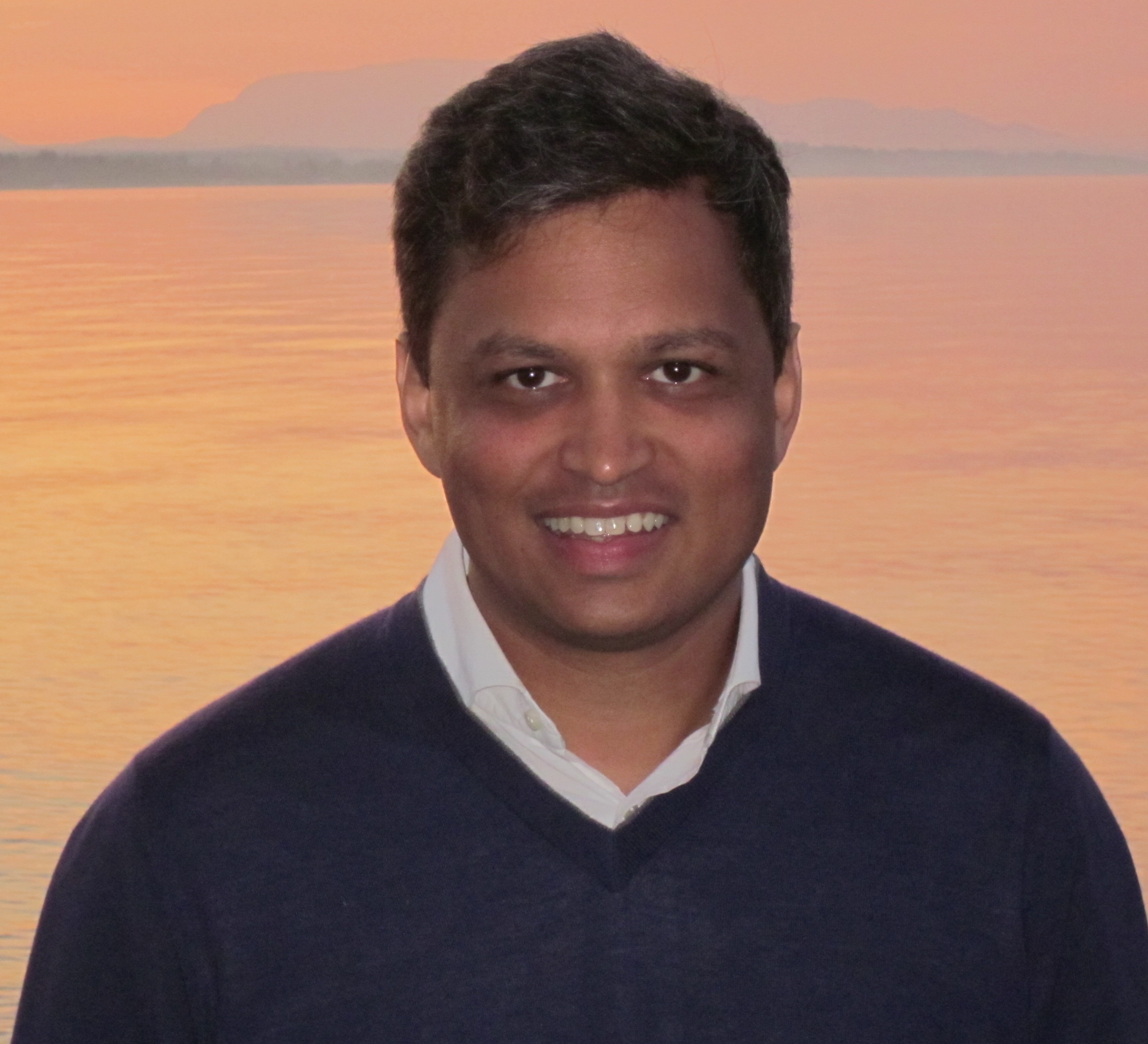
Photograph © 2014 Peggy Kornegger

Some Native Americans use the term “The Great Mystery” to refer to the concept of God or Source energy. It’s such a wonderful usage because within it, humans step back and allow the unknown to be just that—unknown. Many religions spell out the specific attributes of God, the heavenly realm, and its relation to living beings on Earth, including sets of rigid moral codes, laws, and commandments. How much more open-ended is the idea of a mystery that we will never understand with the human mind? Our hearts can experience God or the Divine, but we cannot solve the enigma of existence. Perhaps the greatest wisdom lies in acknowledging that and allowing the Mystery to live within and through us without trying to understand it.

To live in alignment with this mystery involves dissolving identification with thoughts and ideas; then awareness flows freely without conceptual distortion. Buddha mind. Baby mind. The innocent eye. At the beginning of life, we see the world this way—pure perception with no distorting language filters. Toward the end of our lives, words and memories may begin to fall away as we prepare to return to the oneness of pure divine consciousness, in which human language plays no part. In the middle years, we struggle to understand the seeming contradictions and unfairness of life—and the inevitability of death.

Not all of us are driven to figure out the meaning of life and death. I am one of those who has always tried to do so, from early childhood on. Only in recent years have I found my spiritual journey less burdened by inquiry and more open to possibility. This past summer, in particular, I began to let go into “not knowing.” This came out of a weeklong program with Panache Desai in which he challenged me to drop my questions and live from a place of experiencing instead of trying to understand everything. For someone who has perpetually had cosmic questions spinning around in her head, this was indeed difficult, even painful. Finally, though, in the weeks after the program, something in me opened to not knowing as the most peaceful way to go through my daily life. Basically, I surrendered to the Mystery.

I have surrendered in the past, of course, but there are layers to letting go, and humans are never finished with it. We have to keep being reminded, again and again: Relax your fingers; stop clutching. Relax the mind; stop questing. The wider, higher perspective opens up when we allow everything to unfold with awe and wonderment instead of “What’s going on? Why is this happening? How can I change it?” The “control” trap keeps us stuck on a hamster wheel of trying/failing/trying again. Ultimately, surrendering to mystery may be the wisest and least painful path to take in life. Human existence can be miraculous or a curse. We can suffer or we can celebrate. Celebration involves embracing everything, the sadness as well as the joy. We don’t know the meaning or the outcome, but we can fully experience every incredible moment of the journey.

Looking Back Looking Forward

Photo Courtesy of Mike Dubrovich
Recently, a childhood friend posted on Facebook a vintage black-and-white photograph of our first grade class. What a strange experience to look at that picture of unfamiliar school children and slowly begin to see familiarity in their faces. Names from the past popped up out of distant memory. I did not, however, recognize myself. I told my friend that I must have been out sick the day the photo was taken. He wrote back, “Isn’t that you on the far left end of the second row?” I peered at the picture more closely and realized in amazement that he was right. Fascinated, I stared at that blondish little girl with big dark eyes, gazing out into her own future. My future. I looked through her eyes and saw myself looking back. Time ceased to exist in that moment of backward-forward perception.

How often do we stumble across those flashes of memory that stop us in our tracks momentarily, lost somewhere between the past and the present? Some say human life is a series of beginnings and endings out of which we fashion our remembered sense of self in the world. Yet we are so much more than our memories, which are really just a long parade of Instagram photographs that we identify as our personal history, our life’s story. Beyond the mental perceptions of time and our place in it, however, is consciousness itself—an awareness that is greater than any one life. In those brief moments of backward/forward memory jumps, we are given an opportunity to see our life from the soul’s point of view, wherein all time is simultaneous, and everything is occurring now. There is no real distinction between a past, present, or future self. The soul sees one being, experiencing time but not defined by it.

Why would we want to see things from the soul’s perspective? Well, if we completely open to soul vision, we see everything is of a piece, whole. We perceive the oneness at the core of all life. Conflicts, comparisons, and judgments fall away. We can never fail our childhood selves and the dreams they had for the future, because we are those children and we are living those dreams now. We are not lost, nor have we taken a wrong path or made a wrong decision. Everything is unfolding in a way that is perfect for our soul’s growth and evolution.

When I looked back at my childhood self in that photo, I wondered, Where is the “I” that is all of me, girl and woman? My soul answered: I am no where. I am now here. I am present. I AM. Taking a long, deep breath, I felt the wholeness of that “I AM,” a timeless soul presence beyond “where.” No separation—the adult and the child are one. If we open our hearts to the soul’s vision of oneness, we can embrace all possibilities and all selves, and life begins to flow in a less fragmented, graceful way. We are able to see the perfection that is at the heart of our own infinitely expansive lives. Within that perfection, there is no backward or forward; there is just fluid, unbroken, loving presence.

Simply Being

Photograph © 2011 Peggy Kornegger

As I meditate for longer and longer periods of time (1­–2 hours) at daybreak each morning, I am finding complexity and simplicity are merging into one flowing experience. Seems contradictory, I know, but only because of the constraints of language. Put another way, layer upon layer of awareness is opening up within me, yet all the layers are part of one whole, one seamless state of being. I’m discovering it is possible to feel inner peace at the same time that I’m feeling sadness or distraction. I am aware of silence at the heart of all sound, of light at the center of darkness. Beyond the illusion of separation, there is wholeness. Within complexity itself is infinite simplicity. Perhaps the best way to describe all of this is oneness, feeling one with everything, at times just resting without thought in simply being, in simply breathing.

Various spiritual traditions speak of such moments. The Sanskrit word samadhi refers to union or merging with God or the Divine, and the Hebrew word devekut describes intense melding or deep communion with God in prayer or meditation. Humans have tried with words to approximate an experience of Divine union or universal oneness that really defies description. Yet we try.

Because I am a writer, I have always felt a deep compelling urge to describe my own spiritual journeys. Yet, the deeper I dive, the harder it is to find the exact words to replicate what I am feeling. Indeed, during one of my deepest inner experiences of infinity (in a session with Panache Desai), I completely lost the desire to write or describe at all. For several hours, I remained in a state of infinite peace. My journal lay untouched nearby. Lately, as I spend longer periods of time in meditation, this same experience is recurring. Words are unnecessary within pure being, the soul silently witnessing. Language arises from thought, and when thoughts float by without attachment or disappear, there is no need to speak or write. Only, later, as I come to the surface from these depths, do I reach for my pen.

This is not to say that the goal of life is to give up speaking or writing. I guess that what I am getting at here is that the experience of peaceful oneness without words changes you. I perceive the world a little differently. The need for constant intervention and effort diminishes. Events seem to flow of their own accord without my monitoring them. There is a recognition of a higher intelligence at work, an intricate tapestry of which I am but one fiber. And my purpose, as that fiber, is to simply be myself, not orchestrate the entire universe. There is a humility in this, a letting go. It doesn’t mean lack of doing; it means doing that arises from being—a softer, less frenetic approach to life. When I write, the words flow from my soul more than my mind.

Am I in this space all the time? No, of course not. I am human. My mind gets busy, and I start to make lists, feel rushed, etc. But those experiences are becoming more transitory, less all-consuming. My soul self knows better, and that connection grows ever stronger. All of us have that connection, and we are gradually learning its importance. There truly is an inner core of peace. When we open to that peace, one breath at a time, it simplifies everything.

A Life Well-Lived

Photograph © 2014 Peggy Kornegger

When folk singer and political activist Pete Seeger died recently, at age 94, I was filled with great sadness. His larger-than-life presence and spirit, head thrown back in song, will be missed in this world. I also thought, though, that his was truly “a life well-lived,” as the saying goes. From the 1940s to the last years of his life, he spoke out and sang songs for peace (“Where Have All the Flowers Gone?”), civil rights (“We Shall Overcome”), workers’ rights, saving the environment (the Hudson River), and more recently, the Occupy movement. He was tireless, fearless, dedicated, and his heart and soul were in all he did, for human rights, community, and the Earth.

There are so many others who have lived long full lives: Nelson Mandela, Howard Zinn, Simone de Beauvoir, Adrienne Rich, to name only a few. Of course, not all well-lived lives belong to the famous. My own parents, who passed away at 81 and 94, lived long wonderful lives, deeply connected to the natural world around them and to the friends and family they loved. And age is not necessarily a factor either. My dear friend Michael, actor, poet, and musician, died at 39. His life had been creatively filled to the brim while he was alive.

However long they’re here on Earth, some people seem to embody full-out living, treating each moment as a glorious opportunity to experience all of life’s wonders. They stand out in our minds as vital and vibrantly alive. When Pete died, as I thought about the people I know and know of, it occurred to me that perhaps more and more of us are choosing to live our lives as he did. It is a time of great change on our planet, filled with transformation and evolution of all kinds. Many of us are struggling just to survive, but even within those struggles, there is often a deep desire for more than just the material. Our hearts long for human connection, for spiritual connection, and within community and shared experience, we are finding it. There is so much more to life than we can perceive with our physical eyes. Our souls know this, and as we awaken at that level, we will open up to all the possibilities of life, both imagined and beyond imagination.

So, let us take a page from Pete Seeger’s songbook. However long our life’s transit is, let’s live with our heads thrown back, singing, laughing, celebrating every single moment. No half-lives or shelf lives. No sitting on the sidelines and longing for a chance to dance in the circle of life. Let’s step forward fearlessly, heart open, eyes full of light, and fully embrace this precious gift of life we’ve been given. If time is an illusion, as we’re coming to realize, then it’s the quality not the quantity of the years that matters. Let’s make each moment an entire “life well-lived”—expansive, soaring, and full of sweet appreciation.

In memoriam, Pete Seeger, may your beautiful singing spirit continue to inspire us all:

http://www.youtube.com/watch?v=H4YwKPOgz5o

Heart Vibes

IMG_0816
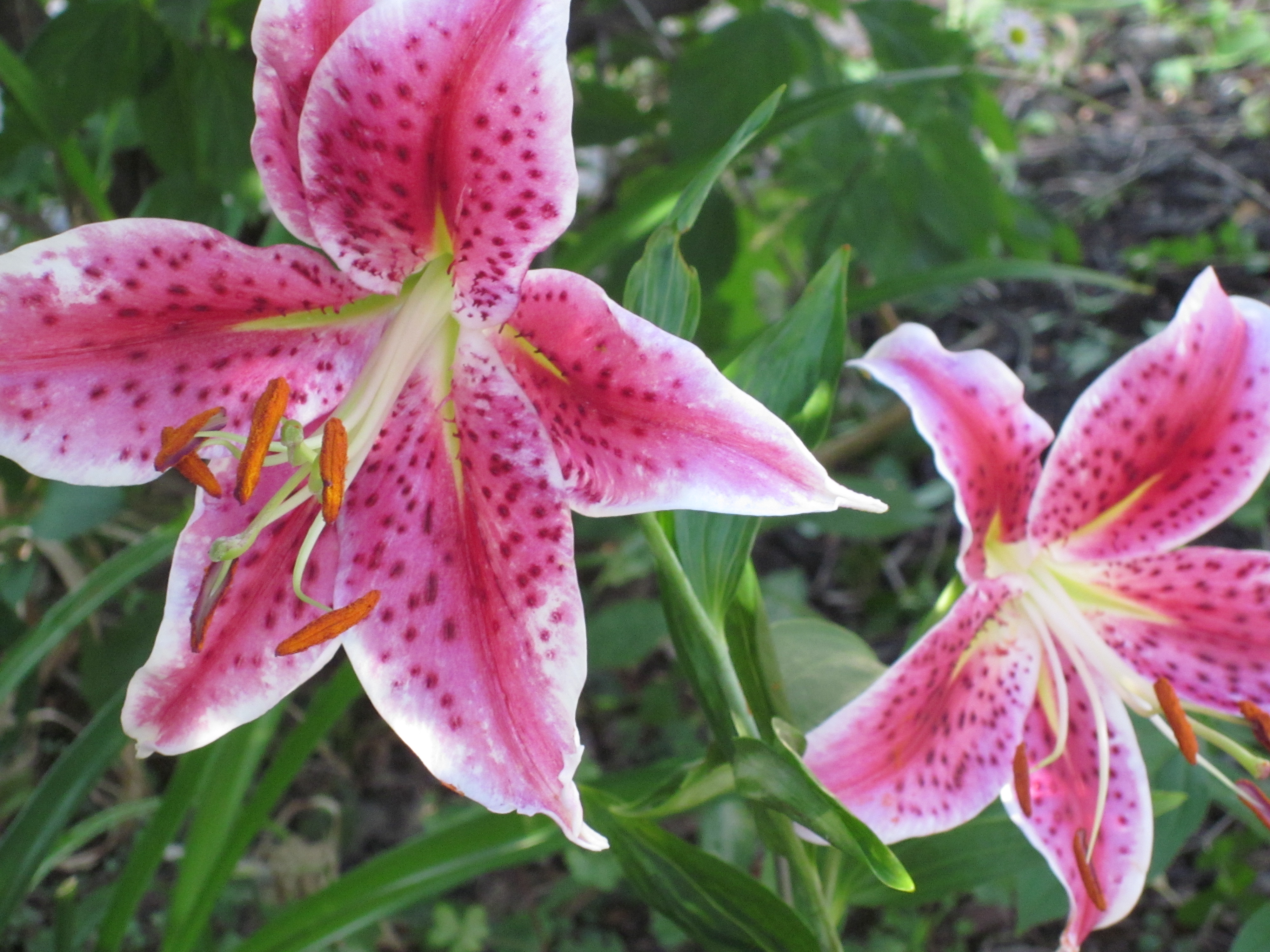
Photograph © 2013 Peggy Kornegger

This year on Valentine’s Day, how about being love instead of just showing love? In fact, how about being love 24/7, 365? What’s the difference, you may wonder. Well, to me, showing love often falls into the realm of expected behavior: cards, candy, flowers on a particular holiday. All very lovely, but there’s more to love than that—a deeper beingness that we are at our very core. Our soul selves, our universal selves, are pure love, connected to our hearts. When we live from the center of our souls, love vibrates outward from our hearts, however we are expressing ourselves, in words or in actions.

As human beings evolve into more open-hearted ways of inter-relating, love will become our modus operandi, whether on a specific holiday or on an ordinary calendar day. An unconditional love that includes love of self as well as love of other. In fact, truly loving and appreciating our unique soul self seamlessly leads to loving others’ uniqueness, too. Every one of us is here to be an individual expression of the universal love. When we recognize that, love and loving behavior become second nature. We won’t have to be reminded by marketing ploys to send flowers or chocolates to loved ones. Everything emanating from us will be an expression of the deep love that connects us all vibrationally in the web of life. You are me, and I am you.

So, on February 14, send out your loving heart vibes via U.S. mail or email, on line or in person, wherever you are and whatever you’re doing. Open your heart so wide that that love will shine throughout all the calendar days of this year and years to come. There’s nothing more important in life than love. And it’s not about doing. It’s about being.