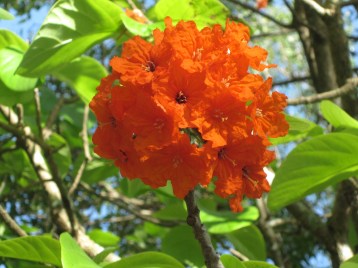
Gratitude Instead of Grievance

Photograph © 2017 Peggy Kornegger
Celebrate the blessings in your life and let go of the perceived wrongs. At the deepest level, everything is a blessing, and those who challenge your identity or cause you pain play their role in your life too. It’s all a giant improvisational drama, this life on Earth. We came into this world with a soul framework, a few costumes, and a troupe of other players. Together we live the magic of life lessons and evolving epiphanies, which lead us forward on our journey.

In grade school, I had two teachers who each embodied different qualities: one, Mrs. Logan, was pure loving-kindness, and the other, Mrs. Wyman, was filled with anger and a need to control.* Both of them taught me human lessons beyond the classroom and had an effect on my life that I’m beginning to see more clearly now after all these years.

Mrs. Logan was my fourth grade teacher, and she was sweetness personified, always giving us interesting games to play between lessons as well as free time to read on our own (my favorite). She was extremely patient and listened attentively to our day-to-day life stories. She also told us about her own life and her grown daughter. In many ways, she was like a second mother to each of us, and everyone loved her. I cried at the end of the year when I said good-bye and later told my mother, “There will never be another Mrs. Logan.” She was my all-time favorite teacher, and I’ve never forgotten how genuinely loving she was to me.

Mrs. Wyman, on the other hand, scared me to death. When I was a shy first-grader, she grabbed me harshly by the shoulders one day in the lunchroom and hissed, “Next time you throw away the crusts of your sandwich, I’m going to make you take them out of the garbage and eat them.” In sixth grade, when I entered the art room (yes, she was the art teacher) as the bell was ringing, she proclaimed me late and made me stay after school and write “I will never be late again” over and over for an hour. Quiet, good student that I was, those two incidents both frightened and embarrassed me. And at the sixth grade level, it also filled me with outrage at being unjustly accused. (My locker had stuck and I was “late” because of that.)

So, right there, my life path was laid out before me: a peaceful warrior for both justice and love. In my twenties I became first a hippie flower child and then a political activist, later a radical feminist. Love was at the core of everything I believed in, a love that was inclusive of all peoples and the Earth. I had no patience with authority or hierarchy of any kind (what a surprise). Over the years, I watched as the patriarchal paradigm that we all grew up with slowly start to be challenged and disrupted by women and men alike. New options, based in freedom and equality, rose out of the growing awareness of each successive generation.

The old top-down structures still hang on, but something else is being born. Something circular and flowing and filled with life. I see myself in the students now who are standing up against violence and power politics. The heart of love continues in them in spite of the forces waged against it, and the people who have been wounded reach out in compassion to others who are suffering. The deeper truth is that those doing the wounding were also wounded themselves. They too are suffering. It is time for the cycle to be broken.

Looking back I can see the loving-kindness in Mrs. Wyman that she was unable to express because of her own core wounding. I no longer feel anger toward her but only empathy. And also, interestingly, gratitude. She helped me find my voice in the world. She, along with Mrs. Logan, helped me become who I am today. Every single person in our lives plays a role, one taken on before birth. When we can see life the way God sees it, we understand that there is only evolving, expanding awareness, only love. So let go of your grievances, and embrace gratitude instead. That one opening will liberate your soul from the constraints of all your stories about the past.
___________
*Names changed

The Experience of God

Photograph © 2017 Peggy Kornegger
God is everything. Yet within that everything, God has many aspects of being, from formlessness to form. At the center of the universe (actually before the universe became the universe) is just Source energy, pure potential. In some teachings, this is called the absolute, or “I.” It is the precursor to the Big Bang: out of nothing came something, out of absolute being arose relative being, or “I Am,” wherein God becomes relatable, experiential, as love, as consciousness. When we on the spiritual path feel divine love, when we expand into conscious awareness of something greater in our lives, we are experiencing the “I Am” at the soul level.

The next aspect is “I Am That,” in which we as humans identify completely with our physical forms, personality selves, or egos, and forget our divine connection. Forgetfulness is the common state for humanity at this time. In forgetfulness, we get caught up in all the polarities and dramas of human physical life on Earth. Our minds, emotions, and bodies are our primary experience, and the soul takes a backseat, often completely overlooked. This also is God, but it is God forgetting that it is God—something we all experience before we awaken again into the “I Am,” the love we came from.

In the collective awakening that is happening more and more on this planet, we reconnect with our souls, with the God within. This is the primary experiential focus for many of us who have incarnated at this time—to expand in awareness from “I Am That” to “I Am” and finally to “I.”

My own life has taken me through all three aspects at different times. Most of my early life was spent in “I Am That.” I dropped much of my socially created personality when I left my small-town home at 18 and went away to college to “find myself.” I spent years exploring “who am I?” and “why am I here?” I often felt lost and in despair during this self-exploration because I couldn’t really see beyond the Earth plane. I was on a spiritual quest, but I didn’t know it as such. I found meaning and a new kind of self-identification within the breakthrough experiences of my generation in the late 1960s and 1970s—flower-child consciousness and political activism. Belief in Love defined my life and informed all the experiences I had at that time. It was a period of awakening, but at a beginning level.

Many years later, I began a conscious spiritual journey, which eventually took me to “I Am,” experiencing God, or universal consciousness. This occurred in my own spiritual practices (meditation, yoga, programs with inspiring teachers), in Nature, and eventually I found that divine connection existed within me at all times. These were powerful moments of bliss and joy, when tears streamed down my face at the all-encompassing loving Godness that filled me. I began to live more and more from my soul (and my heart which is the entry point to the soul) instead of my personality or ego. My fears around infinity and death gradually began to be replaced by trust and surrender to something greater than my single human life. Yet, there was more.

I am only now beginning to touch into “I,” or the absolute. I experienced it once years ago at the very start of my work with Panache Desai, when in an individual session, he took me there. More accurately, he accessed that state within himself, which opened the door for me to access it within myself. It was a completely emotionless state of peace beyond peace. This was infinity, on the other side of any fears my mind could invent about it—because there was no mind, no me. There was nothing. I remained in that state for hours, with no desire to do anything but rest in the experience. It made a huge crack in my previous level of consciousness, and deeper awareness began to trickle, and then gradually stream, in. Because of this crack, I was able to experience God in ways I never had previously.

The door is opening wider now to that fathomless, directionless, experience of absolute potential, where God is not even a definable entity. In a recent immersion retreat with Panache, I found myself “lifting off” into that state, like a hummingbird spiraling upward into invisibility. Here there is no language, no recognizable signposts to point to, so when I “return” (actually, there is no return because it is ever-present, the source of everything), I can find no words to describe it. A woman at our retreat called it the place of “no God”—in other words, God before God is seen by us as God. And it’s not frightening because fear doesn’t exist. As I said, indescribable.

These are the states that great masters throughout time have spoken of and, seeing into the future, told us: “All this you will experience, and more.” I have no idea where I am going on this journey; every bit of it is beyond my human “understanding.” It’s a Great Mystery that I am here to experience in its eternal expansion through formlessness and form, emptiness and fullness, potential and presence. In all honesty, the “I Am That” in me at times still fears the nothingness of the “I” and wants only the loving comfort of the “I Am.” Yet my soul knows they are all God, all one unified ocean of energy and light within me and all around me. Separation and fear only exist in my mind.

Living Kindness

Photograph © 2017 Peggy Kornegger

We learn kindness and patience step by step, sometimes in the receiving, sometimes in the giving. And sometimes, even more powerfully, in the shadow experience: through thoughtlessness or impatience, our own or someone else’s. Hurt by hurt, mistake by mistake, we walk forward into the swirl of human emotion and interrelationship. We learn about pain by being hurt as well as by hurting another. Someone else’s anger or offhand remark can cut to the quick. But to see pain in a loved one’s eyes from our own unthinking or harsh words is to know the other side of pain. It can break your heart, but in the breaking is the opening­—to compassion, to kindness.

When I look back honestly on my own life, I see moments that have taught me, painfully, to be more compassionate and aware. In the years before my mother’s death, she began to have challenges with both her eyesight (cataracts) and memory. I felt tremendous responsibility and fear around making sure she was okay. Once, after a doctor’s appointment, I was asking her questions about what had transpired (What did he say? Did you ask him about ____?). She couldn’t think fast enough to answer me and finally burst into tears. Abruptly I realized I had to slow down and just listen patiently instead of question her. I could see the pain in her eyes at not being able to answer me quickly. It stopped me in my tracks, and I hugged her. What did the answers matter when my mother’s ease of mind was at stake?

Years ago, my partner Anne and I were traveling in the south of France after visiting a friend in Paris. The morning newspapers brought stories of bombings in Paris, which made us apprehensive about returning. Still, we continued to enjoy our trip before heading north again. After our train reached Paris, we began to walk (a bit nervously) across town to our friend’s apartment, but at a certain point we needed to ask directions. I didn’t want to ask because I couldn’t remember the exact French word (I had lived in France years before and felt I had to say it properly or not at all).

Anne thought this was ridiculous and went ahead and asked anyway. She was understood, answered, and we were on our way. I, however, was angry with her (and myself) about it and insensitively pointed out a mistake in her wording. She began to cry. I can still see her walking by the Seine with her heavy backpack, sobbing. It broke my heart, and I apologized with tears in my eyes. What does perfect French (or potential bombers) matter when you’ve just hurt the person you love most in the world?

This is what it means, I suppose, when they say we relive our entire life, all of it, in a split second before we die. We see the times when we were caring and compassionate as well as when we caused suffering or pain. If we are fortunate, we come to realize before that last moment the ways in which we affect others, and we self-correct to be mindfully conscious of the power of our words and actions. We learn to choose kindness in every situation. Just like the wisdom teaching about asking yourself three questions before speaking: 1) Is it true? 2) Is it necessary? 3) Is it kind? In most cases, a “no” answer to any of those prevents us from hurting another.


Fear of Flying—Let Go, Let God

Photograph © 2017 Peggy Kornegger
I used to be the classic “white-knuckle flyer.” I was in such a terrified state that I would clutch the armrests and tightly squeeze my partner’s hand to the point of cutting off her circulation. And this wasn’t only during episodes of turbulence; it was at every takeoff and landing and throughout the flight. Anti-anxiety drugs like Xanax or Valium had little effect. Wine only made me sleepy. Visualizations and positive affirmations couldn’t touch the core of my fear. I was convinced I was going to die at every sound or movement of the plane. It took courage to keep flying in the face of that, but I did. Still, no matter how I tried to reframe airplane travel, I remained stuck in my mind’s perceptual prison of danger and unease.

That is, until I met Panache Desai. It wasn’t just the expansive spiritual framework that he introduced me to. It was the experience of God that I first had through his programs and in his presence. The terror of infinity/eternity I had felt since childhood (which was probably feeding my fear of flying) gradually softened into tentative trust in something greater than my own singular life—and finally faith. I began to experience infinity as God, as a peace-filled spaceless space, which, if I surrendered to it, completely enfolded me in its loving embrace. It was an experience of the soul not the mind. That is what changed everything, slowly but monumentally.

I gradually began to fly without fear. At takeoff, I would relax into the power of the energy that was lifting me into space. It was exhilarating instead of terrifying. When the plane floated downward toward the landing strip, my consciousness floated with it. During the flight, I started to look out the window to see the worlds we were passing through instead of staring straight ahead or sitting rigidly with my eyes closed. Prairies and mountains, rivers and lakes, constantly changing clouds, sunrise and sunset, all were visible beyond the plane’s windows, and I had refused to look for years. Suddenly, I couldn’t stop looking, and I began to request window rather than aisle seats. I was Alice stepping through the looking glass into the full magic of life on (and above) Earth.

The flight during which it really hit home that I was no longer frightened was between Boston and San Francisco. I was meditating quietly as we crossed over the Midwest and headed westward. Suddenly, something moved me to open my eyes and look out, and there beneath the plane was the entire span of the snow-covered Rocky Mountains reflecting radiant light in the morning sun. The shining peaks stretched into the distance, their magnificence filling me with awe and bringing tears to my eyes. I was looking through the eyes of my soul, and my soul saw God, saw infinity, and knew no fear.

Ever since then, I have felt deeply connected to God when I fly. “Connected” isn’t quite the right word. The experience is of God looking out at God, everywhere. There is nothing within me or within my gaze that isn’t God. And being thousands of feet up in the air allows me to have that infinite divine perspective. One that is different from that we have on the ground. What we see here is miraculous and beautiful. What we see up there is beyond words.

Last month, on a plane from Dallas to Santa Barbara, I was able to experience the Southwest from above in a way that opened up my consciousness even further. I have traveled, and hiked, there many times over the years, but now I was seeing the whole area as one limitless vision: the pink expanse of the Painted Desert, the red cliffs and rock formations of the Sedona area, and the sandy brown and beige desert nuances in between. The topography was of a piece, not cut up to fit a state map or a hiker’s trail guide. It was all one, and in looking at it from above, instead of immersed in it, I could see the seamlessness of all life. I could see God. On the other side of all my fear was wonder, infinite wonder. And profound gratitude.


Celebrating Solitude

Photograph © 2018 Peggy Kornegger
Even though I’ve been in a couple for 35 years, I love being alone. It’s been a part of my life since childhood. I grew up as an only child on five acres in rural Illinois, where I spent a good portion of my childhood playing outdoors alone (or with my dog) and sitting in trees reading. I don’t ever remember feeling lonely. My parents and I were close, so I was with them a lot too, and I had school friends who came to visit, but at the core of my life was time spent in solitude. It became the peaceful center from which I lived outward into the world. As an adult, I always relied on time alone to come back to myself, away from jobs and social situations. Don’t get me wrong—I loved my friends, but there was a certain point at which I had to step away and be alone. It was like breathing to me.

I have so many memories that involve finding joy in being by myself. One of the most vivid was when I worked for a senator as a student intern in Washington, DC, in college. One lunch hour I wandered around outside the Capitol Building alone and then sat in the sun in a quiet spot where no one else was walking. I can remember having a sudden flash of absolute exhilaration when the thought crossed my mind, “No one else on Earth knows where I am right now.” There was something incredibly exciting about that to a 19-year-old living in a new city, trying out grown-up life on her own. I’ve never forgotten that feeling—of being an alive, independent, free spirit in the world.

When I took up bird-watching many years later, I felt a similar thrill being alone in nature: a magical aura that surrounded a sudden encounter with a migrating bird in a bush or tree. If I were absolutely still and silent, the birds came closer and continued with their bird lives as if I weren’t there. It was a precious gift. There were even times when a wood thrush or warbler would land in a branch close to me and sing its heart out. Some kind of special connection occurred then—a living awareness that passed between us. I treasured those moments. It was perhaps my first conscious experience of the spirit of life that is in all beings.

After I embarked on a spiritual path in my 30s, time spent alone in meditation or contemplation became central to my journey. I found it absolutely key to have those daily periods of solitude in order to connect with my own soul and with God. In solitary silence, “stillness speaks,” as Eckhart Tolle has written. Divine connection is an inner experience that comes only when we set aside all external distractions and open our hearts and souls to something greater, beyond the material world.

These quiet moments are extremely precious to me. They are at the core of my life as a human/spirit on this Earth. Ultimately, too, they bring me closer to those around me. I am fortunate in having a life partner who understands and supports my wish to have alone time. She too needs time to herself. When we come together from our separate solitudes, our connection is even deeper and more loving.

Words are often unnecessary with friends and family who share this kind of connection. Something beyond verbal language is passing between us. We recognize and celebrate one another’s souls when we are together and carry our heart connection with us when we are apart. This is life on Earth at its most expansive and wonderful. To me, time spent alone is an essential part of being human, of being conscious spirit in physical form, which is why we incarnated at this particular time on this particular planet. The world is full of so many distractions. It is only in stepping aside and looking inward that we find the true nature of who we are in this extraordinary universe. Every day I say a prayer of gratitude for the solitude that is a sanctuary of peace in my life.