The Zen of Bird-Watching

Photograph © 2013 Peggy Kornegger
If you want to develop greater inner patience and be a better listener, become a bird-watcher. If you want to learn how to remain motionless in absolute silence for open-ended periods of time, become a bird-watcher. And, if you long to experience being so centered in present-moment awareness that nothing else exists, become a bird-watcher. Sound kind of Zen-like?

More than 20 years ago, I became a bird-watcher for none of the reasons mentioned above. I loved birds, that’s all. I loved their colors, their songs, their marathon migration flights between South and North America. Everything about them was awe-inspiring. Gradually, however, bird-watching also became a spiritual practice for me. Because my interest in birds developed simultaneously with my interest in meditation, the natural similarities became interwoven in my consciousness. Both meditation and bird-watching involve focus and quiet; they also require awareness and presence. I found that whether I was sitting in meditation at home or walking meditatively outdoors in nature, my inner consciousness and my outer behavior were almost identical.

Over the years, the peace that I feel while meditating or bird-watching has brought with it an underlying joy at being alive. In fact, the distinction between meditation and normal waking consciousness has blurred for me. The practice of centering my awareness in the present moment makes all of life a meditation. And never more so than springtime in Massachusetts, when birds by the thousands fly from the tropics to mate and raise families in North America. Every year, bird-watchers eagerly anticipate the magic of this relatively small window of time when the birds are passing through in a parade of colors and sound. Why the excitement, you may wonder?

Well, to me, their brightly colored spring plumage (reds, oranges, yellows, blues, greens) and their varied spring songs are just plain thrilling to see and hear. One of the first sounds signaling the coming seasonal changes is the ringing-telephone song of the red-winged blackbird (photo above). He lifts and spreads his wings to show off his colorful wing patches when he calls. As migration begins in earnest, the songs of the wood thrush and veery fill the woods with an ethereal flute-like quality that make me feel as if I have been transported to a sacred outdoor chapel. Two of my favorite birds are the orange-and-black Baltimore oriole and the red-and-black scarlet tanager, whose saturated colors often evoke audible gasps from bird-watchers when sunlight hits their feathers. Then there are the tiny warblers, in a class all their own, with an infinite variety of markings, colors, and songs. I especially love the blackburnian warbler, whose throat radiates a deep neon-orange in the sun, and the Canada warbler, whose lemon-yellow chest and throat are accessorized with a delicate black “necklace.”

It’s each bird’s unique beauty that captures my heart and transforms mere watching into something deeper. Meditation, contemplation, Zen peace of mind/spirit—but also more than that. There have been times when a bird has landed on a branch directly in front of me and begun to sing, looking directly at me. A thread of light, of living attention, links bird and human for a moment in time. It is then that I experience that miracle of connection that makes me believe unequivocally in the familial relationship of all beings on Earth.

The Simple Life

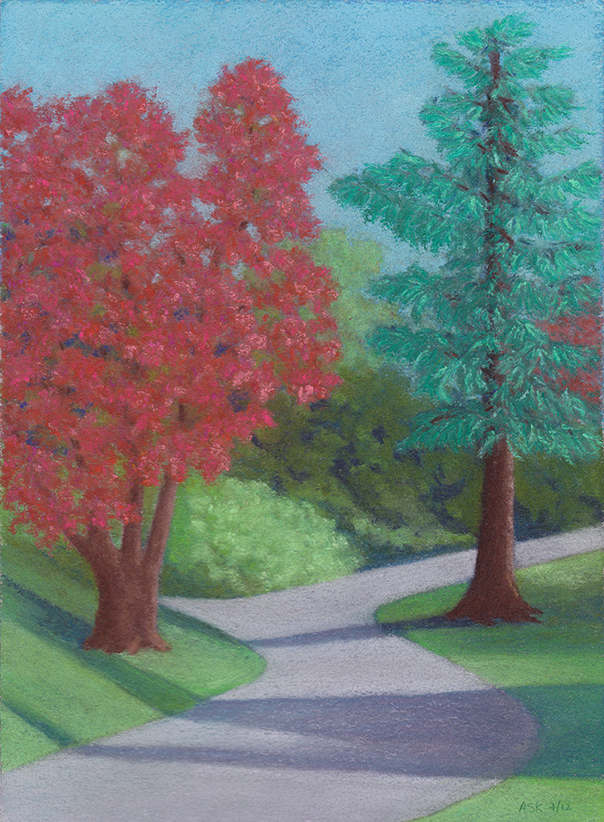
© 2008 Anne S. Katzeff / Artist

I have always loved the expression “Live simply so that others may simply live.” Implicit in that statement is a recognition of interconnectedness—an understanding that what I do affects the lives of others. If I live without conscious awareness of each of my actions, the entire planet feels the impact. Something as seemingly small as conserving water or buying locally grown organic food makes a difference in the world. How we live creates our future, now.

Equally important is stepping away from the emphasis on consumerism that permeates U.S. culture, especially during the holiday season. Commercials, advertisements, and the mass media promote material acquisition to the point of excess. Much has been written about our throw-away society in which people endlessly buy and discard, buy and discard, overloading landfills and polluting the environment in the process. Segments of the population live in poverty while others aspire to the “lifestyles of the rich and famous.” Money, cars, houses and all sorts of material goods to fill them is supposedly the American Dream. But is it really?

True abundance has absolutely nothing to do with money or possessions. It’s an ongoing appreciation for life’s simple gifts: air to breathe, food to eat, love of family and friends, the beauty of the world around us. Filling our lives (and the planet) with things is not abundance; it is waste. Waste that leads to an inner emptiness. If we continually look outside ourselves for fulfillment, we will always be seeking, always feel somehow lost and lacking. It is the simple life that brings the greatest contentment. Moment to moment, we eat, sleep, laugh, love. We can find extraordinary pleasure and fulfillment in the simplest, most uncomplicated activities of living a human life on Planet Earth. Chop wood, carry water, as Zen Buddhism describes life before and after enlightenment.

These are not unreachable aspirations restricted to those who want to live alone in the woods like Thoreau or achieve spiritual enlightenment. Some would say that we already have enlightenment within us, that we are already filled with infinite abundance and love. I believe this. My life is rich in countless ways that are not dependent on monetary wealth. It is the simple joys of daily life, sunrise to sunset, wherever I happen to be, that fill my heart to overflowing. In this time of evolving human being-ness, I think many people are now beginning to feel within themselves a desire for greater simplicity, inner peace, and a connection to the source of all life on Earth. May it be so, for each and every one of us.


For the Love of Bees

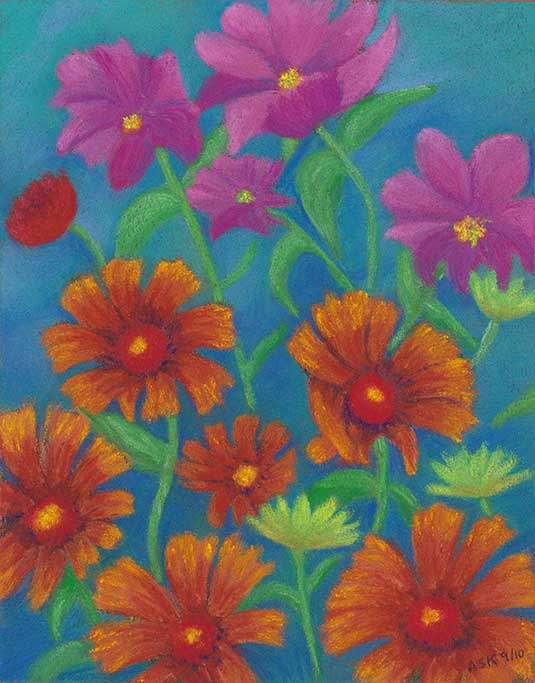
Photograph © 2012 Peggy Kornegger
Now that winter is over in New England, and spring bulbs are blooming in my garden, I am filled with sweet anticipation for the coming months of summer flower abundance. My life has increasingly revolved around the change of seasons since I moved to a house with a yard a few years ago. Although I have always filled my apartments with houseplants, I had never really gardened outdoors before. I read up on which flowers and bushes would bring butterflies and birds to the garden and slowly began to learn how to become a “midwife” to plant life.

Soon, butterflies and birds did indeed begin to frequent the flowers and bushes in my yard. Unexpectedly, though, it was the bees that completely stole my heart. I discovered that there were at least 5 or 6 different kinds that visited the flowers, including honeybees and bumblebees. I watched them all and learned more all the time, just by observing their behavior. The evening that I discovered a bumblebee curled up for the night on the petals of one of my zinnias, I fell in love. I felt such tenderness, as if it were my own child.

Over the weeks and months, I found that bumblebees also “slept” on blanket flowers, bachelor buttons, pincushion flowers, sedum, cosmos, and the butterfly bush. Their most interesting bed, however, was the 6-foot-tall Joe Pye weed, which has large clustered fluffy pink blossoms. In the late evening, I would often find 8 or 9 bees on the different levels of flower clusters, snuggled into their own down comforters. When it rained, they would hang beneath the flower clusters, using them as umbrellas while they rested.

In the mornings, if it was cool or damp, the bees would often “sleep in” until the sun warmed the air. Sometimes I would see a bumblebee slowly stretching its legs, one by one, as if limbering up after its night’s immobility. I always wished them good morning and good night, and I believe they were aware of my presence as a “friend,” occasionally buzzing up to my face in greeting. I’ve had butterflies behave in a similar fashion, sometimes even landing on my chest or arm to sit in the sun. It was a beautiful life lesson about the conscious intelligence of all beings.

Bees, which many people hardly notice, provide irreplaceable support to the cycles of life on Earth by pollinating the flowers. The massive deaths of honeybees and bumblebees in recent years have been heartbreaking. The probable cause: pesticides and herbicides used by agribusiness, landscapers, and often homeowners as well. It is my hope that people will begin to understand the wisdom and urgent necessity of gardening and eating organically, for the health of our bodies, our planet, and all the creatures that inhabit it. You only have to fall in love with one flower, one tree, one animal, or one bee to feel the interconnectedness of all life. In one(ness) is the survival of all.

Note: A reader has reminded me that GMOs are another likely culprit in the collapse of bee colonies. Thus the key importance of the current consumer campaign against GMOs in the U.S. For more information, visit: http://www.organicconsumers.org/bees.cfm.

Peace, Love, and Extreme Fear

Photograph © 2013 Peggy Kornegger
Is it possible to remain peaceful when you are faced with extremely frightening events? Can you feel fear and peace simultaneously? And hold love in your heart through it all? More and more, we are living the answers to questions like these. In Massachusetts, where I live, during the 2013 Boston Marathon, residents found themselves in the midst of a terrorist drama that dragged on for five days. As fate would have it, I was away from home, on retreat with Panache Desai in Florida, during that exact time period. Within the group of 46 people from all over the world, there were several of us from Massachusetts.

We first heard the news about the explosions at the Boston Marathon when the daughter of one couple phoned her parents in tears. Remembering with a terrible sinking feeling that my partner was at the marathon, I left the session to phone her. Finally, I got through and cried with relief upon hearing her voice. In the days that followed, those of us from Massachusetts kept in touch with loved ones back home, supported by the deep caring of others in the group, many of whom knew firsthand about living with political unrest and violence in their own countries. Panache himself grew up in London, where bombings were an ongoing part of life.

During the course of the week, together we held a space of peace, love, and compassion for those in Boston as well as for those elsewhere in the world who face terrorism, violence, and gut-wrenching fear. True, we were one step removed from the events in Boston, but because many of us had family and friends there, the fear was very real for all of us. Each day brought some new painful piece to assimilate. On Friday, when I learned that pursuit of the two suspected bombers was taking place less than a mile from my home, I once again felt adrenaline course through my system. On the phone, my partner told me that the entire city was under lockdown, and she could hear helicopters flying low over the house, searching the area. It was surreal—and frightening. Yet, even in the midst of it, she and I found we were able to remain relatively calm and centered. “Breathe,” she said to me. “I’m here. I’m okay in this moment.”

And that’s how we got through the week, one breath, one moment, at a time. Feeling everything and letting it flow through our bodies. All of us in Panache’s group were experiencing our various individual fears and pain within the larger spaciousness we had opened ourselves to—allowing instead of resisting what had occurred in the past and what was unfolding in the present. I’ve found such a deep wisdom in that process. For me, it means being open to every part of life—embracing it all, every exquisite or excruciating minute. Within that embrace is a peace that helps me to live my life with less suffering and tension, even in the middle of frightening or upsetting circumstances.

Back home in Boston, I was especially moved by the stories of those who stepped forward to help others during the explosions and by the community spirit that flowed within and toward Boston from individuals and groups across the country and around the world. A One Fund was established to help those most affected by what occurred. One, oneness—it was empathy and heart-felt love that people were feeling. May that love continue to expand, and may we peacefully heal the separation that gives rise to violence.

“The greatest gift that you can offer our planet is the gift of your peace.”—Panache Desai

Don’t Miss the Miracle

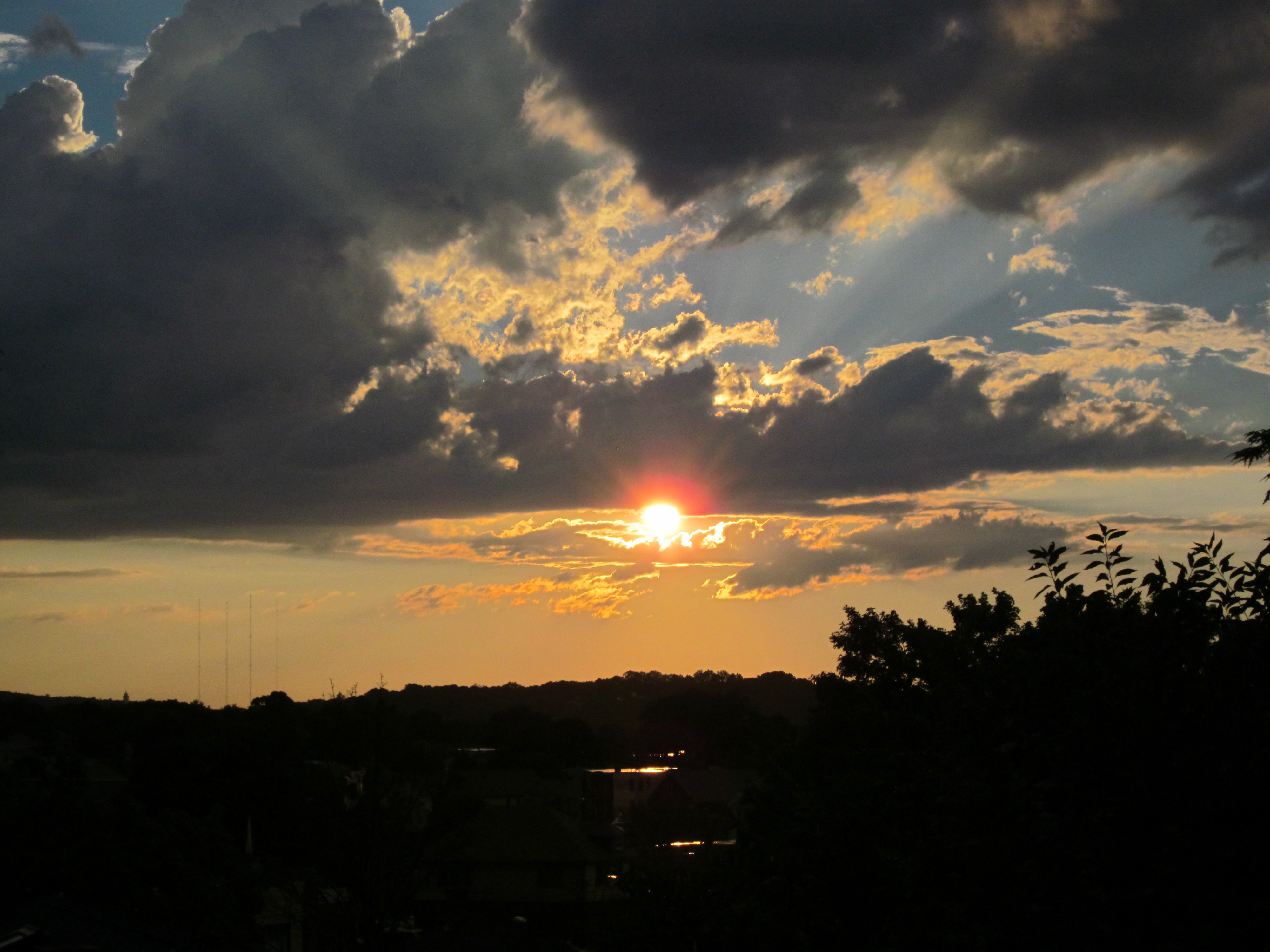
Photograph © 2012 Peggy Kornegger

Sometimes we are so submerged in the day-to-day details of our lives that we forget to look up and see the bigger picture. Literally. With our heads down, focused on our endless to-do lists, we lose sight of what is really important in life. It’s not the errands, tasks, or dollar signs that will pass before our inner eyes at the end of our lives. It’s the people we’ve loved and the moments of wonder and joy that we’ve experienced we will remember as we leave this lifetime. As we navigate this time of global awakening, we are being continually reminded to see the miracles in every moment. And we need those reminders. At least I do.

It is so easy to forget, to lose yourself in thoughts or distractions. Yet, if you just remember to take a breath and look around, there is extraordinary beauty everywhere. The other day, as I waited for the bus, I watched towering cumulus clouds forming huge white cotton balls against the bluest of skies. Then, slowly charcoal-gray rain clouds moved in, creating a dramatic play of darkness and light. The entire sky was filled with an infinite variety of cloud formations, and I felt blessed to be standing there at that particular time, witnessing Nature’s pageantry. The rest of my day was uplifted by the experience.

Such moments are not infrequent if we just pay attention. Often it’s as simple as walking to a window in the early morning or evening. Daily, the sun puts on a radiant multicolored light show as it rises or sets. Each day is different. Like snowflakes, no two sunsets are the same. And the colors frequently linger well after the sun has disappeared below the horizon—mauves, lavenders, and pinks against an indigo sky, as the stars begin to appear faintly. What more could any human ask of a day on Earth?

Of course, equally important as connections to the natural world are connections to other human beings. Those we love, friends and family as well as those we may just meet in passing, bring us warmth and happiness if we have ongoing appreciation for each person’s uniqueness. There is a cashier in the store where I buy my groceries who is a true master in the art of appreciating people and lifting their spirits. He always has a smile and friendly word for everyone who passes through his line. I learn from him each week how simple it is to be kind, and what a difference it makes.

At times, life’s passing irritations or problems cause us to forget how special the people and experiences in our lives are. Yet, each one is a miracle—each passing cloud or ray of sun, each spring flower, and each extraordinary person. Every single moment is a miracle, even the challenges. Don’t miss your life as it unfolds before you in glorious living color.