Whose Hands Are These?

img_4914

What is sound before hearing, world before language, being before the idea of it? A baby, who has yet to develop a conceptual framework or ego, sees the world solely as spirit without words or ideas. That conscious spirit, that pure awareness, exists within us all beneath the layers of egoic stories and beliefs that we have gathered over a lifetime. The soul, or spirit, is our inner home: the Great Mystery silently witnessing life through our eyes.

A few months ago, I was on my way to a silent retreat in Florida and was reading one of Adyashanti’s books, Emptiness Dancing, on the plane. As I sat absorbing what I read in an almost-meditative state, I grew sleepy and gradually dozed off. After a short time, I opened my eyes and looked down at my hands resting on the book in my lap. “Whose hands are these?” passed through my not-fully-awake consciousness. This question was not “mine”; it came from that place before “I.” For a second, there was only the mystery, prior to my idea of me. Then “I” returned and recognized “my” hands. It was a moment of deep connection with that conscious spirit within, a step beyond anything I had experienced previously.

Occasionally, when I am in deep meditation for a prolonged period of time, I slip silently into a space without boundaries, infinity opening infinitely. I perceive my physical body as a temporary container for this eternal beingness without form. It is an exceptionally peaceful state that I always long to return to, but it is not reached by an act of will, of course—only by completely relaxing and letting go. That kind of letting go is an ongoing evolutionary process for human beings now, and we all need almost daily reminders to release the reins of control. Meditation definitely helps, and certain books do as well. Although on the surface meant for the mind, books like Emptiness Dancing slide between the cracks and reach our soul without our realizing it at first. My own experience on the plane awakened the “I” of me to that place of conscious spirit before and beyond form, if only momentarily. A new and more profound level than I had reached through meditation alone.

We are all heading in this direction, I believe. The Divine is always patiently waiting for opportunities to show us our divinity, our presence within infinite consciousness beyond the parameters of body and mind. During these extraordinary times of increasing awareness and awakening on our planet, the moments of passing effortlessly between form and formlessness may become more and more prevalent. After all, it is not alien to us. We were formless before birth, and we will be formless again after death. Perhaps this time on Earth is tutoring us in eternal fluidity and flow, which is the heart of divine consciousness in the cosmos. We are gradually learning not to be afraid of that mysterious unknown realm but instead to embrace the magnificent wonder of it.
The Cutting Edge of Courage

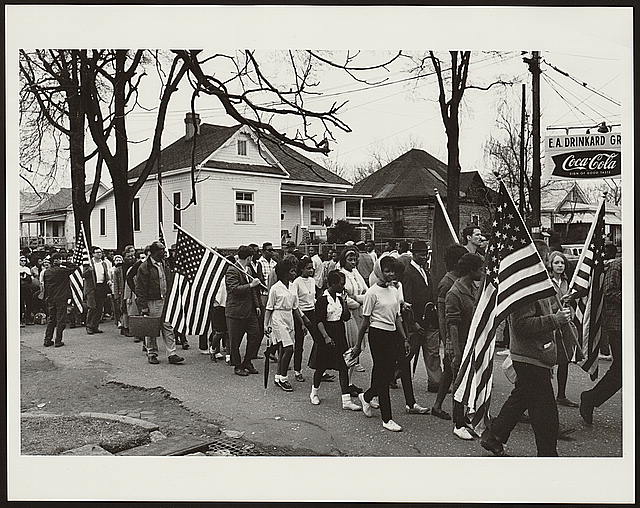
March from Selma to Montgomery, 1965 (Library of Congress)
March from Selma to Montgomery, 1965
(Library of Congress)
In the past few weeks, I have seen two incredibly moving and inspiring films: Selma, about the historic Selma-to-Montgomery march in 1965, and The Normal Heart, about the beginning of the AIDS health crisis in the 1980s. Perhaps because I lived through both of these time periods, the subject matter hit me hard as I remembered the events recreated in the films. Selma chronicles three key civil rights marches in Alabama (two stopped, the third completed with federal protection) that challenged the pervasive racism and violence preventing African Americans from voting in the state. The main characters are based on real people, including Martin Luther King Jr. The Normal Heart is the film version of Larry Kramer’s play of that name, which addressed the public silence and denial that accompanied the rise of AIDS and the radical activism that brought the epidemic to the nation’s attention.

As I watched each film, I was struck over and over again by the extraordinary courage displayed by those who lived through these events. Not just mental strength and physical fortitude but raw unglamorous day-to-day courage that frequently meant facing not only hatred and violence but also the deaths of loved ones and one’s own death. Out of that matrix of fear, hope, anger, and pain, people rose up to speak out for the very basic right of each human being to be treated with compassion and respect. In both films, there is a scene in which one individual cries out with anguish and rage: “People are dying!!” These are the voices that have changed history.

Martin Luther King Jr. marched in Selma, Montgomery, Washington DC, and countless other cities. His speeches echo down through the decades, clarion calls to remember that the dream of equality, freedom, and justice has yet to be fully realized. Selma couldn’t have come at a better time, reminding Americans of the history of racism that precedes tragedies like those in Ferguson, Missouri, and elsewhere. Larry Kramer co-founded the Gay Men’s Health Crisis and the activist group ACT UP to fight for acknowledgment of the AIDS crisis and for treatment, care, and research for a cure. The Normal Heart, written and performed first in 1985, was his heart-wrenching call to awareness and action. Watching it today, I found that the issues have lost none of their power or poignancy. The “causes” in these two films were not popular at the time; many didn’t want to hear what King and Kramer had to say. They were criticized and hated; yet they continued. They walked into the resistance, into the face of death, and they inspired thousands of others to do the same.

When people have the courage to speak the “inconvenient truth,” to be both bold and uncompromising, they become part of the cutting edge of human evolution. When they step forward and take action for basic human rights, they help to move us all forward into greater compassion and caring. We need the activists and the whistle-blowers to shake us up and remind us that the human story is not finished and we are here to do the work of freedom, equality, kindness, and love, not indifference and silent acquiescence in a deadly status quo. Thank God for Martin Luther King Jr. and Larry Kramer. For Mahatma Gandhi and Rosa Parks. Pete Seeger and Robin Morgan. Alice Walker and Dennis Banks. Karen Silkwood and Harvey Milk. Malala Yousafzai and Julia Butterfly Hill. For Occupy Wall Street and Millions Against Monsanto.

I am thankful for the known and unknown individuals across time and around the globe who have spoken and acted with integrity and bravery in their lives and in so doing reminded us of our human hearts, our common humanity. May together we each find the cutting edge of our own courage and live truth and love into this world. The planet needs all of our passion and commitment to turn the evolutionary wheel in the direction of universal freedom, equality, and loving-kindness. We are one people, and humanity’s voice speaks through each one of us.

Remembering

Photograph © 2014 Peggy Kornegger
We humans forget all the time. We forget we are human, and we forget we are spirit. Then we remember. And then we forget again. Then we remember again. And each remembering is a blessing. These are incredible times we are living in. It is a time of remembering. Not long ago in human history, people lived entire lifetimes without realizing that they were really spiritual beings having a human experience. That awareness is now infusing the collective consciousness. We are remembering who we are. It may be happening in fits and starts, but it is happening. The planet is shifting, right before our very eyes.

In being human, we may not consistently live out attributes that we wish to embody: patience, compassion, unconditional love, peacefulness, generosity. We forget. We get angry. We say something thoughtless or unkind. Or we lose touch with others because we are lost in our own pain or sorrow. Yet anger, fear, and sadness are part of the human experience. If we judge ourselves harshly, we are distancing ourselves from the spiritual power of compassion and unconditional love. For self as well as for others.

I am learning, slowly but with increasing awareness, to let go of self-judgment when I lose patience or inner peace. Instead, I center myself in gratitude for having remembered that there is a different way and that I can always begin again with each deep breath, with each moment of conscious awareness. Yes, I want to be open-hearted and joyful, and I am that. But there are also times when I am shut down or sad. Recalling the existence of the full spectrum of human experience shifts the energy for me. Each time I remember is an opportunity to live deeper into my humanity and access the love that is at the core of my being. In the midst of dismay at not always living up to how I wish to be in the world, I am learning to trust in my own evolution and growth within the collective planetary expansion. One by one, we are all opening our hearts to embrace everything in life as both human and divine.

My soul is at peace with whatever occurs. It is here to experience all of life through me. If I see from my soul’s point of view, I trust in the ultimate perfection of all things. I trust in the beauty and love and infinite possibility of each moment. I begin to flow with the rhythm of the expansion and contraction of life. The in-breath and out-breath of the universe, of spirit, which is expressing itself through me, through all of us. We are each musical instruments opening to the wonder and beauty of our own music. When we remember that, life becomes a blessing instead of a disappointment. So when I forget and then I remember, I am grateful. Grateful for the chance to know I am both human and spirit, a physical being and a soul. I am one cell in a universe of evolving cells of light and love. What a tremendous miracle that is.

Perfect Imperfections

Photograph © 2014 Peggy Kornegger

The idea of perfection is something we all carry around in our heads, applying it to ourselves, our loved ones, strangers, and to every experience in our day-to-day lives. We want to live up to a standard we have set for ourselves—or someone else has set for us. We want others to live up to that same standard, and even more important, we want life to live up to this standard as well. Whatever the standard of perfection is, it involves judgment—and almost inevitably failure, disappointment, frustration, anger. People or events let us down, we disappoint ourselves, and life becomes an experience of disillusionment rather than joy. We have not yet learned to embrace “what is” as the true perfection of life.

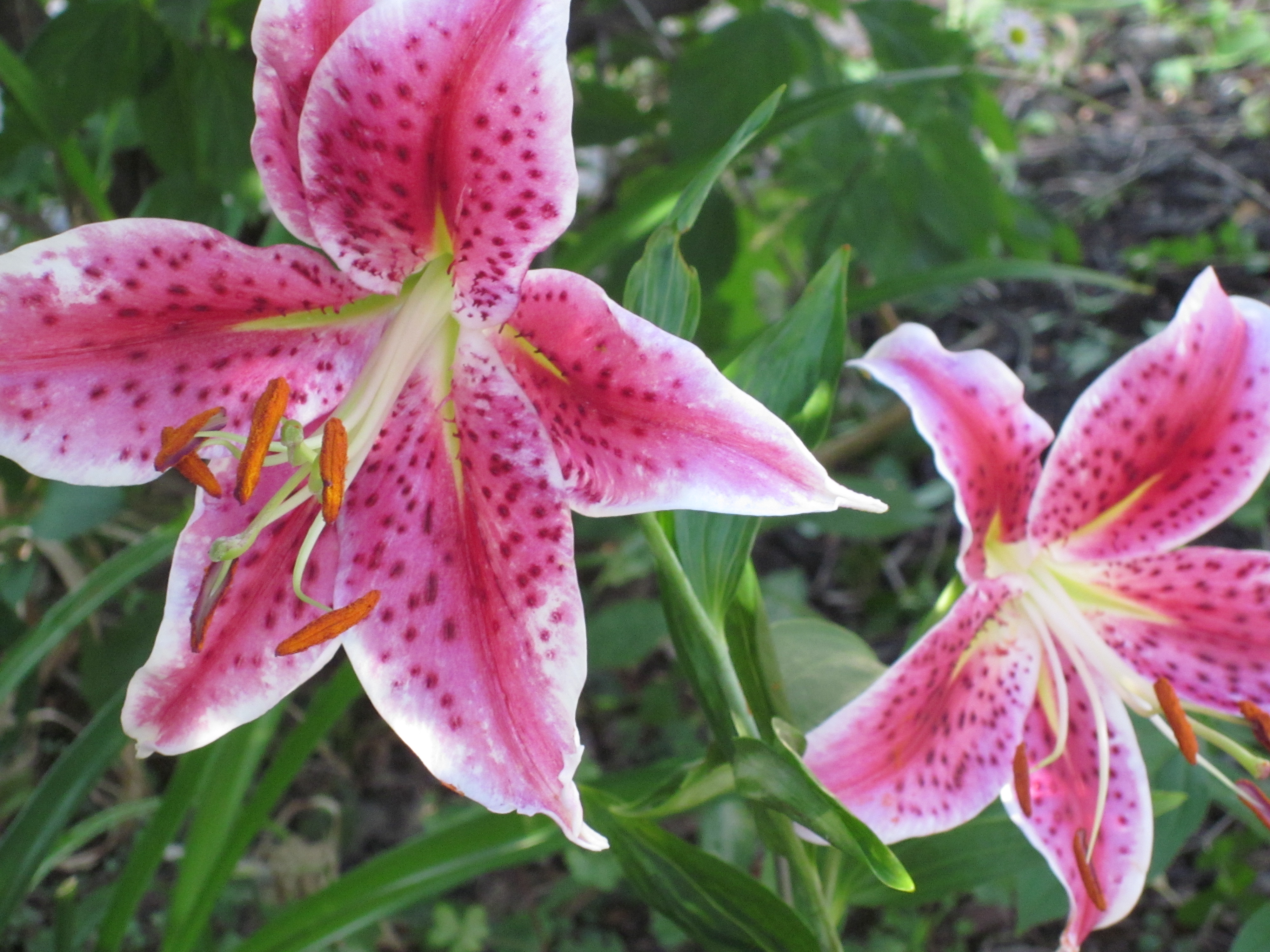
Every day in my backyard flower garden, I learn this lesson over and over again. Reluctantly, and sometimes with great frustration, I am forced to give up my mind’s idea of a perfect garden with every flower and leaf intact: no violet leaves ragged with rabbit bites, no hyacinths bitten off by woodchucks, no potted coleus uprooted by squirrels, no rose buds eaten by worms. Each morning is a practice in letting go into loving what is, in seeing the perfection in everything. I prune dead flowers and chewed leaves, remove worms and aphids, but I also stand back and gaze at the beauty of what continues to bloom and flourish. Nature includes all living things (yes, rabbits too), and my role as a gardener is to find a way to live in balance with that wholeness. The curves and jagged edges; the perfect symmetry of inclusiveness. And after an hour or two in the garden, I am always more at peace, more accepting of all of life because I am surrounded by such incredible beauty. Beauty that is constantly changing, just as life is. Nothing remains the same, and that is the miracle of being alive.

Photograph © 2012 Peggy Kornegger

If God or Source energy is in all things and everything I see is shining with that inner divinity, then “what’s not to love?” as the saying goes. Same with animals, same with people. When I judge myself or others against some mental standard of what I think I or they should live up to, I am not appreciating the absolutely perfect creation that we each are. If I stand in judgment of people, life’s events, or my own “failure” to be as enlightened as I think I should be, then I am missing the miraculously orchestrated unfolding of all things in the universe. Nothing is out of place, and everything is evolving and expanding into more. Flowers, animals, insects, and human beings are all playing their parts. So this is a gentle reminder to celebrate all of life’s perfect imperfections as you go through your day—in the garden, in your home, and out in the world. Heaven is all around you, and everyone you meet is an earth angel—absolutely perfect.

Connections and Distractions

Photograph © 2014 Anne Katzeff
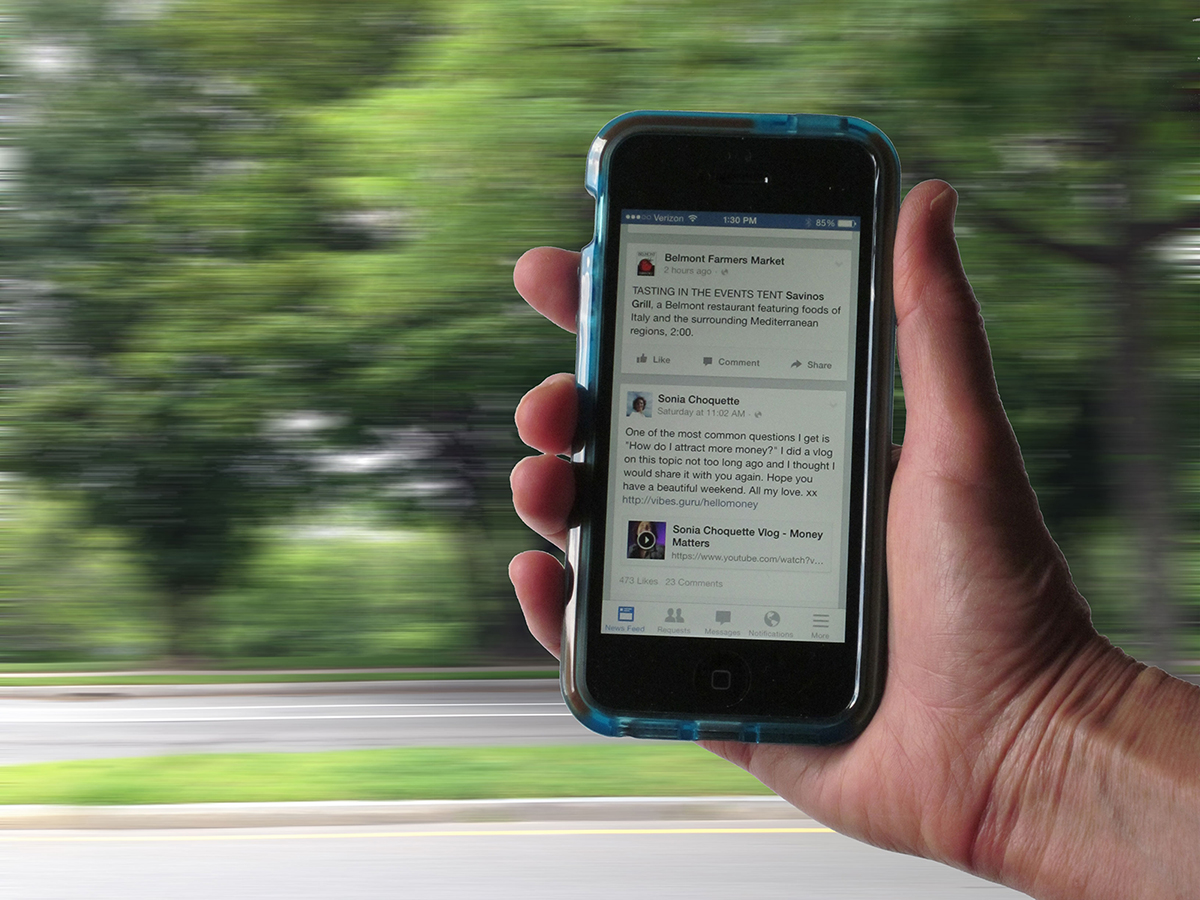
We are connected invisibly all the time, every one of us, through a psychic web of thoughts and emotions. The existence of the Internet has made this web tangible to people around the world. However, we are now in danger of losing our awareness of the power of that connection because of our dependence on technological gadgets that rob us of our intuitive intelligence. Smart phones are dumbing us down by keeping us compulsively plugged in to social media and online information sources.

When I ride the bus and train these days, there are very few riders who are not glued to their smart phones—checking emails, texting, tweeting, posting on Facebook, etc. The world around them goes by in a blur without their noticing. They could be passing urban high-rises or a park with trees and flowering gardens, and they would not look up. Where are they really? Yes, they are interacting with friends or acquaintances, and some of these exchanges are important and worthwhile. But a lot of this constant social back-and-forth is just distraction, avoidance of the present moment. So many of us pass the day in a trance state that blocks natural connections with the people and world right in front of us.

As you might guess, I am not a big fan of cell phones. I have avoided them for years because of the health hazards associated with them and also because I don’t want to be available for phone calls anytime, anywhere. Recently, however, I purchased a cell phone to use when I’m traveling. Because of the almost universal demise of pay phones, it became a necessity. Although my phone is “smart,” I use it only for the occasional call when I’m away. My home iMac is where I read emails and interact with friends via social media. I value these connections greatly, but I know firsthand the addictive attraction of online activity, wherever you are. It seems to have a compelling, magnetic power all its own. The images, posts, and website content draw me in and before I realize it, hours have gone by. I’ve been completely and utterly distracted.

The only way I’ve found to break this pattern is to limit my online activity. I usually check email, Facebook, etc. once a day and only interact for an hour or so. This can be challenging because I’m a writer, so I’m often at my computer anyway. It’s so easy to check in more frequently. I have to be strict with myself in order not to succumb to the sirens’ call to “log in just for a minute.” This is where conscious awareness comes in. Through meditation, yoga, and other spiritual practices, I have come to live more fully in the moment, to be aware of distractions when they ensnare me, if not immediately, then relatively soon. I know that when I spend several hours online, I am less connected to my own internal process and rhythms. The only exceptions are the spiritually related webcasts and communications that I participate in, which do in fact impact me at a deeper level. Other than these, my time offline is the most life-enhancing and soul-enriching: walking, gardening, writing—any quiet activity that centers me in my own peaceful inner core. Actually, spending time doing absolutely nothing except being present to the world around me brings me the deepest soul connection.

So what is the value of online activity? Is it more harmful than helpful? Well, I see it as an interim evolutionary tool to demonstrate to humanity the existence of invisible connections. I think more and more people are starting to become aware of the distractive downside of being perpetually online: smart-phone dependency. I recently read an article by a yoga practitioner whose 9-year-old son asked him, “Daddy, why do you have to check your emails so often?” A wake-up call for him. Perhaps it will be the next generations who show us that we don’t need those phones to be connected. Our own internal intuitive “smarts” that we are born with can handle that just fine, if we learn to access and use them instead of letting them atrophy. Each time we awaken to our own distractions, we take an evolutionary step into that space of awareness and connectivity.