African Dreams

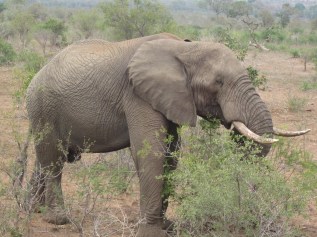
Photograph © 2016 Peggy Kornegger
In October, I spent two weeks in South Africa. After I returned, I woke each morning disoriented, thinking I was still there—bird calls and animal sounds filling the air. My own bedroom seemed unfamiliar, and as I lay in a half-awake/half-asleep state, I dreamed of elephants walking slowly with majestic, graceful intent, just as they did when I saw them in the hot, dry African savanna. Gradually, when I awoke fully, I realized I was back home in Massachusetts, where it was cold and rainy, and autumn leaves covered the ground. Yet the elephants are still with me. Africa inhabits my consciousness now, never far way in memory or awareness. I close my eyes, and I see again the enduring, yet somehow fragile beauty of the land and the people and animals who live there.

It was one of my life’s greatest blessings to travel to South Africa, where the animals are like nowhere else on Earth. Elephants, giraffes, zebras, impala, kudu, sable, lions, wildebeests, wart hogs, buffalo, nyala, waterbuck, crocodile, hippopotamus, rhinoceros, baboons, monkeys, bush babies, honey badgers, and many more. The birds too are unique: bee-eaters, hornbills, storks, spoonbills, ostriches. The grey go-away bird and the Egyptian goose with bright pink legs and feet. All miraculous beings living in a world that has drastically changed because of human activities and population growth.

The wild animals of Africa can no longer survive outside of reserves, where they are protected, in theory, from game hunters, poachers, and those who see them as a threat to farms and villages. Still, poachers find ways to enter the reserves (by helicopter) to kill elephants for their tusks and rhinoceroses for their horns. There is a high price paid in various countries for them. The animals face food and water shortages because of drought and the fact that fences block them from following their age-old migration routes across Africa. The heartbreaking worldwide dilemma of humans and animals inhabiting the same areas and using the same scarce resources is nowhere as dramatically visible as in Africa. Foreign investors buy up land to raise rhinos for their horns; private game reserves offer hunting for those who can pay for the “pleasure” of killing exotic animals. Colonialism has not disappeared; it has just taken new forms. You can see it in the everywhere-visible electrified wire fences “protecting” houses, land, and supposedly animals.
Photograph © 2016 Anne Katzeff

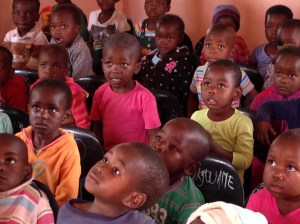
I came to South Africa to volunteer at Moholoholo Wildlife Rehabilitation Center and Daktari Bush School and Wildlife Orphanage and then to see the magnificent animals in the wild. This was not a usual tourist trip, but one where we learned about the enormous challenges faced by the people as well as the animals. Daktari offers an intensive teaching curriculum for 10-11 underprivileged students a week (grade 8) from neighboring schools. They receive class instruction from volunteers (with special focus on the environment and wildlife) and learn firsthand about animals by helping to care for them (they are often afraid of them at first). They also learn about possible future jobs in Africa’s animal reserves.

The students arrive shy and reluctant to speak and usually leave with more self-confidence and a greater ability to express themselves. Still, when we visited the daycare centers and schools that they came from, we saw the uphill battles they face. Schools with hundreds of students and only a handful of teachers; many classrooms with no teachers at all. When they finish school, many encounter either unemployment or jobs that are mostly low income. Racism and poverty have not disappeared with the end of apartheid.* In spite of the odds stacked against them, however, the students we met wanted to make a difference in their communities.
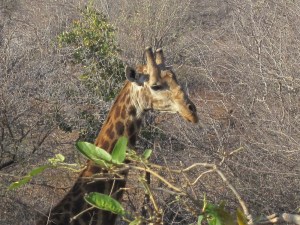
Photograph © 2016 Peggy Kornegger

We heard various stories about the animals in the reserves. Some of the staff at Moholoholo and Daktari told us that the two-year drought is drying up both food and water, and animals are dying. That there are far too many of some animals in the reserves (because they are prevented from migrating), and culling operations often kill off the “excess.” Still, many are starving, and some are driven to break through fences to get to food and water, where they are killed by farmers protecting their crops.** A tragic situation. Meanwhile, the rangers at Kruger National Park, one of Africa’s largest animal reserves (7,523 sq. mi.), told us that drought is normal, part of Africa’s savanna climate cycle, and that culling is infrequently necessary. Of course, this is the softer picture presented to tourists, so that they will continue to come to Africa.

So we as visitors who wanted to help, but also tourists in spite of ourselves, did what we could while we were there–offered our love and support to the children and animals and the people we met. A small gesture within a huge continent facing huge conflicts and challenges, within an even bigger world that often sees this unique land only in terms of the money that can be made by exploiting it and the people who live there. We who visit can only know a part of the larger picture, but even so, we can speak about what we have experienced—about the extraordinary beauty of the land, the animals, and the people, and about how precious they are in the greater landscape we all inhabit. Until we can see every part of this world as part of us, we cannot live in oneness. It begins with seeing other people as like ourselves, by seeing every living creature as a sentient being, and by honoring the Earth as sacred ground. To live with good heart upon this planet, wherever we are and whomever we meet. From the African word ubuntu: compassion, humanity, kindness for all. In so many ways, visible and invisible, we are all connected.

_______________

*Just as racism and poverty have not disappeared in the United States in spite of the civil rights laws passed in the 1960s

**Just as wolves are killed by ranchers in the western United States when they leave the protection of national parks

 

Ride the Current

Photograph © 1999 Lynn Van Gundy

There is a river running through Bern, Switzerland, that is used as a kind of moving thoroughfare by local residents and adventurous tourists. Individuals don swimsuits and hike upstream alongside the river and then ride the fast-moving current back into town (without boats or rafts). The Swiss pride themselves on the cleanliness of the water, and a recent PBS travel program showed people of all ages and body types zipping along rapidly, laughing in delight at how fast they are traveling, with no effort whatsoever. They just have to jump in and become one with the current.

If only we could always see life in this way: a beautiful river that will carry us home if we let go and flow with it. Nature gives us so many examples of how life flows if we don’t try to swim against the current: dolphins and porpoises surfing ocean waves, birds and butterflies gliding on airstreams. Surrendering to life’s natural movement allows you to just be instead of striving and struggling. Strenuous effort is so draining, whereas becoming part of something greater energizes you and moves you forward with lightness and grace. Even when the current feels wild and a bit scary. That wildness is life’s pulsation, which is within each of us as well. If you find yourself caught in a small eddy of fear, sadness, or tension, relaxing into feeling it fully often allows you to effortlessly slip back into the main current of life’s events.

For much of my life I was a “trier,” believing that nothing would happen without my own efforts. Of course, I was taught this, at school and in the world at large. Only later did I come to realize that it was in moments of being rather than striving that I always found a connection to life’s flowing essence, which is spirit. As a child, when I climbed trees, ran through open fields, or lay in the grass watching the ever-changing sky, I was most relaxed, alive, inspirited. The natural world held me in its arms and nurtured the evolution of my young soul. Today, it is gardening in my backyard, hiking in the mountains, or swimming in the ocean that fills me with that sense of oneness with all things. As a writer, I tap into this ever-present life energy in order to express my soul’s voice.

Aligning with the pulse of the universe, inside us and all around us, brings liberation and deep connection. When I allow life to flow through me, I am not forcing anything. The current carries me easily. I let go of judgments about people, events, or my own feelings and see them all as part of life’s river, alive with motion and possibility. Every moment is a new opportunity to release expectation and just experience everything openheartedly: “Oh, this is happening now…” Living with all the doors and windows open, no barriers to what is showing up, is the perfect way to expand your inner being. Every river you jump into wholeheartedly will carry you to magical and undreamed of places that will feed your soul. Ride the current of your own heart’s desire, and you will come home to yourself, again and again.


Neutrality and Inner Peace

Photograph © 2013 Peggy Kornegger
The word neutral can be used in many contexts. Beige is a neutral color. A car in neutral is not moving. Switzerland was a neutral country during two world wars. In the dictionary, the first definition of neutral is “impartial.” If we give the word a spiritual application, we could say that the soul is neutral. In other words, it is impartial. It is just quietly witnessing life as it unfolds. While the personality or ego may react strongly to people or situations, the soul just observes it all without attachment to any particular outcome. The soul experiences life through us, but it does not have opinions about anything that transpires.

The soul abides in neutrality. It is not at war with our experiences. If you allow your soul to move to the forefront of your being, you can be at peace with everything within and around you. You can accept all emotions and events with equal receptivity. You will not be thrown by circumstance, and you will refrain from labeling things as positive or negative. Inner peace arises from neutrality, impartiality—from soul connection.

Which doesn’t mean that your humanness is permanently disabled or on hold. It just means you have cultivated a connection to your soul that creates awareness. That greater awareness gives us pause, literally. You may be upset by something, then immediately become aware of your reaction, and take a moment to breathe and center yourself in acceptance, neutrality. Accepting your feelings too. It may take longer than that for awareness to resurface, but the more we connect with our souls on a regular basis, the more we become immersed in inner peace, no matter what else is going on.

Connecting regularly to the soul is a practice. It can be meditation or walking in nature or just becoming aware of your breath during the day. The soul, the spirit in all things, is always patiently waiting for us to connect. A quiet moment, a deep breath, a stunning sunset, and you are connected—soul-centered and aware. Calm, receptive, neutral. At least that is my own experience. I find that the more frequently and consistently I do one or all of these things, the more aware I am—and the more peaceful.

In recent weeks, as I’ve dealt with ongoing uncertainty about an eye diagnosis, I have repeatedly been drawn to silence and inner reflection, which allows my soul to surface and soothe my humanity with its expansive awareness. Life is constantly changing, never just one thing—simple or complicated, easy or difficult, comic or tragic. It is all of these, and in embracing all of them, we can flow with whatever arises, day by day, moment to moment.

When I see my life as part of something much larger, a soul within infinite beingness, always evolving and expanding, then I am better able to relax into neutrality. Human concerns are real but they are also illusory within a greater context. We are infinitesimal cells of a living consciousness that spans universes. There is a Great Mystery before which we will always remain unknowing. If we open ourselves to soul awareness, that unknowing will not faze us, for we will be grounded in an inner peace that transcends understanding. God too abides in peaceful neutrality.

The Silent Nature of All Things

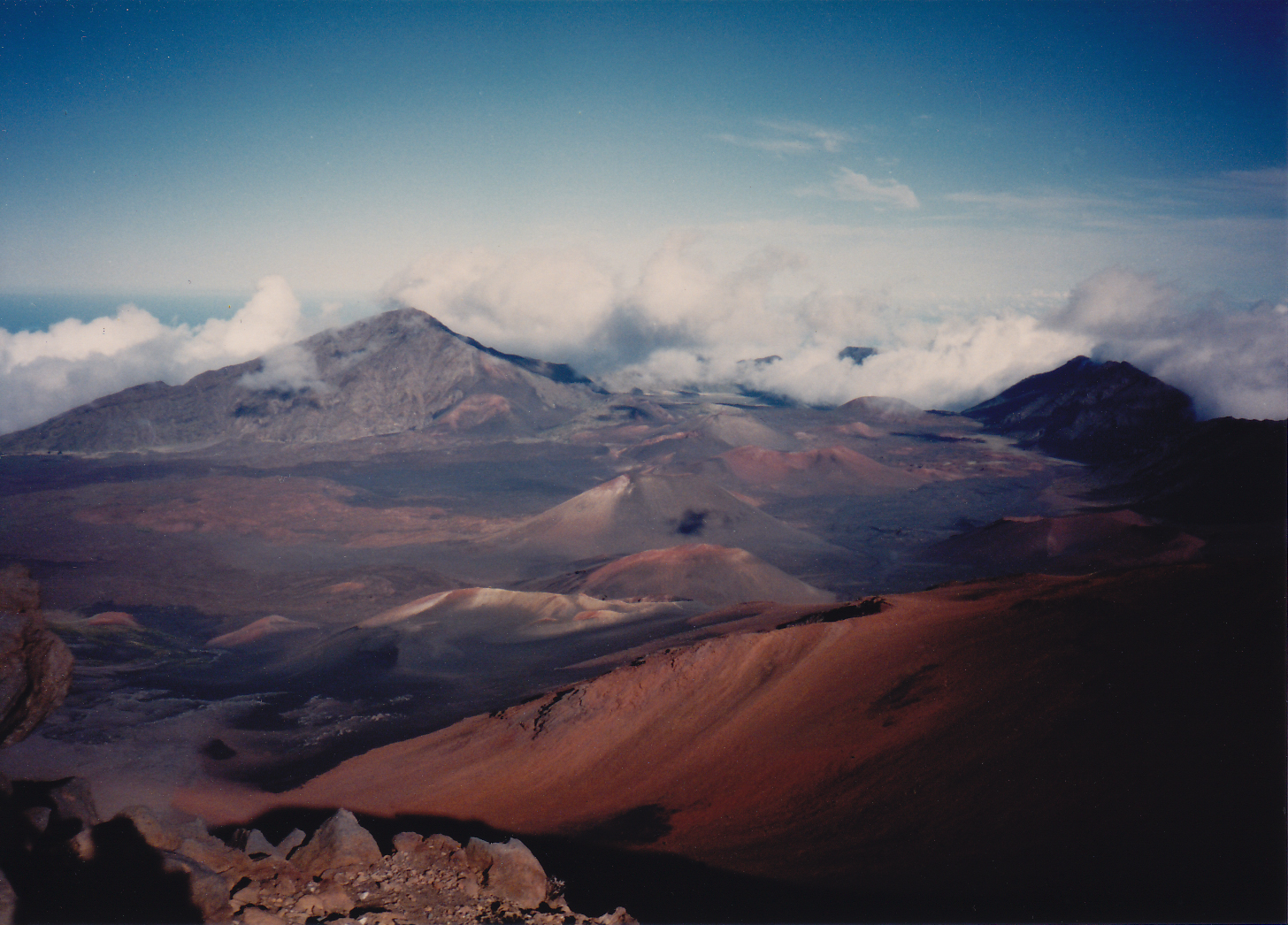
Haleakala photograph © Peggy Kornegger

I spend countless hours outdoors in my yard every day in the spring- and summertime. It is a deep inner calling that brings me peace of mind, heart connection, and balance between being and doing. Nature in its silent presence teaches me stillness and reminds me of that same place inside myself. When I stand quietly within the natural world at my doorstep, I am a part of all that I see, and I feel the stillness at the heart of everything, whether stone, tree, bird, bee, butterfly, human, cloud, rain, wind, star, or planet.

Indeed, the universe itself is complete stillness at its core. I experienced this primordial silence in a very powerful and unforgettable way once when I was hiking into the dormant volcano Haleakala on Maui. If you walk a ways down the trail that winds gradually to the bottom of the crater and then pause to listen, you hear absolutely nothing. No sound at all—no wind, no birds, no human activity. Nothing. I felt as if I were present at the birth of the planet, before anything existed except sandy red lava fragments, ocean, and sky. I’ve never forgotten that profound sense of eternity in the silence, and now I recognize it within all things, everywhere—if I pause long enough to feel it within myself, in my own breath.

That inner stillness is the spirit of life, our soul’s home. It is what calms and soothes us on our human journey. In silence, the soul witnesses our actions, thoughts, experiences, and emotions; our challenges and celebrations; our pain and joy. When we become lost in stress or suffering, often some mysterious force leads us to turn inward, to seek the silent solace of the soul. The human soul or the soul of nature, one and the same. We live at a time in which an increasing number of us are hearing the call to connect with our innermost being, a part of All That Is. A shift in consciousness is occurring, an awareness that opens us to choosing harmony and balance in our lives. I find it a hopeful sign that people are evolving to the tipping point of remembering the being part of human being.

I sense that thread of hope and remembering within my own life. When I balance activity or action with timeless time in nature or meditation, then I begin to live a seamless oneness of being and doing that are not in opposition to each other but exist naturally side by side. Doing that arises from being, not imposed by the mind’s tendency to overthink and plan, but organically part of the creative flow of all life, within and without. I experience internal harmony when I include moments of silent connection and presence continually throughout my day.

In fact, continual (“intermittent”) is gradually becoming continuous (“ongoing”). As my awareness expands and evolves, along with everyone else’s, the separations and distinctions of a world based in polarity and duality are fading into the background. Life becomes a divinely inspired stream instead of an on/off spigot that we think we control. And the source of it all is a peaceful stillness that we can access in each moment of our lives just by taking a deep breath and observing the true nature of what is right in front of us.

Spirit of the Garden

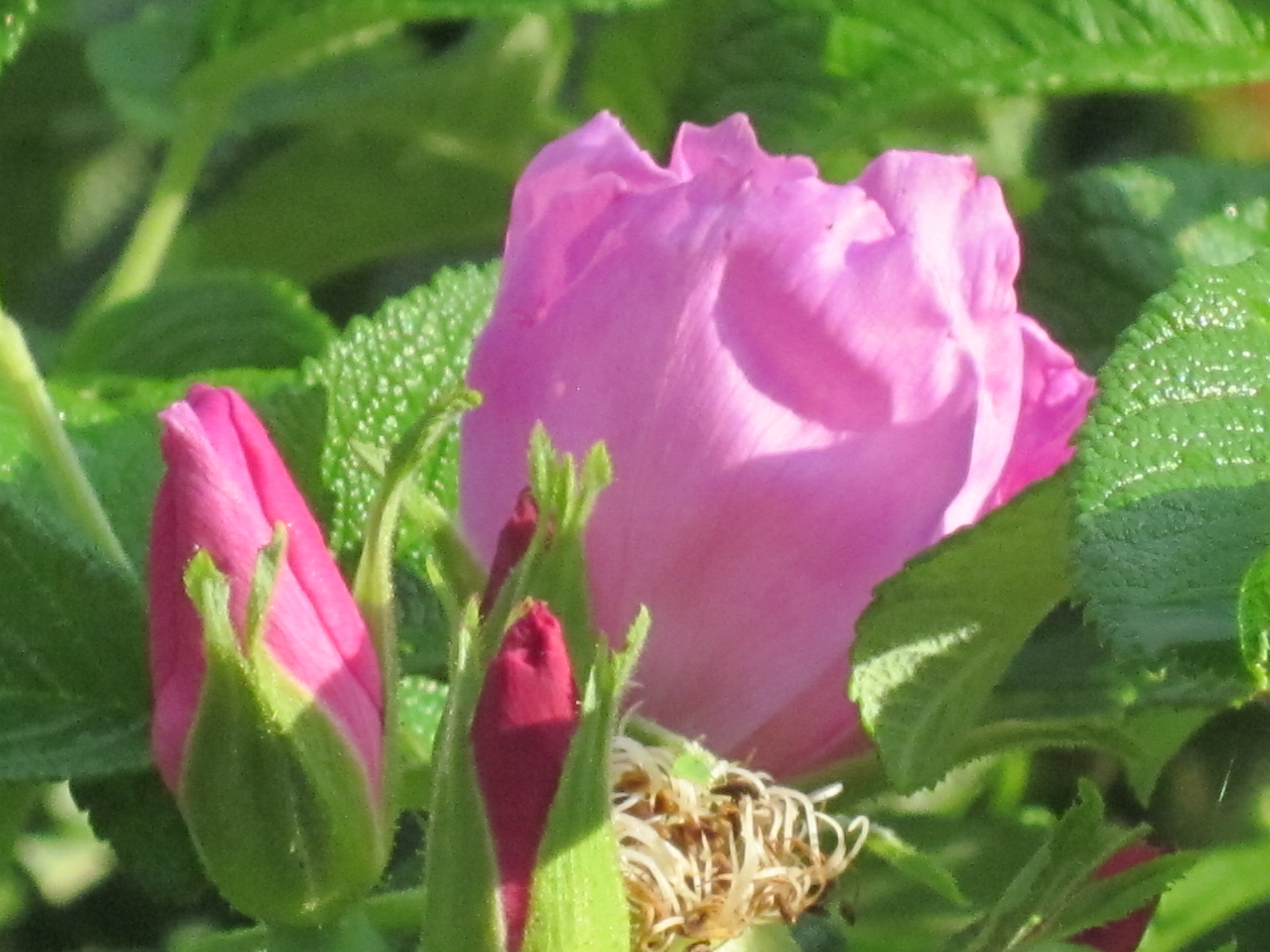
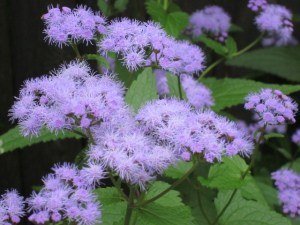
Photograph © 2015 Peggy Kornegger

In my flower garden, I encounter all of life on a daily basis. I am also continually given opportunities to practice classic spiritual principles: Be in present-moment awareness. Accept what is. Let go of all attachments to a particular outcome. Each one is perfectly applicable to both gardening and living. Nature doesn’t play by human rules or expectations. Nature just is. Entering the natural world that surrounds us brings us home to a part of ourselves that often gets lost in the clock-centered busyness of daily life.

When I walk through my back door in the early morning stillness, I am met with a presence that I would call sacred. Neighbors still asleep, traffic sounds distant and minimal. I am alone with the beauty of the green and growing Earth, my eyes clear and open to all that is before me: nature in living color and infinite variety. Immediately I am completely engaged and present. Thinking has faded to the background, and I am just being. When I look at each blooming lily or rose, there is no separation. The flowers and I are one in the spirit of life that flows through us. Standing beneath a towering maple tree, I am drawn into the silence that holds both of us in timeless being. I AM. The tree IS. We are both part of a consciousness that links every living thing on Earth and in the cosmos. Each morning becomes a meditation in slow motion that centers me in the now and eases me into my day.

The actual work of gardening—seeding, planting, weeding, pruning—is another practice that both engages me and teaches me acceptance of all that is. The past winter’s cold has killed my butterfly bush as well as several other perennials. My native honeysuckle, covered with bright red blossoms, has aphids that are eating the new buds. Finding replacement plants and removing insects and dead leaves are all part of gardening. Within that process of letting go of the old and welcoming the new, I surrender to the flow of life, with both sadness and celebration. The garden teaches me to hold it all in my heart without judgment or distress. Every day is a new opportunity to embrace each event in my life and in my garden. When I have sudden unexpected expenses or a painful migraine headache, I am reminded that living includes these challenges as well as the joys of laughing with friends, listening to music, or watching a glorious red sunset after a dramatic thunderstorm. To be human is to encounter all parts of the experiential spectrum.

Gardening immerses me in nature, but it also aligns me with divine presence. My soul is with me in the garden. In truth, my soul is with me everywhere. And it is being in presence within my garden that teaches me this. There is nowhere and nothing that is not filled with spirit, that is not God experiencing life on Earth in a multitude of forms and expressions, including human. We are so much more than we think we are, and it is only in not thinking but just being present that we experience that expansive awareness. Heaven is here on Earth, and when we realize that, we see paradise everywhere we go.