Love, Peace, and Flower Power?

My generation was born in the years after World War II and the Holocaust. The horrors and suffering of that time were still in our parents’ consciousness when we were conceived. If cellular memory can be transferred parent to child, then we emerged with our own unique consciousness that was a mixture of the pain of the past and hope for the future. We carried that through the years of our growing up and coming of age as we witnessed the Civil Rights Movement and the Vietnam War on our TV screens. At a certain point, we ourselves birthed a new awakened awareness, informed by global events but also infused with a positive vision for humanity that we had come to Earth to express. We became the activists and flower children of the late 1960s and 1970s. In the midst of the world’s conflicts and hatred, we spoke our simple truth: Love, Peace, and Flower Power.

In 1969, “in the streets of San Francisco,” I wore flowers in my hair, moved by a belief in loving connections beyond my one individual lifetime. I, and so many others, held that belief in our hearts for decades, working individually and collectively for a more compassionate world based in loving-kindness and equality. We may not use those words now in the 21st century, but the sentiment still rings true for many of us. The question is: Is it still relevant?

What is the state of human consciousness and inter-relationships on this planet? Is love of others and peace on Earth really possible? Many would say No, humans hate and kill one another again and again. Yet, that’s not the whole story. In so many places, what continues to flower (!), in spite of all odds, is kindness and mutual support among people in diverse communities, as well as the courage and strength to persist and survive. Perhaps balance is slowly being restored.

In singing, in speaking, in sharing, we express our humanity, heart and soul fully engaged and interactive with others and with the positive energy of connection and love. We come together in unity for the common good. The deeper truth is that the future is being lived now. This moment is all we have, according to the wisdom of elders in so many cultures. What you sow, you shall reap, moment to moment. Live love, and love moves through you in circles of reciprocity and expansion within your lifetime and beyond. Together we are a living breathing mandala of possibility and wonder. We are colorful bits of light dancing within a cosmic kaleidoscope. We are Spirit in human form.

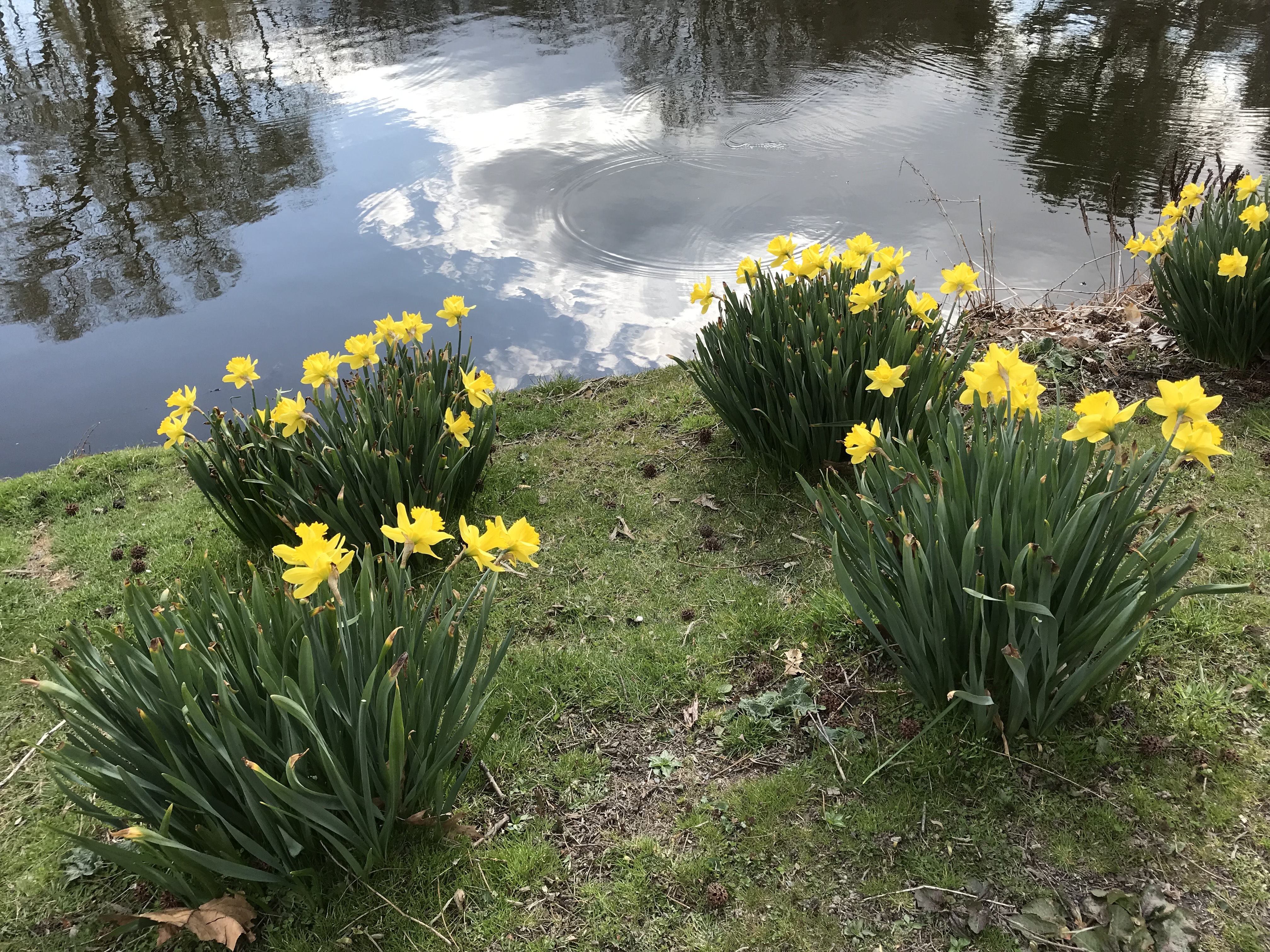
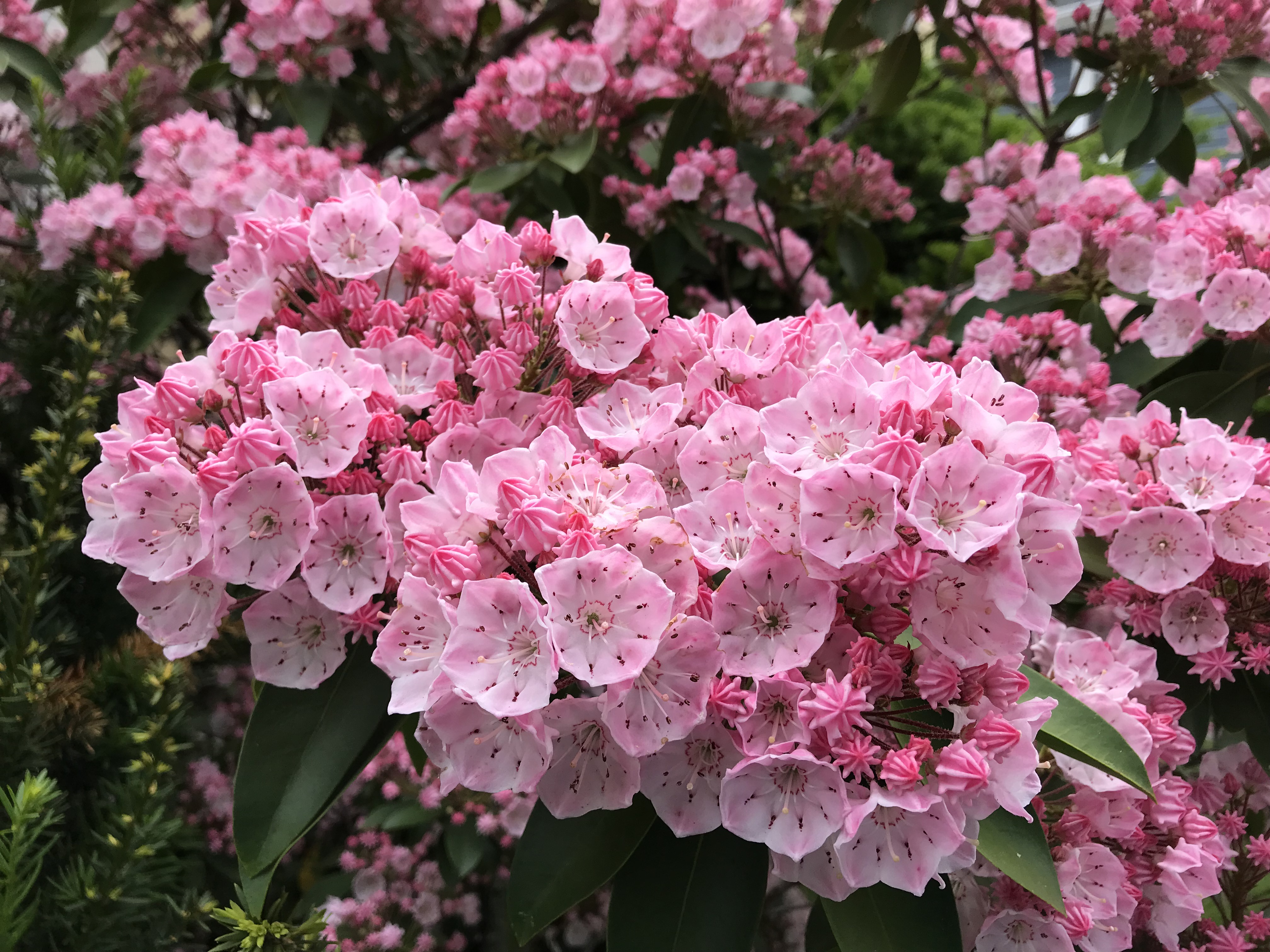
So perhaps “love, peace, and flower power” never becomes obsolete, outdated. The specific words may change, the clothing and hairstyles differ, but the living spirit of humanity always holds within it a seed of compassion and care for others. Love is timeless, peace is within us, and nature reflects back to us the beauty of our own beingness in every flower that blooms. This is the vision I have held all my life.
No Where

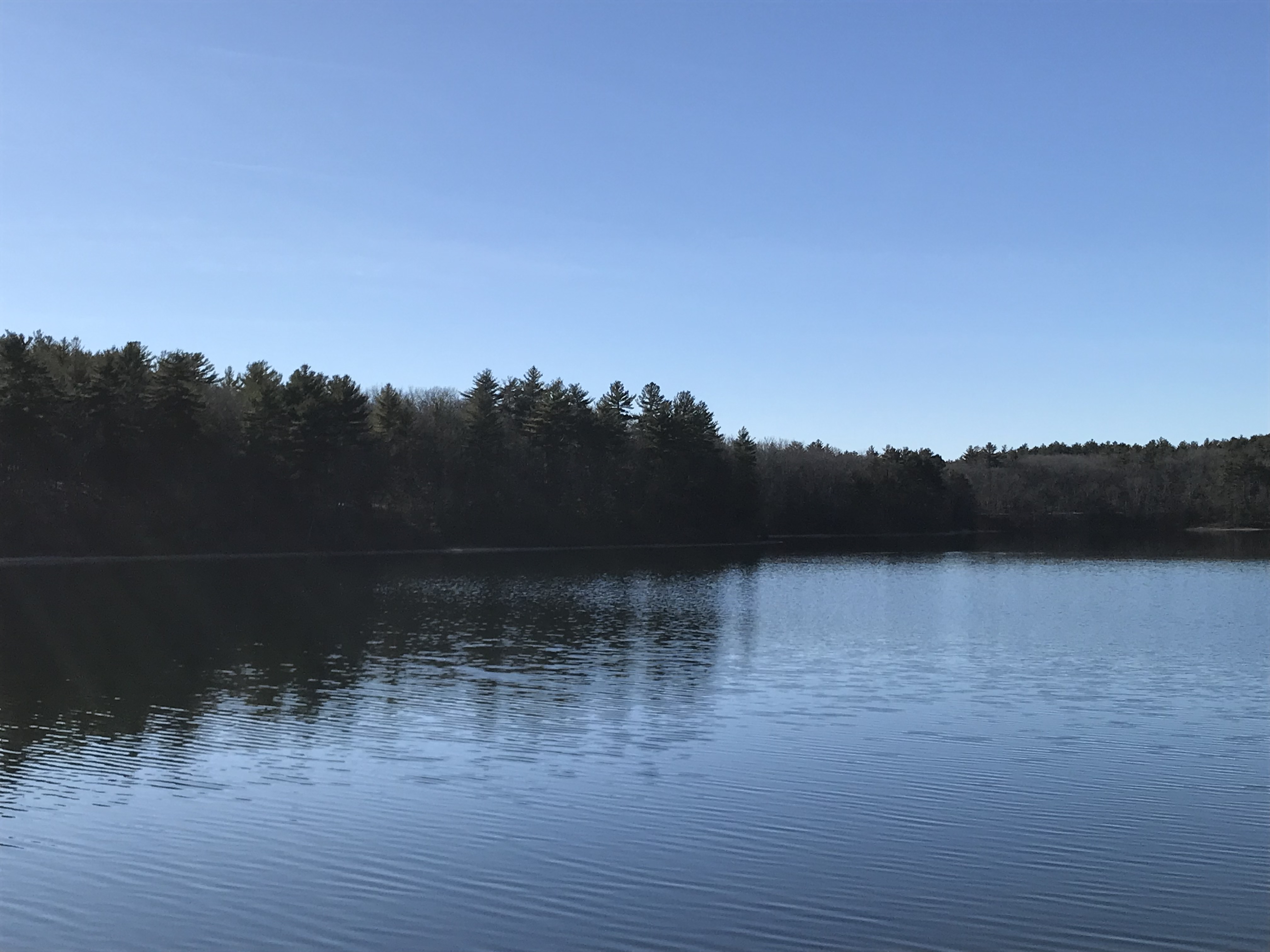
If you walk or sit in silence long enough, you blend with everything. You are no longer separate from the world around you, gazing outward, because there is no out or in. The mind stops grasping and relaxes into blankness. You are no where—because where ceases to exist. This is infinity. Some call it Presence or universal consciousness. It is pure awareness without parameters or definitions. Just being.

I sometimes find myself there when I am walking in Nature or deep in meditation (and once as I was coming out of surgery). But even there is a misnomer because how can there exist in no where? I assure you I am not trying to trick you with word games. I am attempting to move beyond words to the silence of the soul. Of course, you can’t really find your way to silence with language. To describe the process of becoming completely silent seems almost contradictory.

Yet perhaps it is not entirely impossible to offer directional metaphors, as the poet Rumi did in all his work. Recently, a friend commented that the deep meditational experience of infinity was akin to being in the field Rumi describes, which is “out beyond ideas of wrongdoing and rightdoing,” judging. Remembering the words of that poem immediately opened the door of Presence even further for me. A field that is empty of everything but shared spirit.

That is exactly how I felt within the depths of the profound silence of no where. Separation completely fell away. No opinions, no judgments of others, just awareness without any definitions or language to infringe on the vision of the soul, pure and true. Perhaps this is the purpose of all life: to reach that experience of being completely immersed in the silence of the soul. Because within it there is no longer inner or outer conflict, only peace.

We humans often talk of peace on Earth and aspire to it. Yet it seems to drift further and further away. Maybe that distance is an illusion, and in truth we are moving closer to it whenever we reverse our gaze from outward to inward. Because that is where peace lies, undisturbed and eternal. Our inner vision can direct us every day to living in a peace that radiates outward to all those we meet. In spite of the conflicts of the times we are now living through, more and more people are being catapulted inward by outer discord.

Our souls are guiding us in this direction, to seek the harmony and oneness that lives at the center of all creation. The no where within the where. Perhaps we came to Earth for this very reason. To experience the extremes of separation and then stand in the field of infinity, recognizing all that we see as one heart, one spirit. Humanity and divinity as one. Home at last.

All I Need to Know

I have always loved the phrase that many Native Americans use to refer to God and all of life: “The Great Mystery.” There is such wisdom and spiritual surrender in those words, a quiet acknowledgment that the universe and our place in it cannot be fully understood by the human mind. This wondrous mystery is what I experience when I walk alone in Nature or stare up at the stars at night.

Wonder, and joy at the beauty. Yet, for me there has also always been an element of sadness in contemplating eternity and my place in it. As a child I felt great fear when thinking of my life within infinity and the “world going on forever.” It was only in my adult spiritual quest that I came to a deepening and expansion of my awareness and a loosening of the fear. In “accepting what is” I found solace for my sorrow. When I stopped trying to find an explanation for life, the closed doors of my perception opened to the experience of Spirit, my soul’s essence and what is at the heart of all existence.

Even at times of emotional and physical challenge (the death of my parents; treatment for breast cancer), the presence of Spirit has sustained me. There will always be a mixture of thoughts and feelings when I look at the world that surrounds me: love of life as well as grief at its transitory, impermanent nature. When sadness arises, I have learned over the years that the wisest response is surrender: accepting those sad feelings and realizing they are only one part of who I am. It is my human identity that feels fear or grief; my soul witnesses all of life peacefully, without question or judgment. Within that peace, I let everything go and live in the Mystery. I don’t need to know all the answers; I just remain open to experiencing the beauty and wonder available to me in every moment.

I recently had an experience that highlighted this wisdom. I am an avid birdwatcher, and every year I visit Mt. Auburn Cemetery in Cambridge, Massachusetts, for the spring bird migration. Hundreds of migrating birds come through the cemetery because of its beautiful habitat, and local birders are there to greet them. On one particular morning, after days of rain, I walked inside the front gate and paused to get out my binoculars. A man standing nearby enthusiastically commented on the beauty of the day and how he was certain the end of the rain would bring all the birds in. I agreed with him, and as I started to walk away, he added, “I don’t know much about science or exact bird identification, but I know how beautiful and special each one is.” “And that’s all you need to know,” I replied.

 At that, he burst, quite loudly, into song: “That may be all I need to know….” He laughed delightedly as he finished and asked me if I knew the song. I smiled and said, “Yes, I do.” So he sang it all over again, practically vibrating with joy. We then wished each other a wonderful day, and each went our way. As I turned to look back at him, he was still smiling and singing to himself. What sweet synchronicity in encountering this rather eccentric earth angel who reminded me of the wisdom of life’s beauty. I am surrounded by that beauty with every step. And, truly, that is all I need to know, ever.

Reflections on a Board Game

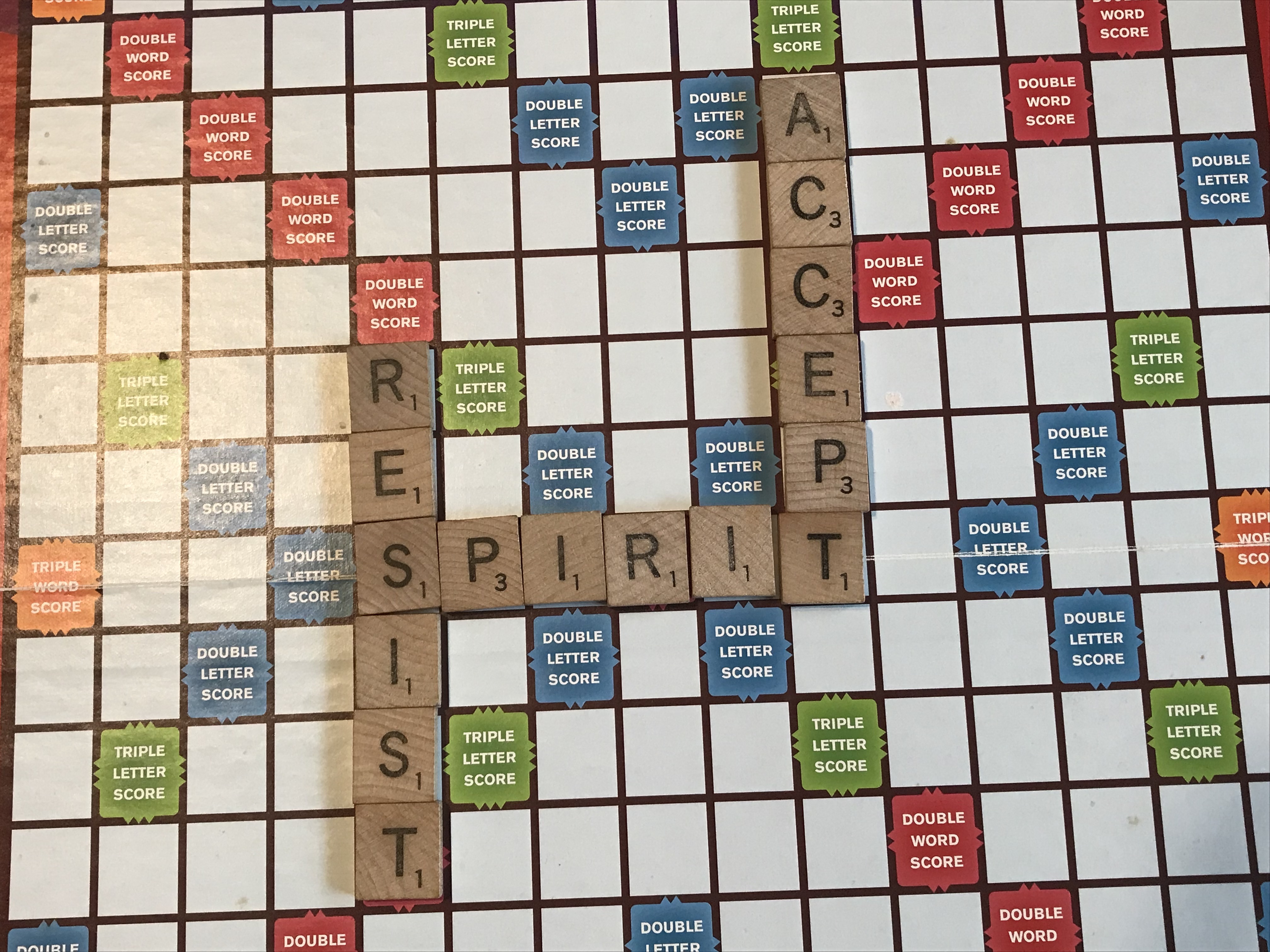
Anne and I have played Scrabble regularly for years. We like the mind exercise involved in forming words to fit on the board in often difficult places. Recently we bought a new board game called Wingspan, which I had read about online. It was a bit complicated to learn, but now we love it. Players create small bird sanctuaries on their individual boards, using bird cards, bonus cards, food and egg representations, and colorful markers and dice. In the course of four rounds of play, each player fills their habitats, and points accumulated from various plays and cards determine the winner. Overall, we are fairly evenly matched, with Anne usually winning more frequently at Scrabble and me winning more often at Wingspan. Occasionally we tie!

So, board games are fun, right? Relaxing as well as stimulating to the mind. But could they also be seen as a reflection of life, something we could learn from? This way of looking at them occurred to me recently when I was repeatedly losing every Scrabble game. It seemed that I was always drawing letters that did not make words—all vowels or all consonants. Meanwhile, Anne was sailing along forming five- to seven-letter words, often with triple scores. After the sixth or seventh game like this, I began to feel frustrated and angry, as if it was more than just bad luck. When I then lost a Wingspan game in similar fashion, it seemed like the last straw: God was literally “stacking the cards against me”!

As soon as that thought passed through my mind, something clicked, and I realized that each game was a reflection of life, and together they were demonstrating to me a spiritual teaching that I thought I already knew by heart: Accept what is. If you resist whatever is occurring, you will be angry and upset. In a board game and in life. And so it is. Spirit has such imaginative and humorous ways of showing us life’s truths and exactly how they work. As long as I continued to be annoyed at the way a game was unfolding, I would be unhappy—and furious that I couldn’t control the outcome. So it is with life. Accept whatever comes up, and you will feel peaceful. Resist, and you will grumble and complain throughout your days on Earth.

When I came to see that Spirit and my soul were playfully reminding me of this deep truth and that it applied everywhere all the time, I smiled—and then laughed out loud. Life flows if you allow it to be exactly as it is. Board games do too. The secret is seeing them that way. Who knew that Scrabble was hiding spiritual wisdom in all those letters?!

P.S. The evening after I had this insight, I won the Scrabble game (not that it matters… ha!)

Words and Silence

This may sound strange since I’m a writer, but sometimes I feel that words and language can weigh us down and overcomplicate our lives. At least as they are traditionally used: to argue and debate, to delineate and deduce, to explain and edify, to compile histories and construct theories. Politics, science, philosophy, religion. Even spirituality can veer off into wordiness. Some books and teachings engage the mind more than the soul. The deepest, most spiritual response to life is often just sitting or standing silently, in reverence. To look up at the trees and see God. To listen to birdsong and hear Spirit’s voice. No words required.

Of course, not all words run to excess or cause mental fatigue. Some poetry and prose can arise from a quiet space of being in the world. When I read Mary Oliver, Ann Patchett, or Mark Nepo, I feel a connection to the core of all life, Nature, and humanity, clearly expressed from the heart. Haiku is the simplest form of poetry. It pares language down to the basics and in doing so allows the reader infinite space to receive. Such writing engenders inner peace instead of a distracted, busy mind.

In one of Ann Patchett’s novels, two men from different countries who don’t speak each other’s language play chess for hours in silence. The tension and danger that surrounds them is broken by the peace that arises from their shared silence. I’ve seen chess players in a crowded city square also play in silence, those gathered around them silently watching. A small circle of stillness forms in an otherwise noisy area. How many other activities could we do quietly, creating peace in the world around us? Walking or birdwatching, for example. What about preparing meals or listening to music? We could in theory extend the list to everything. How would the world shift, without one word spoken?

Perhaps this is not completely realistic, but yet not wholly impossible, on a small scale, in our individual lives. If we hold stillness within us, outer noise falls away. Small talk evaporates. Busyness slows down. Our minds slow down. It suddenly doesn’t seem that necessary to narrate our every move or comment on everything (aloud or via texting, social media, etc.). In the space that opens up, we can rest in our own inner presence, without verbal interference.

Words can be a key part of our daily lives, and language a bridge to communicate with others. It is enjoyable and comforting to share our thoughts and feelings, bringing us closer together. But talking is not always necessary, and if we allow silence to expand within us and outside of us, what we do say becomes poetry or music arising from our souls. Gently touching the hearts of those around us and then dissolving into stillness again. Wouldn’t you love to live in a world like that? Take a deep breath, and don’t say a word. There you are.