Softening with the Years

I hope to soften as the years go by: my voice, my thoughts, my footsteps. My heart. More love, kindness, and gratitude; less worry, fear, judgment. More listening, less talking. Of course, I am already in the age bracket people refer to as “older.” Older than what or whom, I’m not sure. At any rate, I do feel softer now in my approach to life. Years of spiritual seeking and practice have laid the foundation for that. I stopped hanging on so tightly to my carefully crafted version of reality. I opted for meditation and inner peace over angry political disagreements and the need to be right. Of course, I am not always successful, but all in all, I am less attached to my reality as the ultimate Truth.

There are so many “truths” in this world. If we could only see them as ever-shifting variations on a theme instead of finalities that need to challenge one another. Every person we meet has a different perspective, a different voice. A different inner story. If we listen carefully, beneath the words, we can hear it. And that becomes one of the dearest gifts in life, hearing another’s life story. Because it takes softness, a receptive, tender heart, to hear what another carries within their heart. Often it is in being vulnerable ourselves that we find that others can be vulnerable with us. An experience shared opens the door to another’s sharing, which then unites us as one heart, beyond all stories.

All this comes with softening, realizing that we each are travelers in this life, finding our way step by step. As we age, our steps are sometimes slower, which is the perfect opportunity to see and hear more of the world around us. I’ve taken walks all my life: on city streets as I ran errands, in nature habitats as I watched birds and animals, in my own neighborhood as I appreciated others’ yards and gardens. Sometimes I walked fast to reach a destination or complete a task; other times I walked slower, or stopped entirely, to watch a butterfly or bumble bee or listen to a bird singing. Now I walk slowly most of the time because I find contemplative walking more fulfilling than rushing quickly without really seeing the beauty around me. It is a softer approach to life, available to us at any age, but perhaps life gives us more opportunities to receive this wisdom as we grow older.

I know that many people hate the idea of aging and fear the loss of their self-image and physical/mental abilities. Perhaps we could let go of some of our anxieties and trepidation if we saw each year as an open door leading to new experiences and ways of being in the world, possibly more expansive than anything we have ever known. No one can predict how their life will unfold or how long it will last, but we can appreciate each day we are given. I find that the more I soften the need to know what comes next, the more I can accept and love the present moment before me. I also have discovered that the softening of the passing years is a gift in itself, one filled with unexpected wisdom and the kindness of friends and strangers alike. 

Waiting…

We humans spend so much of our lives waiting: for the bus or train, in traffic, in the dentist’s office, in the checkout line, for vacation. Waiting to be 21 and then waiting for retirement. In a blink of an eye, our entire lives have passed in waiting for the next event or experience. Often we miss the moment we are living through because our minds are preoccupied with looking to the future. Yet the future doesn’t really exist; it is always running ahead of us, tempting us to forget where we are now.

The wisdom handed down from spiritual teachers like Ram Dass is to “Be here now.” Because now is all we have. The fantasy of the future and the memory of the past are mental distractions, which often keep us stuck in dissatisfaction. If we can learn to focus on each moment, appreciation and peace of mind arise and help us relax into being instead of aspiring.

I was thinking of this recently when Anne and I stayed at Kripalu Yoga Center in Lenox, Massachusetts, for a few days. Daily life there is very simple: yoga, meditation, meals, walking in Nature, resting or reading. No TV or video; cell phones restricted to use in one room only. Breakfast is silent; quiet, contemplative presence is encouraged. Coming from the external world of noise and activity, Kripalu visitors may discover that it takes consciously letting go to become aligned with a state of being that is actually quite natural to all of us.

At home, I meditate and do yoga every day as well as walk quietly in Nature, so this was not new. However, at Kripalu, I found myself facing my habits of checking emails and going online for one reason or another. Daily routines of busyness. Without them, I realized I was “waiting” for the next meal or yoga session, feeling a bit lost. Even though I have been to Kripalu and other retreat centers many times, this awareness of my own “waiting” mindset was a real teaching for me.

The energy of the external world can catch us up in its fast pace at an unconscious level. We think it is normal. Empty space and time can feel odd. And yet they are completely natural, and it is why I and so many people go to places like Kripalu. To live fully in each moment without looking behind or ahead. So, I sat with that awareness. Within it, I remembered that I could easily bring myself back to the moment, wherever I am, by focusing on some detail in my environment: a tree, a cloud, a person, a pattern of light on the wall, birdsong. Or my own breathing, which is the Presence focus in so many traditions. The breath is only ever in the now. When I step into that soul space of pure being, I stop waiting.

So, the best part of my visit to Kripalu was reawakened awareness of living fully in the present moment without waiting for the next one. It’s a practice, an ongoing reminder of how rich each second of our lives is. No need to “wait for it,” It’s all here, right now.

Resilience

We are born with it—a core ability to recover from hardship or illness, to bounce back from misfortune and loss. Resilience is in our DNA; it’s a survival skill. We wouldn’t have made it as a species without it. Yet, at times of turmoil and challenge, as we are now experiencing on Earth, that inner wellspring can almost seem nonexistent, at the very least in need of replenishing. A global pandemic has exhausted us, and political conflict undermines our hopes for the future on a daily basis. How do we cope?

A year or so after COVID first appeared, I went through a breast cancer diagnosis and treatment (latest breast scans all clear!). I am an extremely grateful survivor, but those two events, taken together, have had quite an effect on my life. In each one, thoughts of illness and death arose, as well as feelings about aging and the number of years I have left in my life. We all consider these things from time to time, but perhaps never more intensely than when faced with a diagnosis and/or a worldwide health crisis.

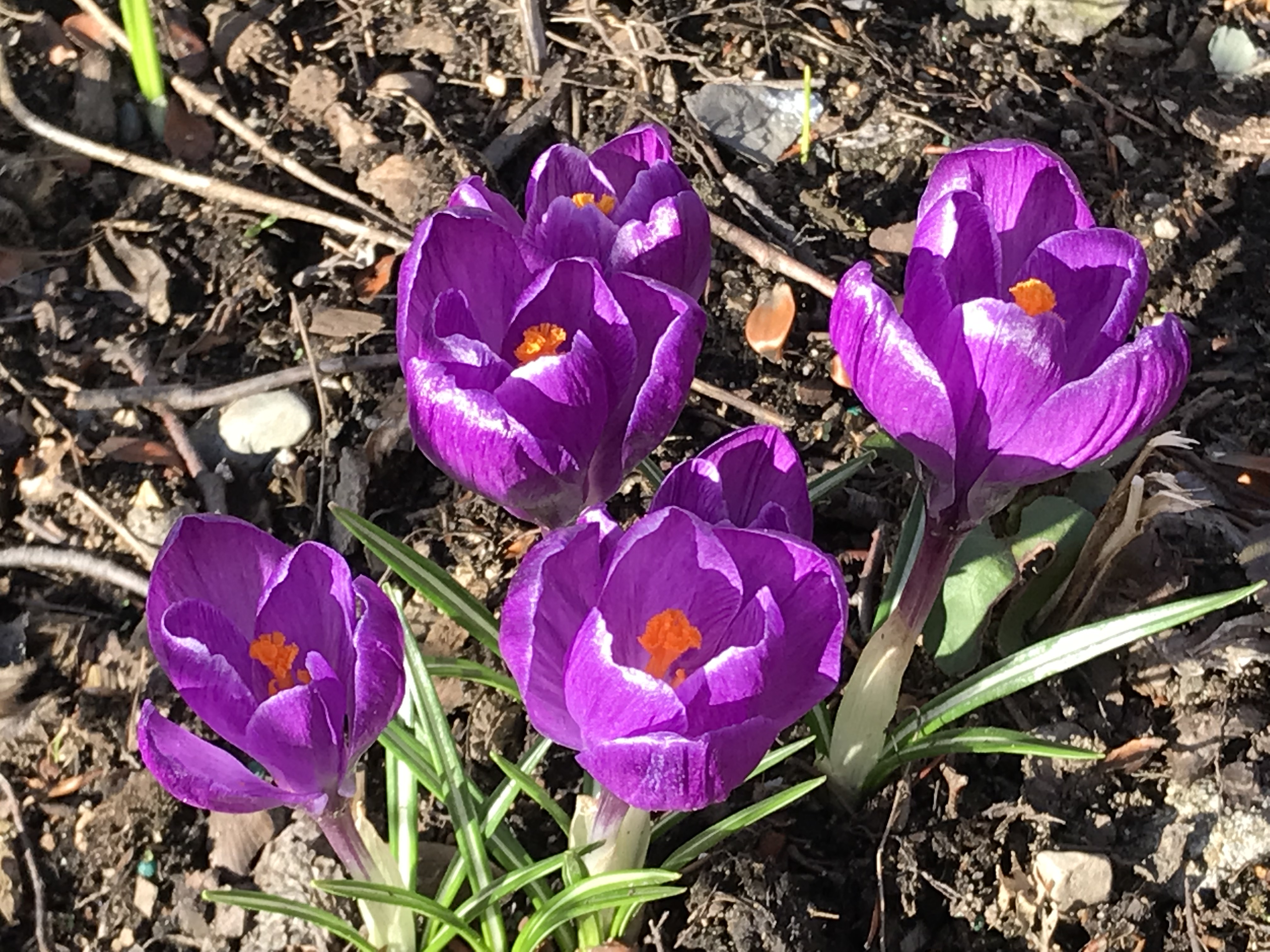
Throughout my cancer treatment, I felt an abiding inner peace because my resilience wellspring was buoyed up continuously by my life partner Anne, friends, family, and spiritual connection. I accepted and trusted my soul’s journey. Still, there are always multiple aspects to life’s most profound experiences. Now a year after the end of treatment, I am even more aware of both the sweetness and impermanence of life. A variety of feelings come and go. I have tears in my eyes as I listen to a touching song that holds many memories, and I smile when I see spring crocuses in bloom or hear a robin calling. Life’s fleeting and poignant beauty touches my heart deeper with each passing year.

Recently a dear family member passed away. She was 92. My father died years ago at 94. They each had a long resilient life, though with some health challenges at the end. Whether or not we face illness in our lives, eventually, inevitably, we transition. I am not near 90, yet I am closer than I was at 20 (which is a bit shocking). When we are young, life seems endless. As we age and look back at our lives, it all seems to be passing quickly. In the last week of her life, Dodie said that everything was “happening so fast” now. We have an entire life ahead of us—and then we don’t.

Our experience of time is relative, sometimes passing slowly, sometimes quickly. Only in the moment does it cease movement. Now is timeless, and this is where resilience lives. When we live our lives centered in the present moment, human time disappears into beingness, which is eternal. Perhaps this is the way we cope—by bringing ourselves back to the present repeatedly. By remembering that the human spirit never really dies and is always evolving. It is part of a greater everlasting Spirit that fills the universe with light, beauty, and joy.

Even when the world and life seem engulfed in unrest, pain, and uncertainty, this beautiful light gives our lives resilience. Deep within us, our soul’s peace carries each of us through life’s many changes—and beyond. In the expanse of each moment, I silently remind myself of this truth.

What If…?

What if you found out that today was the last day of your life? How would that affect the way you experienced everything? Would you see and hear the world with fresh eyes and ears, the way a newborn baby does, everything new and wondrous? Would you notice the colors of the trees and flowers, the vast expanse of sky, the music of birdsong, the faces and voices of those you love? Would habit and routine fall away, to be replaced by an appreciation of the miracles we live with on a daily basis?

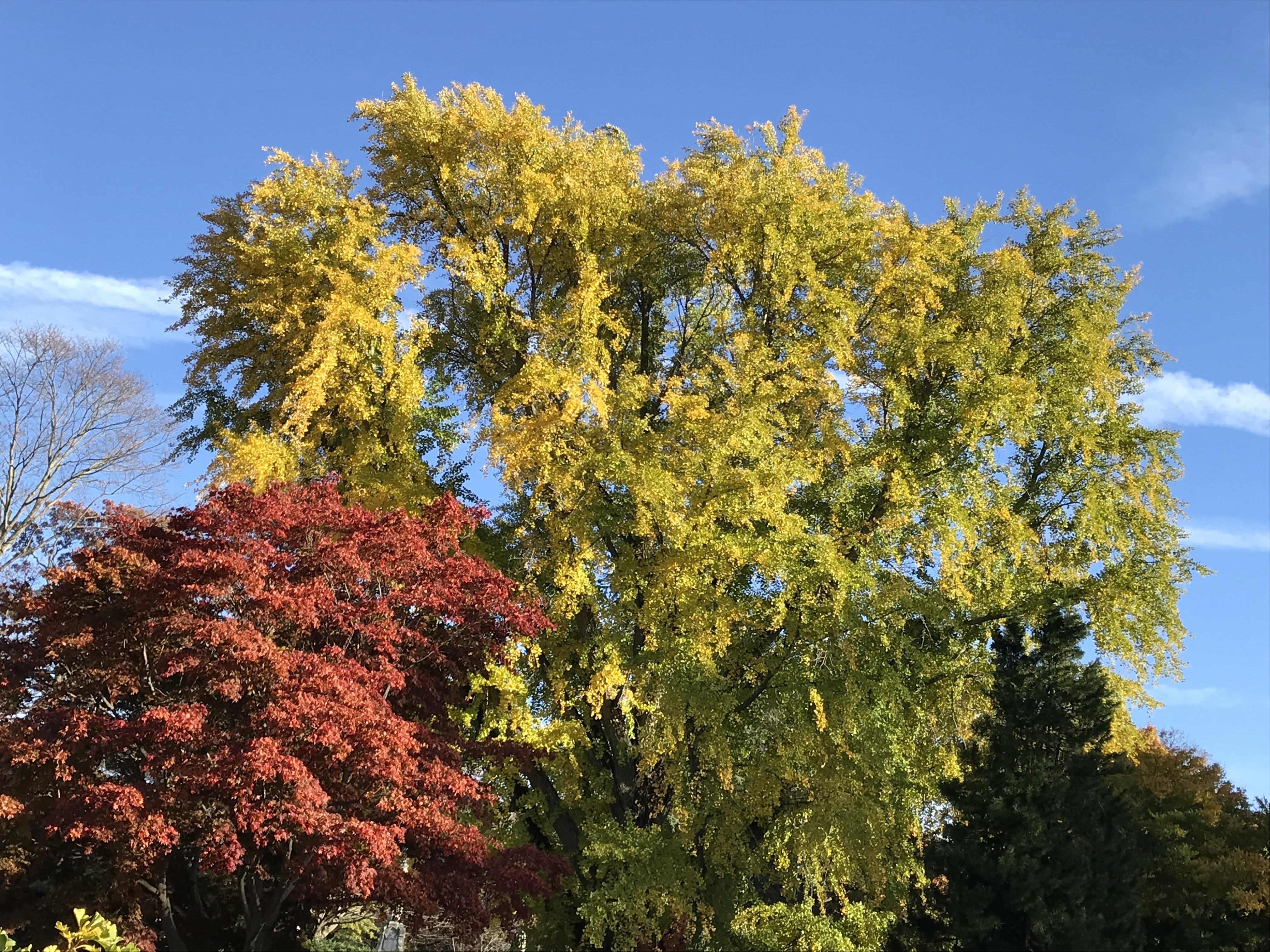
This thought passed through my mind recently as I walked among the autumn-colored trees at Mt. Auburn. I realized that I was a bit distracted, only half-aware of my surroundings, and I consciously made an effort to become fully present. I sat on a wooden bench and closed my eyes for a few minutes, and when I opened them, there was the world before me in full vibrant living color. My heart reminded me of how fleeting each moment is and how extraordinary every detail. Tears rolled down my cheeks.

We have the opportunity each day to remember that, to live it fully. That’s why we came here, to wake each morning and see sunrise, to pass through our days with awe and celebration. We are all strangers on this planet, slowly recognizing that we are actually family. Whether you think of humans as souls, angels, ETs, or just physical organisms, there is a thread of connection among us. A thread that links us to the stars and the galaxies and to all living matter. We are tiny beings in the cosmos, with one life to live here on Planet Earth. One second in universal timelessness. I don’t want to forget that, ever.

As I continued my walk, I found that everything took on a shimmering aliveness, as if I had never seen it before. Gratitude filled my heart. I know I have the opportunity to press this inner “refresh” button each moment of my life. Many of us experience a renewed outlook if we go through a health crisis or lose someone we love. Or if a particular birthday reminds us of aging. Life becomes precious beyond words. We realize at the deepest level how little “time” we have in the greater scheme of things.

In human-created time, today is always the last day of your life because there is really only the present moment. If I am not fully awake and in love with life now, will I ever be? Today I know I am alive with all my heart and soul. May that continue. And may each of us feel the sweet unrepeatable perfection of everything visible and invisible throughout our lives.

The Wandering Mind

In Western culture, we learn to let the mind direct us, as if it were the designated all-knowing leader on a journey through the uncertain jungle of life. The mind is ever-busy, looking for problems to solve, but it often gets lost in the looking. The mind’s focus is always shifting, past or future: looking backward with regret or forward with trepidation. Rarely present, it leads us down a path of endless, restless movement, never at peace with life as it is. The expression “your mind is wandering” is a fairly accurate description of our usual mental state—unless we find a way to break the habit of dwelling on the past or worrying about the future.

If we happen to meet a Buddhist or yogi on our life path, we may encounter a different way of looking at the world: focusing on the present moment, one breath at a time. This changes everything. I began a meditation practice (insight meditation) about 40 years ago, and it has gradually shifted how I see the world and how I live day to day. Or rather, moment to moment. All the wise teachings I have encountered over the years have emphasized present-moment awareness, the key to peace of mind. This is accessed through the breath—because you can’t breathe in the past or future. Focusing on each breath, I am brought back to the now, and peace arises within me. My mind stops wandering, and I experience the peace of presence.

It is not an instant overnight occurrence; it is a practice. And I am still practicing, reminding myself to return to the breath, to the present, to peace. This may be the greatest wisdom of my spiritual journey—to rest in the peace of mind that arises from that deep awareness. Whenever I find myself worrying about some future event or regretting something I did or said in the past, if I can remember to take a deep breath and come back to the moment, I am at peace again. And nothing else exists but that peace. The more I repeat this process, the deeper it is ingrained in me, and the more easily I shift into it.

Basically, that means aligning with my soul, because the soul never feels fear or regret. It lives in the present moment, and there, there is only peace. The soul is always with us throughout our lives to gently remind us of that peaceful space within us. Perhaps that is the reason for all life journeys: to discover the peace that is the source of all life on Earth. In peace, there is no suffering. No judgment or fear or struggle. We can look in each other’s eyes and see the light that connects us all to a greater universal peace. We let go of fear and allow trust to arise in our hearts.

There is a wonderful animated film called How to Train Your Dragon. In it, the main character, a young Viking, turns away from aspiring to be a dragon slayer when he looks into the eyes of a dragon he is about to kill and sees the same vulnerability and fear that is within him. Instead, he reaches out and touches the dragon, and they become lifetime companions, each looking out for the other. The Vikings and dragons gradually learn to live in peace and harmony with one another.

Many of us live with a dragon of fear and mistrust within us, on the defense against past or future danger and misfortune. Our minds have learned to be our defenders, ever wandering in search of problems. If we befriend that dragon and “train” it to trust life, we can live in peace. With each breath, we have that opportunity. The mind can stop wandering and rest in the beauty and peace of the present moment.