In Search of Silence

Silence can be hard to find these days, and if you find it, hard to hang on to. The 21st century world is filled with noise almost everywhere, even in places that are supposed to be quiet, like cemeteries and residential areas. But I’m getting ahead of myself. First, I have to admit that I am a lover of quiet: the silence of meditation rooms and nature sanctuaries. Deserted beaches and country roads. Mountain tops and forest clearings. Mornings before dawn. I gravitate to the absence of any sounds except those in Nature. In recent years, that has become more difficult to discover, particularly in living situations.

When Anne and I moved back to Massachusetts from Florida three years ago, we rented an apartment that was on a busy street in a town northwest of Boston. The neighborhood was generally peaceful, but the traffic sounds on that street continued all day long. Only in the night and early morning hours did quiet descend. We learned to live with it, but it did not engender an ongoing sense of outer peace.  A few months ago, we moved to a condo community in a more rural/suburban area with woods close by and busy streets further away. Very quiet—with one exception: There is a rifle and pistol club down the road, and the sound of gunfire is frequently audible in the distance. Fortunately, the building we live in is relatively soundproof, so we don’t hear it unless we go outside for walks, when it can definitely be disquieting.

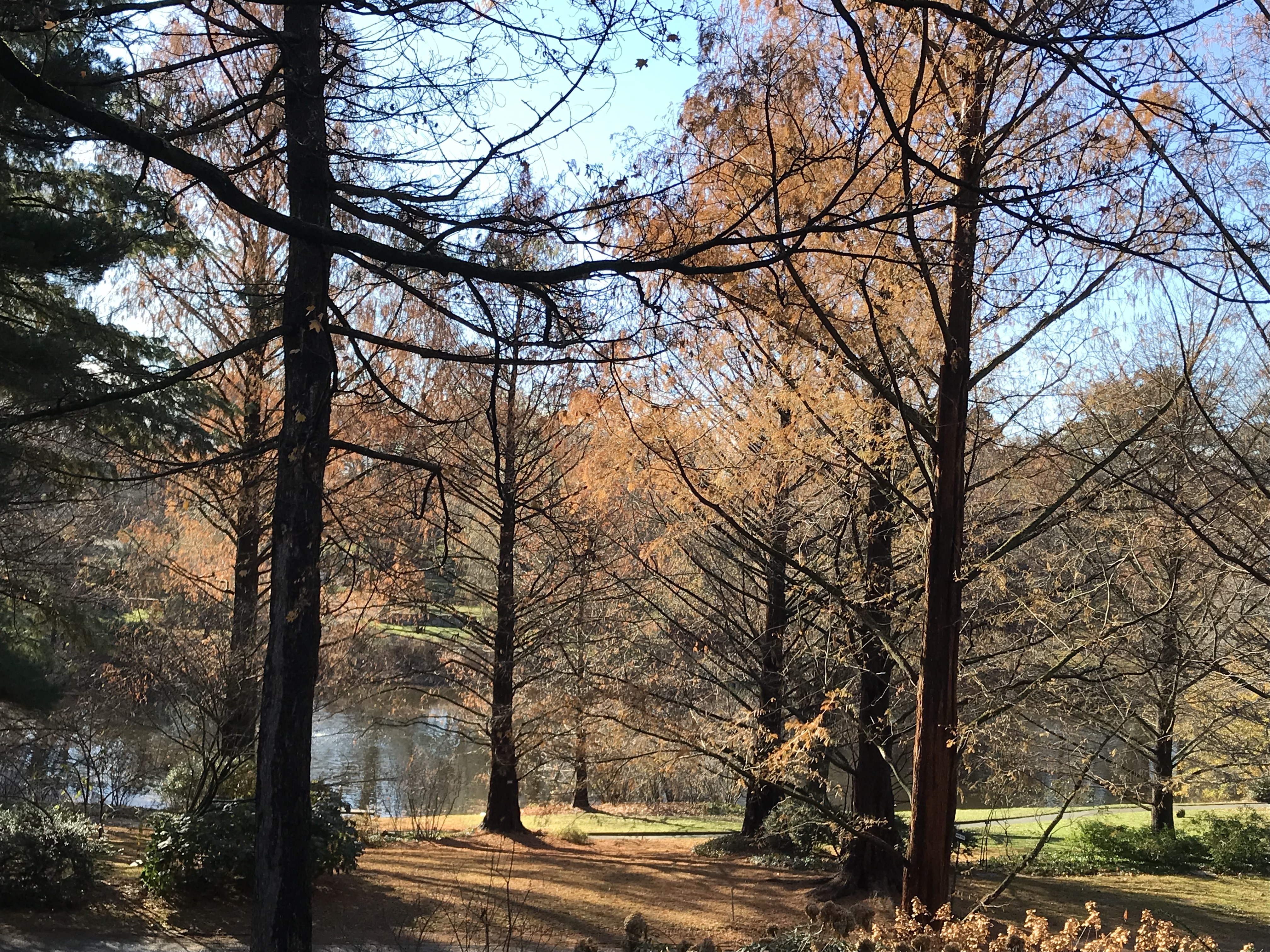
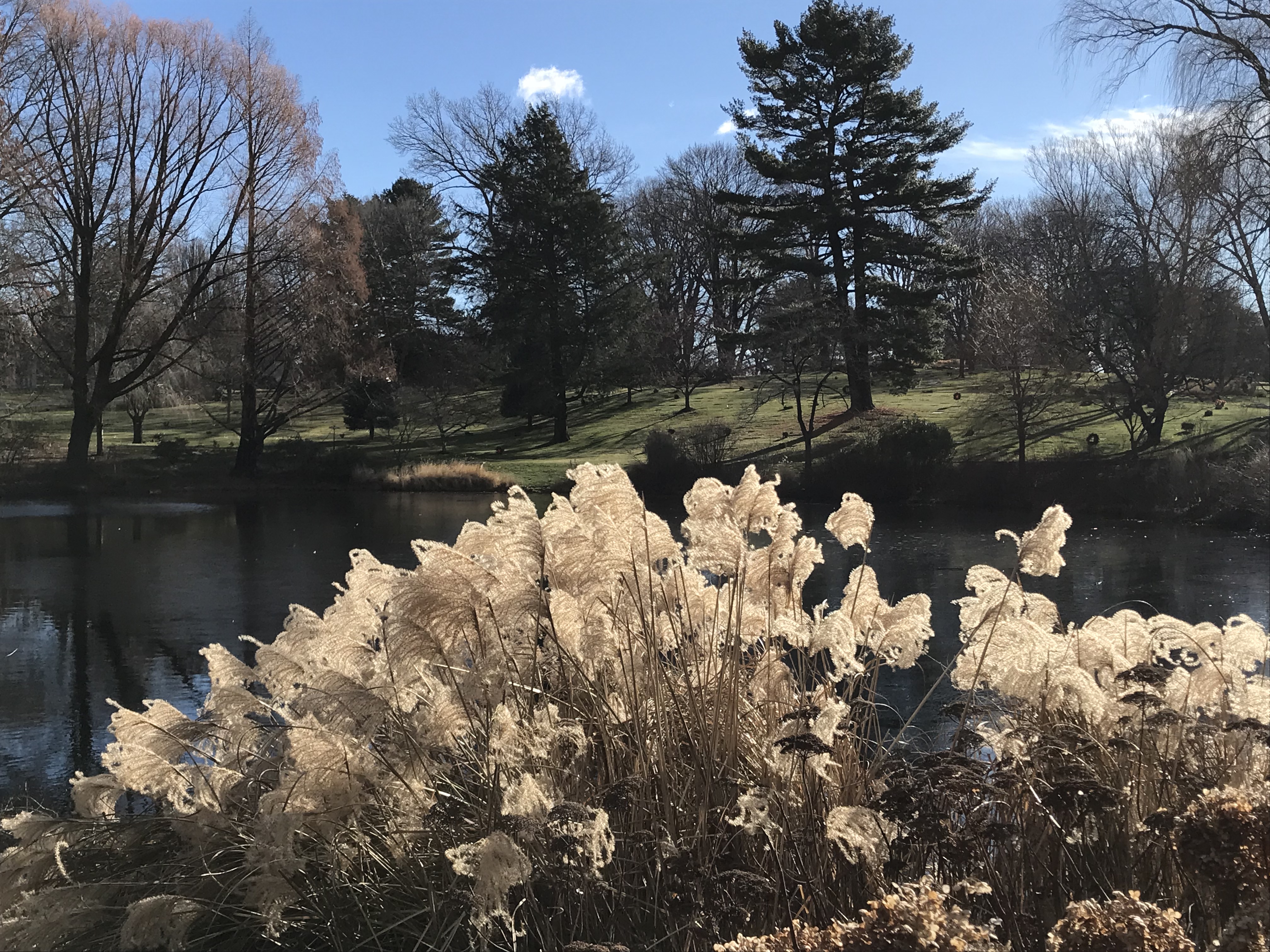
As a walking alternative, I often take the train across town to my favorite nature sanctuary, Mt. Auburn Cemetery. I have been going there for many years to experience a quiet, peaceful oasis in the midst of a semi-urban area. Recently, though, there has been a change in focus at the cemetery. They are trying to encourage more people to visit by organizing events such as solstice gatherings, historical walks, etc. Along with that comes new sidewalks in some areas and the (perceived) need to keep them clean and tidy at all times. Enter leaf-blowers—and the deafening noise that accompanies them. When I visit now, if landscaping equipment is in use, I move in another direction, like the birds.

So, are cars, guns, and leaf-blowers obliterating any chance for silent peace in our contemporary culture? Not necessarily. For me, a spiritual perspective helps. From this view, silence is not solely a surface phenomenon in the external world. It lives inside everything, including each one of us. A friend of mine told me that when he visited India, the noise of the crowds and traffic in the cities was almost overwhelming, and yet he felt a deep silence simultaneously. It arose from a Presence deeper than human activity. And it is everywhere if we become aware of it.

Perhaps the secret is to carry silence with you. If I enter a situation consciously aligned with the silent Presence of spirit inside me (and everything), then that is what I experience. If I accept whatever is before me, I access peace. Every day, I relearn that wisdom. Within that space, there is nothing that can disturb my inner peace and silent soul.

“Relax into the part of you that is always silent, always still, always in meditation.”—Panache Desai
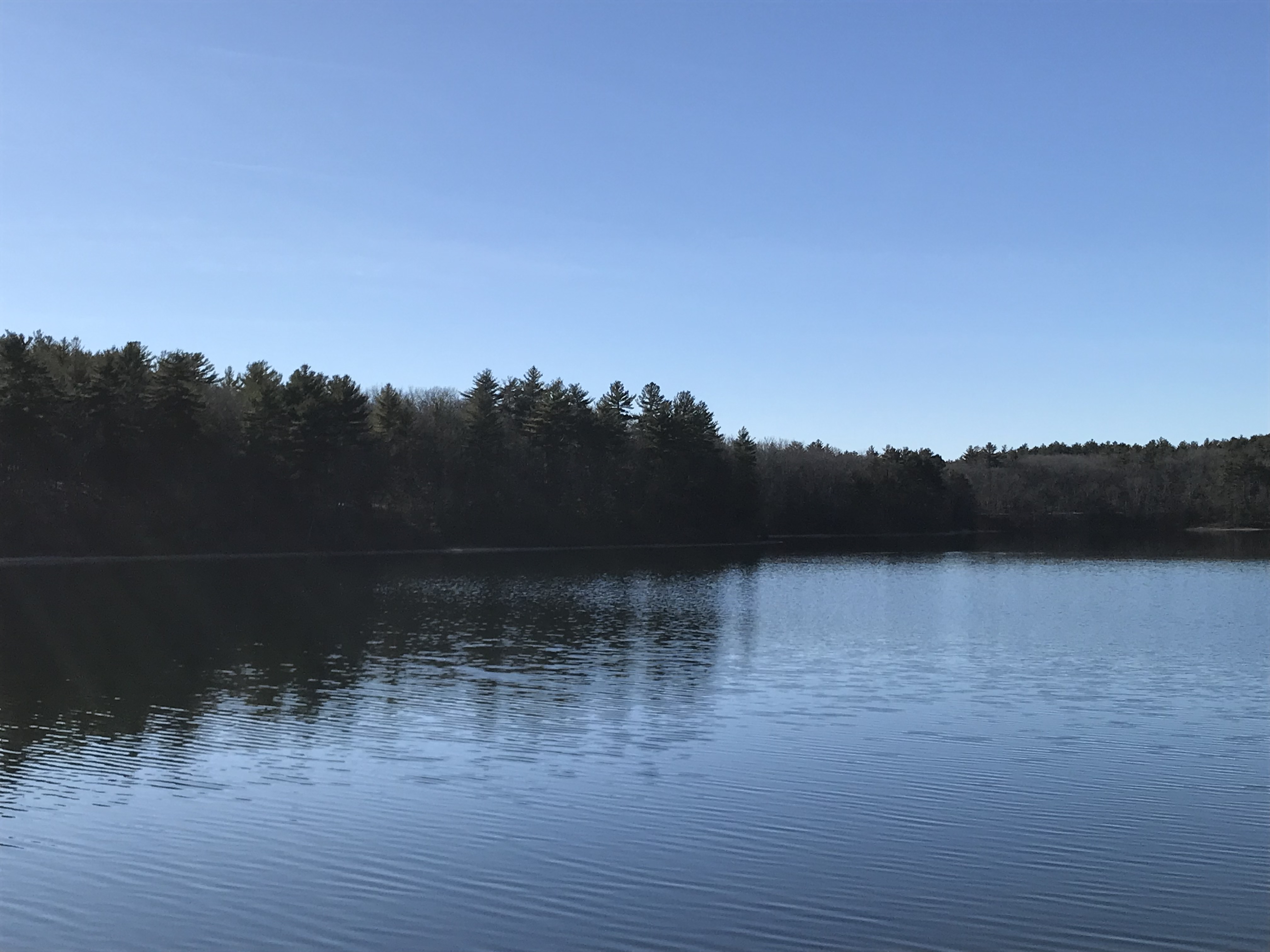
No Where

If you walk or sit in silence long enough, you blend with everything. You are no longer separate from the world around you, gazing outward, because there is no out or in. The mind stops grasping and relaxes into blankness. You are no where—because where ceases to exist. This is infinity. Some call it Presence or universal consciousness. It is pure awareness without parameters or definitions. Just being.

I sometimes find myself there when I am walking in Nature or deep in meditation (and once as I was coming out of surgery). But even there is a misnomer because how can there exist in no where? I assure you I am not trying to trick you with word games. I am attempting to move beyond words to the silence of the soul. Of course, you can’t really find your way to silence with language. To describe the process of becoming completely silent seems almost contradictory.

Yet perhaps it is not entirely impossible to offer directional metaphors, as the poet Rumi did in all his work. Recently, a friend commented that the deep meditational experience of infinity was akin to being in the field Rumi describes, which is “out beyond ideas of wrongdoing and rightdoing,” judging. Remembering the words of that poem immediately opened the door of Presence even further for me. A field that is empty of everything but shared spirit.

That is exactly how I felt within the depths of the profound silence of no where. Separation completely fell away. No opinions, no judgments of others, just awareness without any definitions or language to infringe on the vision of the soul, pure and true. Perhaps this is the purpose of all life: to reach that experience of being completely immersed in the silence of the soul. Because within it there is no longer inner or outer conflict, only peace.

We humans often talk of peace on Earth and aspire to it. Yet it seems to drift further and further away. Maybe that distance is an illusion, and in truth we are moving closer to it whenever we reverse our gaze from outward to inward. Because that is where peace lies, undisturbed and eternal. Our inner vision can direct us every day to living in a peace that radiates outward to all those we meet. In spite of the conflicts of the times we are now living through, more and more people are being catapulted inward by outer discord.

Our souls are guiding us in this direction, to seek the harmony and oneness that lives at the center of all creation. The no where within the where. Perhaps we came to Earth for this very reason. To experience the extremes of separation and then stand in the field of infinity, recognizing all that we see as one heart, one spirit. Humanity and divinity as one. Home at last.

Stillness and Spirit

Within stillness is Spirit: beingness without definition or form. Before it manifests into the world as we know it, the entire universe is pure silence, a formless Presence that shines with light. When we are born, we are that shining light, taking human form. It remains within us throughout our lives, but we forget that it lives there as the soul. If we embark on a spiritual quest later in life, we may become aware of that soul presence and know it as God/dess. This is the human journey.

Growing up as an only child in the Illinois countryside, I experienced silence as part of my daily life. I could often be found sitting in trees reading or playing quietly by a creek. The sounds of Nature surrounded me, but there was a deep stillness within them. As an adult, living in various cities, I sought that silence everywhere, beneath urban noise and busyness. I could always find it when I was alone, so I valued solitary time, particularly in Nature. My exploration of spirituality led me to recognize God in meditative moments of complete silence. External silence reflected inner stillness, and it was all soul awareness.

This awareness and silent connection to Spirit has become an essential part of my life. Each morning before dawn, I sit in silence and breathe it into my consciousness. With each breath during the day, I reawaken that awareness. This is my practice midst all the distractions of daily life. It holds me steady when so many parts of living on planet Earth now can throw me off balance. If I can find my way back to the inner stillness of my soul, I recenter.

After my journey through breast cancer two years ago, I began to become more aware of the cycles of form and formlessness arising within silence. The challenges of that time expanded and deepened my spiritual connection in ways I couldn’t have imagined beforehand. For example, a few months ago, as I looked out the window at the winter snow, I suddenly recognized the seasons as a reflection of life taking form within the cosmos, God becoming manifest.

Winter can be seen as formless beingness that holds all potential. Spring is the birth of life in the forms of Nature on Earth. Summer displays the full bloom of living expansiveness. Autumn colors show us the colorful light of life just before it releases itself into the formless slumber of winter once again. A wondrous cycle of living and dying and rebirth that repeats itself each year. Night and day, darkness and light, are other examples of form arising from the formless unmanifest realm of pure being every day. And sound too emerging from the silence as birdsong at dawn.

If you look around and quietly observe with your inner eyes, you can see these cycles of form and formlessness taking place everywhere. Slow down and breathe in the silence beneath everything, and you will be amazed at the miracles you experience. Spirit lives in stillness, which is the heart of who you/we are.

Words and Silence

This may sound strange since I’m a writer, but sometimes I feel that words and language can weigh us down and overcomplicate our lives. At least as they are traditionally used: to argue and debate, to delineate and deduce, to explain and edify, to compile histories and construct theories. Politics, science, philosophy, religion. Even spirituality can veer off into wordiness. Some books and teachings engage the mind more than the soul. The deepest, most spiritual response to life is often just sitting or standing silently, in reverence. To look up at the trees and see God. To listen to birdsong and hear Spirit’s voice. No words required.

Of course, not all words run to excess or cause mental fatigue. Some poetry and prose can arise from a quiet space of being in the world. When I read Mary Oliver, Ann Patchett, or Mark Nepo, I feel a connection to the core of all life, Nature, and humanity, clearly expressed from the heart. Haiku is the simplest form of poetry. It pares language down to the basics and in doing so allows the reader infinite space to receive. Such writing engenders inner peace instead of a distracted, busy mind.

In one of Ann Patchett’s novels, two men from different countries who don’t speak each other’s language play chess for hours in silence. The tension and danger that surrounds them is broken by the peace that arises from their shared silence. I’ve seen chess players in a crowded city square also play in silence, those gathered around them silently watching. A small circle of stillness forms in an otherwise noisy area. How many other activities could we do quietly, creating peace in the world around us? Walking or birdwatching, for example. What about preparing meals or listening to music? We could in theory extend the list to everything. How would the world shift, without one word spoken?

Perhaps this is not completely realistic, but yet not wholly impossible, on a small scale, in our individual lives. If we hold stillness within us, outer noise falls away. Small talk evaporates. Busyness slows down. Our minds slow down. It suddenly doesn’t seem that necessary to narrate our every move or comment on everything (aloud or via texting, social media, etc.). In the space that opens up, we can rest in our own inner presence, without verbal interference.

Words can be a key part of our daily lives, and language a bridge to communicate with others. It is enjoyable and comforting to share our thoughts and feelings, bringing us closer together. But talking is not always necessary, and if we allow silence to expand within us and outside of us, what we do say becomes poetry or music arising from our souls. Gently touching the hearts of those around us and then dissolving into stillness again. Wouldn’t you love to live in a world like that? Take a deep breath, and don’t say a word. There you are.

Without a Word

I usually arise around 4 or 5 in the morning when there is predominantly silence everywhere. I sit in the darkness and rest in the stillness, soothed by the absence of noise or traffic outside. Soon the birds begin to sing, and the light of the sun fills the world. There are no voices or conversations interrupting the peace I feel at this time. I am absorbing the experience of morning without a word. Through my ears and eyes; through my cells. Presence.

So much of our lives is based in language, spoken or heard, filling our brains with thoughts. What would it be like to experience the world without mentally describing it to ourselves? Can you see a tree or bird without naming it as such? A person without mentally categorizing gender, age, race? Even beyond that, can you see anything without language, just experiencing it without a word? We humans have learned to divide the world with the words we have created to describe it. Often we aren’t even seeing what we see; instead we perceive a mental image of a word designation we have come to associate with something. We all do this. What if we tried to shift our awareness into just experiencing with no perceptual parameters? Life arising and falling away with no attempts on our part to capture it in words. Like the silence at dawn.

I’m a writer so this can seem like quite a challenge to me at times. Yet when I am walking in Nature or sitting in the silence of sunrise, it frees my mind to just experience the world from my heart, wordlessly. I practice seeing without naming as I walk among the trees, bushes, and flowers of the natural world. I can always write about it later, but in the experience itself I prefer to be and receive the full wonder of what is before me. I grew up an only child on five acres in the Illinois countryside, so I spent a lot of time alone during those years.  I had friends at school, but at home I enjoyed the solitude and silence of Nature. Somehow this has carried over to my adult life. I feel most at home in wordless Presence.

A number of years ago, when I was taking part in traditional fire ceremonies with Maya elders in Guatemala, I experienced this same kind of deep Presence. Even though words in the Maya language were spoken within the ceremony, somehow there was a profound silence that pervaded everything. No conversation, just inner quiet and receptivity. The stillness of Spirit linked our hearts and souls and also brought Nature’s magic beyond human language close to us. Bees circled in the air above the fire before the ceremony at Tikal, and birds swooped through the lingering smoke afterward. It was as if they were weaving the energy of the ceremony into the greater world. And none of us spoke at these times; to be wordlessly present was enough.

Of course, it’s not necessary or realistic to live like this all the time. Our friendships, family, and community arise out of communicating verbally and sharing life experiences, thoughts, and feelings with words. Yet, to step back at times and just be silent is deeply soothing. Your breathing slows, and your whole body relaxes. Space opens up within you for the soul to expand into present-moment awareness. Those who meditate or take long quiet walks experience this. I feel it in the stillness before the day begins. If we each found our way to including such experiences in our daily lives, perhaps we would be less busy and stressed. Sometimes the most profound moments of life occur without a word.