In Silence…

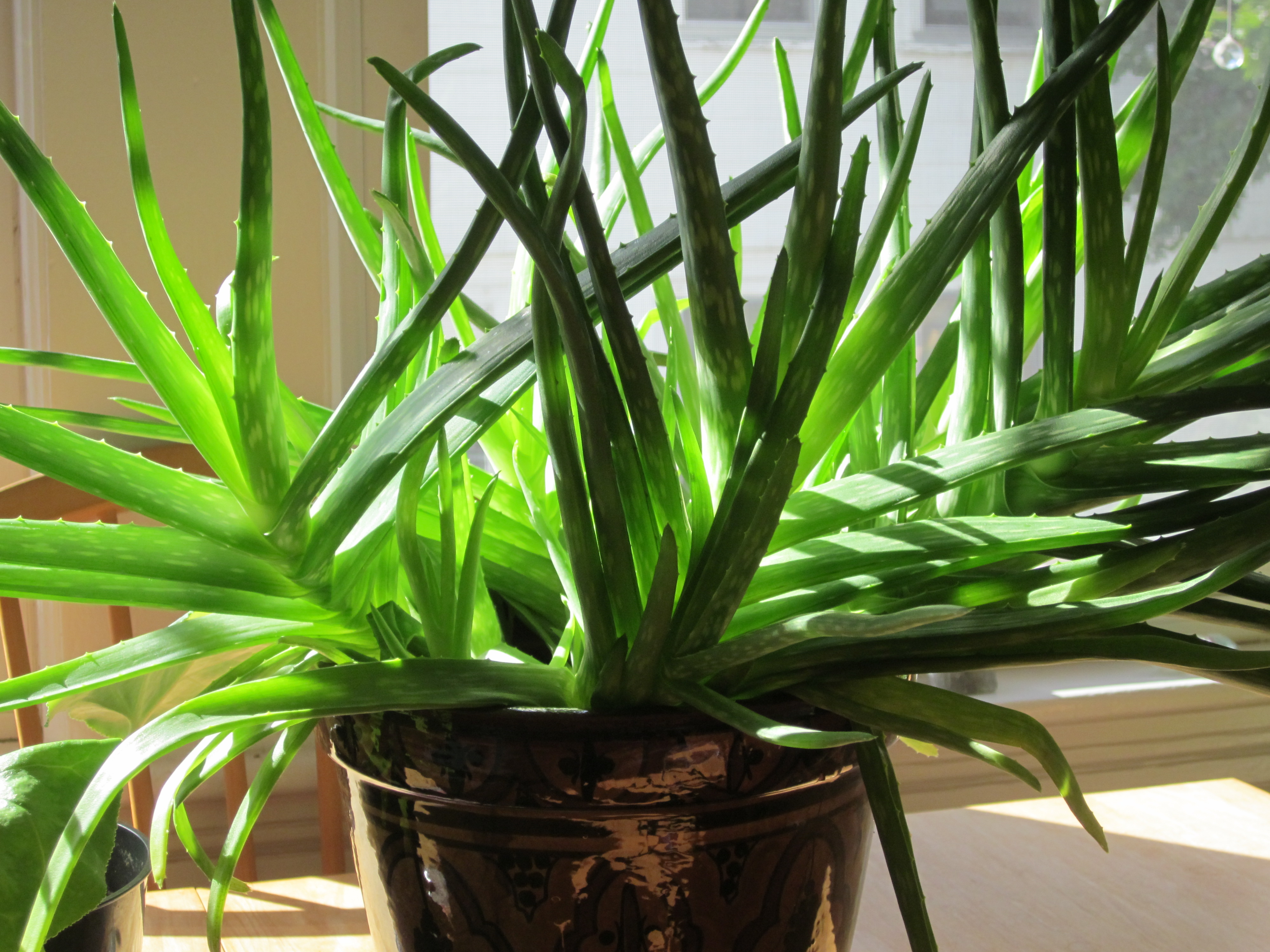
Photograph © 2014 Peggy Kornegger

We humans express our selves and our lives in words, language, and sound. It is a learned process, reinforced with every generation. We talk our way through each day, sometimes clamoring to be heard above the general din of daily life that seems to have increased over time. Not only human voices but cars, buses, planes, media, and machinery (leaf blowers, snow blowers, etc.) add to the mix that becomes the “noise” we have learned to acclimate ourselves to—more or less. But at what cost? Today, stillness and complete silence often seem like the dream of a long-gone world. Yet, it is only in silence that we can hear the voice of spirit within, our own soul’s wisdom and guidance. Without that compass, we flounder through our lives, stumbling along the ego’s path of alternating attachment and avoidance in relation to all things. We are never at peace, always running toward or away from something. Only in stillness and soul connection can we find respite from that hamster wheel of striving and suffering.

Silence has always been important to me. As an only child, I spent long hours outside quietly playing alone or reading books high up in the branches of my favorite climbing tree. School was a place for friends and social connections; home was where I decompressed and communed with my self, although I was too young to even articulate it that way. As an adult, I found work to also be a “social” experience; when I came home, I needed large expanses of quiet time alone to rebalance myself. At some point, I began to meditate to more easily access that inner harmony. Gradually, I discovered that the longer I spent in silence, the more peaceful I became—and the more I carried that inner peace with me everywhere I went in my life.

My partner and I recently made an agreement to remain silent each morning until we finish breakfast. We finally figured out—after more than 30 years together—that this is the most peaceful way to begin the day for each of us. We both feel less distracted and more centered. When I am talking, I am not listening, period—whether to the subtle sounds of nature outside the window at dawn or to my soul’s voice within. Once I spend time in that inner/outer silent space, I can truly listen to others, and to life, with presence and without restless distraction. My partner and I start our days in a much happier, more harmonious frame of mind because we have given ourselves this gift. Even in the frequently noisy external world we all inhabit, it is possible to find ways to bring more quiet, stillness, and calm to our lives—and thus to the lives of others. In silence is the deepest truth, the most profound peace.
 

Learning to Listen

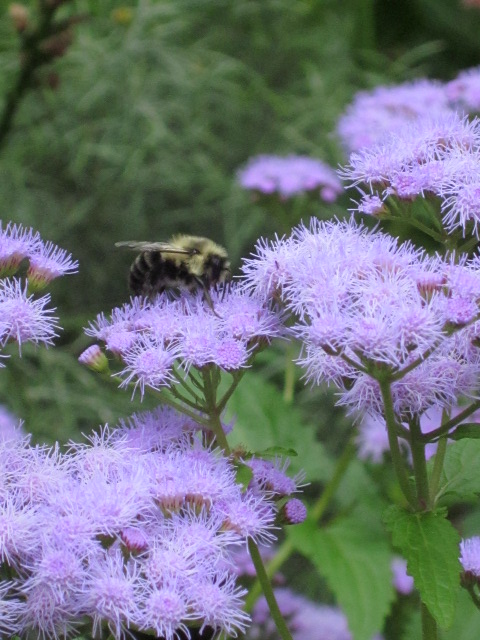
Copyright © 2013 Peggy Kornegger

We learn to talk when we are babies, expressing ourselves in sounds and eventually words that make sense to those around us. Speech and verbal communication are encouraged and celebrated. What an achievement that first word is—a rite of passage in the human journey! Listening, however, is not given quite the same emphasis or encouragement. In school, we take classes in speech but not in listening. Within the context of polite behavior, we are told to listen and not interrupt, but learning to be silently present with focused attention in a variety of situations is not part of the curriculum. Neither is quiet time spent in meditation or contemplation. Western society is noisy and wordy and very distracting, and we learn to live with it in whatever way we can, often to the detriment of our inner spirit.

As an only child, I played quietly by myself as much as with friends, but I didn’t begin to learn the true value of silence and of listening until I was well into adulthood. Although from a rural background, I acclimated easily to the novelty of living in cities and thought little of urban noise for years. At some point, however, I began to notice, and then couldn’t stop noticing, the lack of quiet everywhere. I sought out silence—in meditation classes, in parks, on vacations to natural settings away from the city. I took up bird watching as a way of immersing myself in nature, and it was then that I really began to learn how to listen.

In order to observe birds closely, you have to be willing to stand or walk in absolute silence, your senses of sight and hearing keenly attuned. When you are silent and motionless, the natural world gradually resumes its normal activity, which it had ceased at the appearance of a noisy human. What a miracle this was to me when I first experienced it. The more I listened, the more I heard: birdsong, bees buzzing, squirrels chattering, chipmunks scampering through the bushes, the wind rustling tree leaves and creaking branches. My soul was in silent communion with everything around me. Over the years, my listening deepened to the point where I felt I could actually hear flowers growing in my garden in the early morning stillness. Sounds fantastic, I know, but when you quiet yourself enough and truly listen, the world opens up its secrets to you.

Birds and flowers weren’t the only ones to teach me about listening. The elder parents in my life also taught me this sacred life lesson. Both my father and my partner’s mother experienced memory loss and related dementia in their later years. What you learn first in that situation is not to rush or finish the other person’s sentences, but to allow them time/space/silence to find the words they want to say. And if they don’t find the words, so what? Really the words themselves are unimportant. You learn to listen to the spaces between the words to hear what is really being communicated. I listened with my heart, with my soul. The last time I saw him, my father and I shared a lifetime of love just by looking in each other’s eyes. When he spoke, I heard his heart’s voice beneath the words. And during the afternoons when my partner and I sat quietly with her mother listening to 1940s tunes, we experienced together the beauty of the songs as well as the silence between the songs. Our spirits were connected in that peaceful space.

Perhaps what I am describing can’t really be taught in school, but only in life. We learn to listen as we learn that there is more to this world than the physical dimension. The longer we live, the wider our perception and awareness grows (if we are fortunate), and the closer we come to the essential stillness that is at the core of being and at the center of the cosmos. Out of silence, sound is born, life is born. When we listen deeply enough, we hear the sound of silence itself. And that is the place where our souls speak to one another, without words.


It’s All Just Divine!

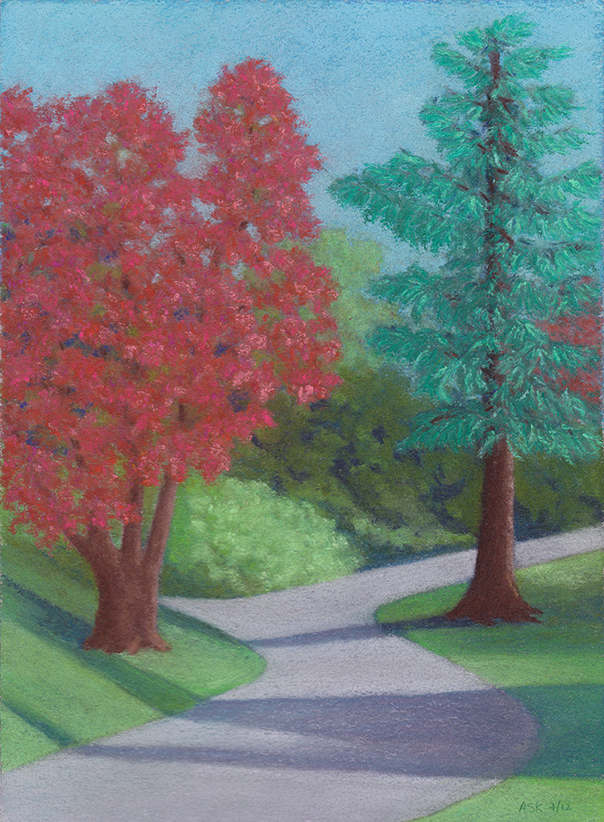
© 2011 Anne S. Katzeff / Artist
Divine is an interesting word, with more than one meaning, depending on context. The adjective divine means godly, angelic, or heavenly, in the spiritual sense. Divinity, or the Divine, is another name for God in some traditions. Then, somehow, the “heavenly” reference came to also mean splendid or sensational, especially with regard to food. “This chocolate cake is divine!” There is even a kind of fudge called divinity. The experience of God and the experience of food can both be transcendent, as we all know!

In my spiritual exploration over the past 20 years, I have often used Divine as an alternate name for Spirit, Source, or God/dess. I like the word because it has a shining, translucent aspect to it, like something floating between this dimension and another. Which is, I suppose, what God is, really—a luminous, non-localized presence. Within my own meditation and yoga practice, I have experienced that Divine presence at different times as shivers all over my body, tears in my eyes, inner vibration, pulsing in my palms, or deep expansive peace. More and more, I know that I am not alone and heavenly guidance is available to me 24/7 if I just breathe deeply and tap into that space of inner peace. This connection is not always instantaneous (to say the least), but if I just remember that it’s there, then I am halfway home.

One morning recently, I found myself unable to quiet my busy mind and the endless stream of distracting thoughts that filled my consciousness. Self-judgment followed. Then, I heard again the inner guidance I had heard before when I was trying to understand why I suddenly felt so much sadness in the midst of feeling peaceful: “It’s all Divine.” Right. I forgot. That’s the wisdom that keeps gently tapping me on the shoulder and whispering in my ear. God is in the thoughts and in the space between the thoughts, in the emotions and in the peace. There is no place where God is not. When I let go of judging and embrace my active mind and my sadness, I am at peace. Peace is always present within the soul’s silent awareness. The soul is quietly observing the Divine (itself) having the experience of being human, and there is no separation anywhere from that vantage point. It’s all human and Divine.

Each time my mind won’t settle down or I’m distracted by neighborhood noise during meditation now, I am remembering more and more easily: My spinning thoughts, the roaring garbage truck, and the water drops sparkling on the tree branches in the morning sun are all part of the same oneness. As I take deep breath after deep breath, I slowly relax into the inner peace that is awareness without attachment or judgment: It’s all just Divine….

Dawn—The Sacred Hour

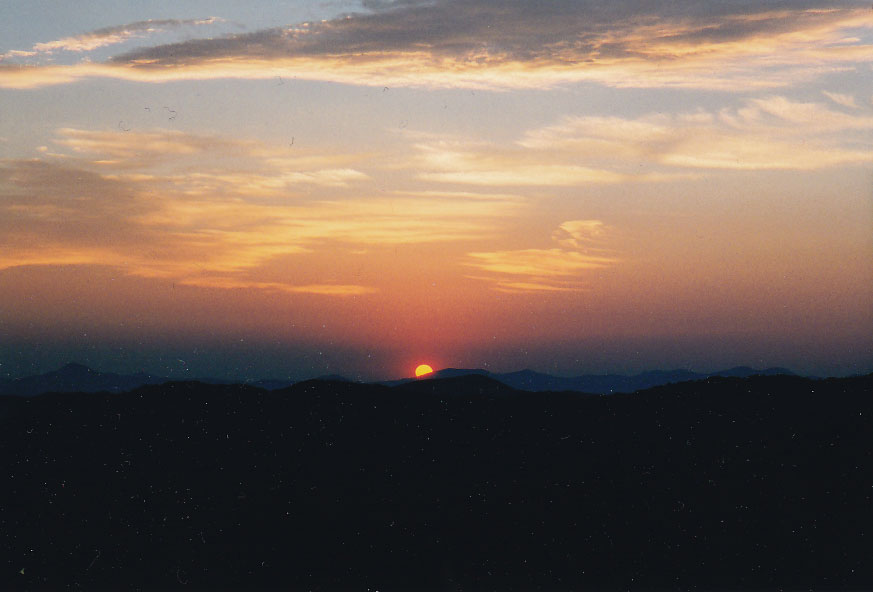
Photograph © 2002 Peggy Kornegger
Since the beginning of December, I have been drawn to meditate in complete silence for a full hour as the sky is lightening just before dawn. I usually meditate in the early morning each day, but recently, the timing has become very precise. Some inner guidance awakens me while it’s still dark. Sleepily, I walk to the chilly living room and wrap myself in a blanket before sitting in my favorite chair to meditate. The guidance seems very clear that nothing less than an hour will do (sometimes more), and thus I am present for the complete experience of sunrise: darkness to first light to full radiant sun shining. It takes that amount of time for my physical body to settle into the depth of meditation required of me. This is not the one-breath-and-you’re-there process that sometimes is my experience. I am going much, much deeper now, and commitment and patience are necessary.

As I sit through the restlessness of my mind and body, I bring myself repeatedly back to the breath and gradually sink down into the inner stillness and peace of the soul, which always awaits me. It takes a full hour to get there, but “there” is deeper and more expansive than ever before. The breath, slow and steady, carries me to a place where infinite space without boundaries opens up all around me. In fact, there is no “me” really. Instead, there is consciousness, being without form, which has no beginning or end. Separation does not exist. I am aware of my physical body as a transitory container for that infinite beingness. The body is temporary, but consciousness is eternal. I experience this rather than think it.

I open my eyes at this point because I can feel the sun’s rays on my face. As the sun becomes fully visible over the tops of the trees, light fills the sky and illuminates everything. Each tree branch, each drop of water, sparkles and radiates light. Multiple suns are reflected in the window glass; dream-catchers and hanging crystals shimmer and dance. Ordinary objects are magically transformed in the light. I am transformed. Or perhaps the more accurate word is revealed. The soul of all things is revealed, and my eyes, filled with light, see the true nature of everything, which is radiant, sparkling divine light. I understand that we all are that. The details vary and morph into different forms, but our essence, the core essence of all things, is divine light.

As I continue to sit in the silence, an all-encompassing love fills my heart with gratitude and my eyes with tears. Dawn—the sacred hour when divinity and infinity reveal themselves as one in the light, and the soul silently witnesses it all. This is the amazing power and grace of the dawn hour, an unexpected gift of warmth, light, and renewal in the midst of this cold New England winter.

Making Space for Spirit

© 2012 Anne S. Katzeff / Artist
People have gone on retreats within various spiritual traditions for hundreds of years. The definition of the verb retreat is to “withdraw” or “move back.” In a spiritual context, an individual usually withdraws from the world and goes within, seeking a deeper connection to self, to spirit, or both. Today, many people go on retreats that provide time and space apart from day-to-day life in order to renew their physical body and inner spirit. Both yoga and meditation are frequently offered for week-long retreats in peaceful locations where participants can relax into being instead of doing.

My first retreat was a 10-day trip to Tulum, Mexico, with Brooke Medicine Eagle and Angeles Arrien in 1997. Fifty of us stayed in palapas (stone structures with thatched roofs) next to the Caribbean and met daily for shamanic journeys and sharing in small groups. We visited Maya temples and also spent 24 hours in silence at the end of the retreat. That day/night was the most powerful part of the trip for me because I felt deeply aligned with something greater than my own life as I walked and sat alone in silent meditation. Upon returning home, I decided I would find a way to include retreats in my life regularly.

Since then, whether on a longer trip to a sacred site outside the United States or more locally at New England centers such as Kripalu, Omega, or Rowe, I have periodically stepped away from my life and gone inward to connect with spirit. Last month, however, my time/space apart took the form of an at-home retreat in combination with one of Panache’s Desai’s online programs. I found that if I formed the intention of “retreat,” I actually didn’t need to leave my home or travel great distances to get away. Instead, I limited social and online activities and spent longer periods of time in meditation and silence. Retreat became an inner place of the soul that I could access any time I took a deep breath, relaxed, and tuned in. The key was making space for that experience.

In our busy, multi-tasking lives, we often run from one activity to another and then fall into bed exhausted. We think we don’t have time for anything else, and certainly not a retreat, of any kind. Yet, it is possible to step back, even for a moment, and experience a quieter, unhurried part of ourselves. Your spirit is always waiting for you to connect with it. Find a quiet corner, close your eyes, breathe deeply, and you are there. The mind will try to keep you spinning along on a high-speed wheel of mental activity, but the breath can sidestep that compulsive tendency. View thoughts as passing clouds in the sky, or passing waves in the ocean, and gradually, with each deep breath, you will be able to rest in the space beyond thought—soul as silent witness.

Of course, the goal is not to abolish thinking entirely (unrealistic for most of us) but to become aware of it. In so doing, you are seamlessly connected to the part of you that is witnessing your life peacefully and without judgment. That experience alone, whether a minute, an hour, or a week, can provide you with a renewed inner spirit and refreshed physical body. Suddenly, the need to rush through every task on your to-do list seems less urgent, and you begin to allow other possibilities to arise. One or two consciously centered deep breaths can make that inner space available. A retreat is as close as your next inhalation. Give it a try, and the edges of your life may begin to expand in all directions. Make space for the infinite within and without, and your spirit will be forever grateful.