Suffs: Keep Marching!

Earlier this week, I watched the inspiring Broadway musical Suffs for the third time (once live in Boston; twice on PBS, New York show filmed). With both compassion and humor, Suffs focuses on the lives of the suffragists who fought for (and won) women’s right to vote in the years 1913–1920 (a 72-year struggle begun in 1848 at Seneca). This is classic women’s herstory, including the first women’s suffrage march on Washington in 1913 and later hunger strikes by imprisoned activists. All the characters are real people, movingly and powerfully portrayed: Alice Paul, Ida B. Wells, Lucy Burns, Carrie Chapman Catt, Mary Church Terrell, Inez Milholland, Doris Stevens, Ruza Wenclawska…. Several of the women’s names and life stories were unfamiliar to me, even though I had been deeply involved in the women’s movement in the 1970s (when the last scene of Suffs takes place).

I first encountered contemporary feminism when I took a class on the subject in 1971 at San Diego State University. In 1973, I enrolled in the Feminist Studies program at Goddard-Cambridge Graduate School, specifically Women’s Literature. We were a small group of eight women, reading many “lost” women authors, whose work we had to find in used bookstores or library archives. We were living on the cusp of the creation of women’s presses that reprinted these out-of-print, little-known works by women. It was an exciting time to be entering the feminist movement because new women’s groups, periodicals, and publishers were appearing all the time.

Several members of our graduate group, myself included, became editors/writers for the Boston feminist magazine Second Wave, as well as the Women & Literature Collective, who published an annotated bibliography of international women writers. Women’s distribution networks, bookstores, and print conferences became gateways for sharing feminist thought and creativity. Health centers and shelters for homeless or battered women were forming. In addition, most of us were active in local and national marches for women’s rights and human rights (ERA, LGBTQ, anti-racism, pro-unions).

Looking back, I see it as a time of great hope and optimism about the future. A few of us had been peace and civil rights activists in the 1960s, and we brought that positive view of the possibilities for change with us. Whatever our backgrounds, we knew there was still a long way to go to achieve full equal rights for all women. There were conflicts and disagreements about direction and focus, even as we tried hard to work together.
One of the most interesting parts of Suffs is that such conflicts also arose in the suffragist movement. And there were those, younger or older, who thought they knew best how to proceed. Cary Chapman Catt and Alice Paul were equally determined in their individual visions for the future. As was Ida B. Wells, who stood strongly for the necessity of addressing racism and working for the rights of all people.

Watching Suffs, I could see the long view of a century of change, continuing to this day. None of us are the same people we were earlier in our lives. The suffragists lived intensely focused lives as strong women dedicated to creating a better world for women, moving forward step by step, even in the face of obstacles, misunderstandings, and impatience. The feminists of the 70s and 80s were similar in our strength and dedication despite challenges. Today, whatever we call ourselves (or perhaps we have discarded labels entirely), we continue to hold the vision of a more equal, inclusive, and peaceful world in our hearts. And, as the final song in Suffs, expresses this, we “keep marching, keep marching….”
—————
Note: Suffs will be free to view on YouTube and PBS through the end of July:  https://www.pbs.org/video/suffs-efgkiq/. After that date, you need to join PBS Passport to view it. Definitely worth seeing—writing, music, and acting all outstanding!
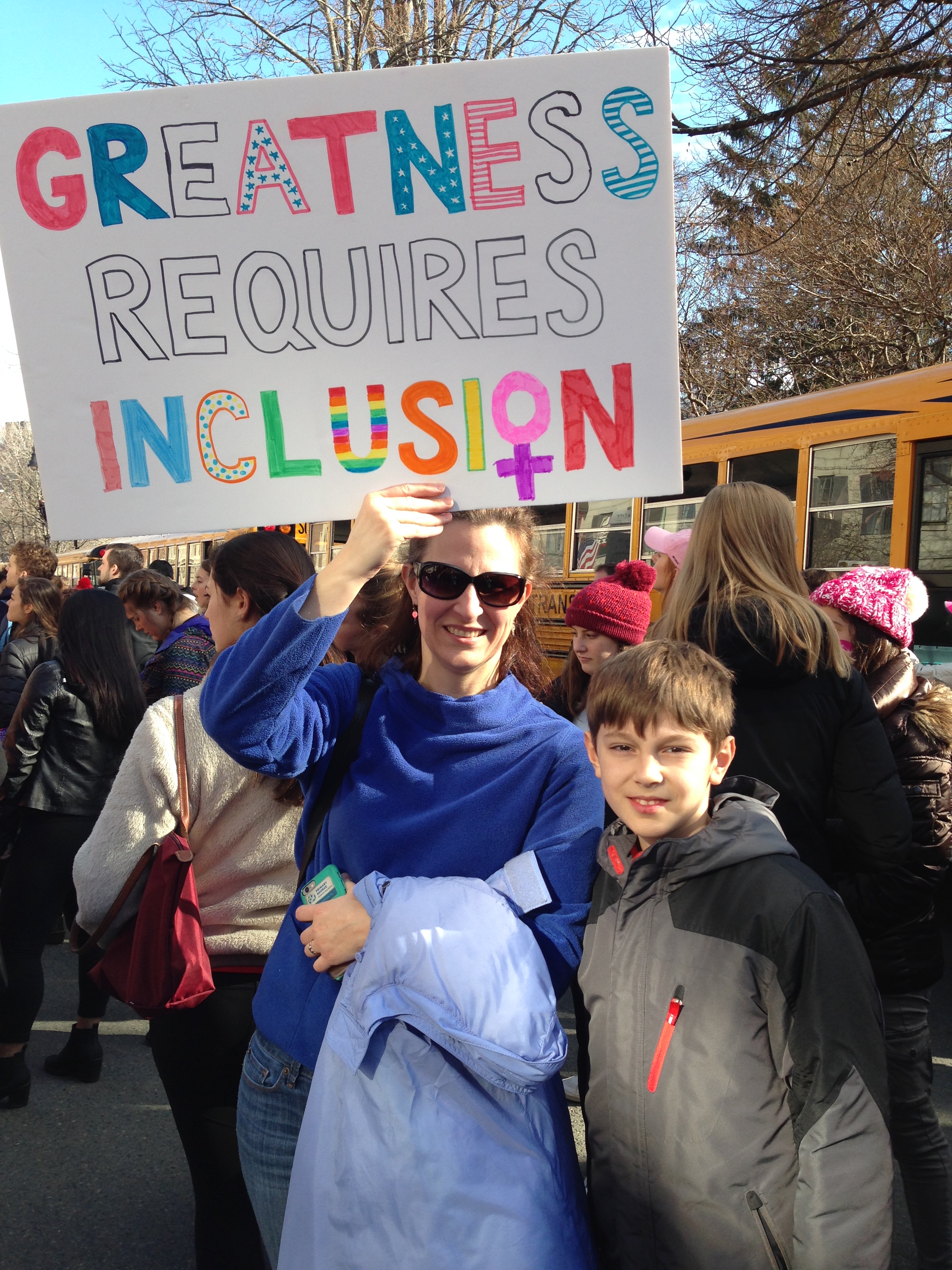
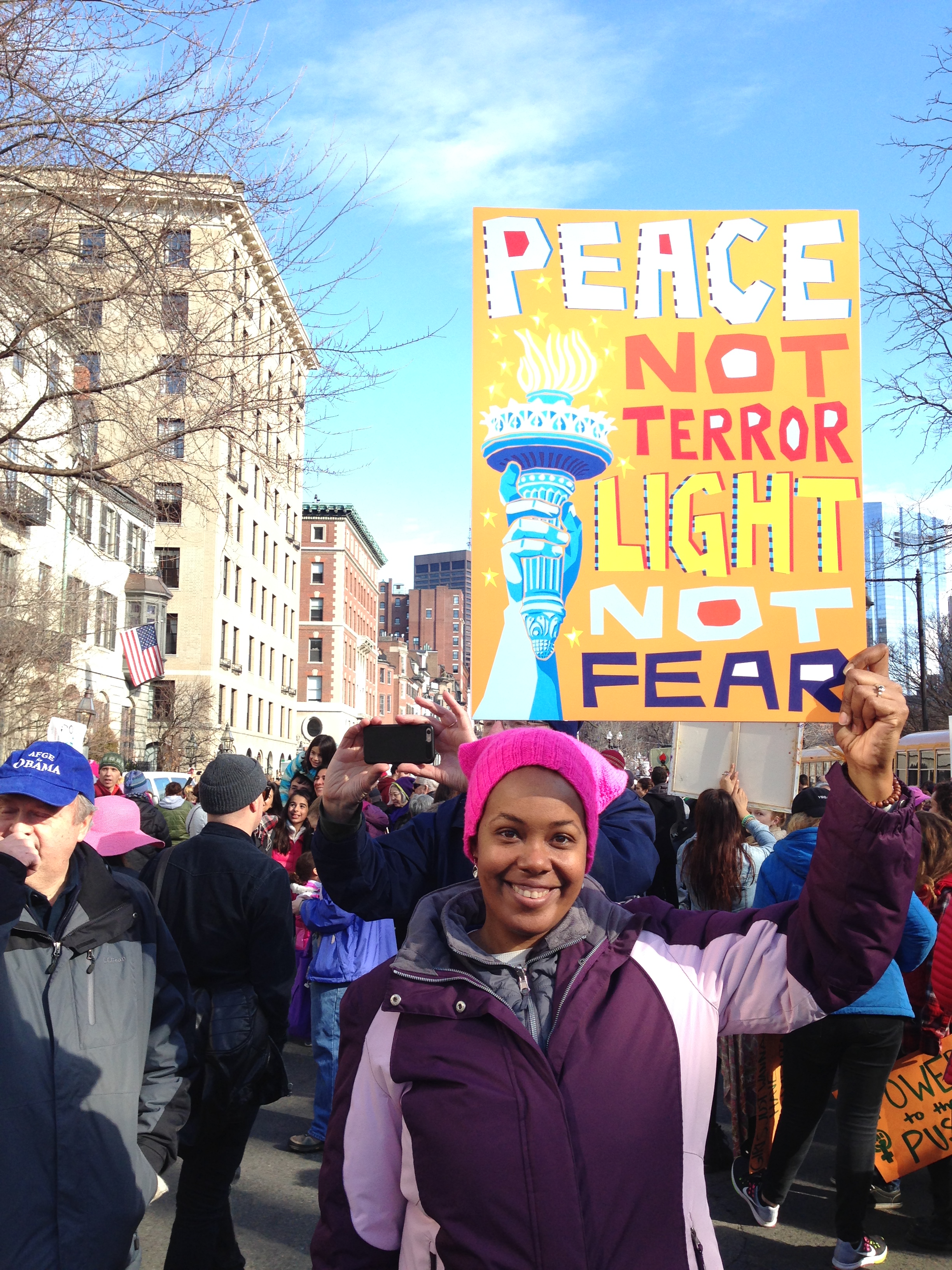
**Photos above are from the 2017 Women’s March, Boston, Massachusetts.

Remember Your Heart

How do we live through difficulties and challenges with our life spirit intact? The current political landscape is full of such extreme divisiveness and hatred, both nationally and globally, that it is hard to feel optimistic about the future. Almost daily my heart is filled with sadness, and peace on Earth seems like a lost dream. Recently, as I sat staring out the window at a cloudy winter landscape, I sensed similar cloudiness within me. I realized then that I had felt exactly the same way in the late 1960s when the Vietnam War was at its height, and fiery race riots raged in Detroit, Newark, Watts, and other cities. The world seemed to be in hopeless conflict, and I couldn’t see how basic human rights, justice, equality, and peace could ever come to be.

Many others of my generation felt similarly, and it was the birth of movements for nonviolent social change and the possibilities they held that helped us survive. Civil rights workers and peace activists, flower children and feminists, began to grow in numbers (yes, I was among them). The vision we held for a more loving and harmonious planet moved us forward, our hands and hearts joined. Music, speeches, marches. Hope lived in collective actions by thousands against war, racism, sexism, homophobia, and environmental destruction. Over the years, gradual but significant changes took place, even nationally. The end to the Vietnam War. The first African American President and first woman Vice President; a more diverse Congress. Women’s health rights. Voting rights. Martin Luther King Jr. Day; Earth Day. Legalization of gay marriage. Rainbow flags across the country seemed to symbolize the possibility of a diverse and inclusive future for all.

 Yet systemic racism and injustice, misogyny, anti-Semitism, hatred of immigrants, transphobia/homophobia, and the rise of the 1% economic elite continued to grow and become stronger. Right up to the present, when it all burst out into high-profile predominance with the current elected (and non-elected) government and its single-minded focus on power and money. Decades of social change are being battered and broken. Once again I/we are facing hopelessness.

At times like this, we need to remember what lifted our spirits and helped us through in the past. The positive energy that inspired us and encouraged us to continue. In books, articles, speeches, songs, films, meetings, demonstrations—in hundreds of places across the country and around the world, we have been sustained by our individual and collective voices of hope for human freedom, equality, compassion, and love. This is our Survival Kit for Troubled Times.

This past week,  I watched two classic Frank Capra films from the 1930s: You Can’t Take It With You and Mr. Smith Goes to Washington. Both films are quintessential Capra: average citizens pitted against ruthless wealthy businessmen and unscrupulous politicians. They struggle against seemingly impossible odds and yet in the end, “we the people” prevail. Each film is a hopeful vision as well as a cautionary tale. One with relevance today. How many times over the years have people been called to stand up and refuse to relinquish the dream of a just and free world, a heart-centered humanity? Sometimes it seems like a horrible replay that we don’t want to relive, but we came to Earth for exactly this. With each generation, there is a shift, a further awakening into recognizing the basic oneness of everyone and everything, even in the midst of our differences.

We have to remind ourselves that possibility lives within impossibility. In her book A Paradise Built in Hell, Rebecca Solnit writes about groups and communities of caring, support, and mutual aid that have spontaneously arisen within disasters, both natural and human-made. As unlikely as it may seem, when everything falls apart, humans often turn to one another with kindness and generosity and build connections anew within great loss. Such stories belong in our Survival Kits, along with memories of our own strength and resilience, our own optimism in the face of pessimism. Maybe “hell” will begin to recede as our human hearts reach out to each other with hope and resolve. As my friend Heather recently said, “Remember your heart.” Everything we need is within us and among us.