Women’s Voices: Speaking Truth to Power

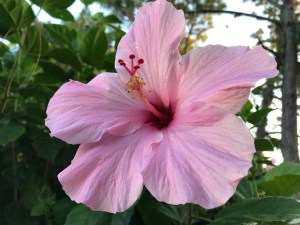
Photograph © 2019 Peggy Kornegger

In last fall’s elections, the U.S. Congress saw a refreshing new influx of those who have been left out of the legislative process far too long—specifically, women and people of color. African-American, Native-American, Latina, and Muslim women were elected from various states across the country. Alexandria Ocasio-Cortez from New York is one of them. Since her surprise unseating of the incumbent there, she has been relentlessly criticized by nervous politicians from both parties for her outspoken and uncensored comments about the President and all those in power. Many of those criticisms show just how much public opinion panders to “acceptable” behavior for political candidates, and women in particular.

This country was born out of a revolution. Rebellious and opinionated “forefathers” are a part of American history. Women and African enslaved people, however, were left out of this version of events, unless we look underground and behind the scenes for hidden truths. Power based on sex and race formed the backbone of the new government. Whatever equalities and rights exist today (and we have a long way to go) are because of courageous people who spoke up and fought back against those who would silence them.

Whether or not you agree with her, Alexandria Ocasio-Cortez is standing firm in a long line of strong women who spoke their minds, “speaking truth to power,” as she puts it. Suffragists in the early 1900s and feminists in the 1970s and 1980s (myself included) stood up for a woman’s right to do just that. Because of them (and those who continue speaking out today), women are taking their rightful place in this country’s social and political structures and, in many cases, turning them upside down with new approaches to getting things done. Specifically: inclusive, circular, nonhierarchical. And by not being “good girls.”

Rebellious women always make people nervous because they threaten the status quo. People of both sexes want them to tone it down, play nice, not offend anyone by being too radical or outspoken. Well, good behavior and playing by the rules, as defined by the patriarchy, has never gotten women anywhere, not even a seat at the table (or a Presidency). Historically, they’ve been relegated to the kitchen, the bedroom, and menial, subservient jobs. It’s only in refusing to be intimidated or silenced that women have together formed a powerful alliance of intent that has challenged the old boys’ clubs and broken through entrenched traditions. They have also challenged prevailing attitudes about acceptable and “good” behavior for women.

It’s time to throw out the old rulebook and create something visionary and inclusive instead of outdated and elitist. “Subvert the dominant paradigm,” as the saying goes. Many of the world’s greatest ideas have seemed impossibly radical and edgy until they slowly worked their way into the collective consciousness, and people began to see their brilliance. Recognizing truth can be a process of opening to a deeper awareness about everything, including one’s own life.

We in this country are at a tipping point: Will we hang onto the racist, sexist historical patterns that created an undemocratic, top-heavy power structure, or will we topple the kingpins and create an alternative that truly embodies equality and freedom for all? It seems to me that in the midst of conflicting and fear-based news reporting, people—and women especially—are finding their voices and raising them together to speak truth to power. Thus is transformative change begun…and continued to its full flowering.

The Language of Clouds

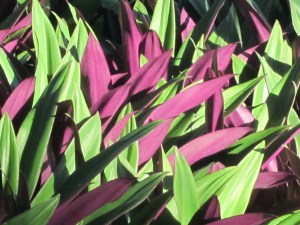
Photograph © Copyright 2018 Peggy Kornegger

When I was a small child, I saw clouds as one-dimensional, as if they were painted on the sky by some artistic giant. It was really only after I flew in an airplane many years later that I perceived the three-dimensionality of clouds. At 20,000 feet, flying above and through them, I could see their depth and dimensions, their constantly changing shapes and sizes. It was a revelation to me, and I became fascinated with them. Even on the ground, I could see that they were not really paper-thin but often thick and expansive…and constantly morphing into new forms.

Their very names describe clouds’ variety, each kind indicating a different altitude, shape, and weather pattern. There are low-level, mid-level, and high-level clouds, with names like cumulus, cirrus, stratus, cumulonimbus, and altocumulus. They can look like scattered puffs of white dotting the sky, huge towering cotton balls, or long streaks of pale fiber with little sky visible. Flying next to and through cumulus clouds (the giant cotton balls) is awe-inspiring. The play of light and shadow on the brilliant whiteness, as well as the illusion of solidity (flying into and out of them), makes for an other-worldly experience. Thus the reason why many people feel as if they are close to heaven when they fly.

In that heavenly place, I began to look at clouds from the perspective of a spiritual being rather than a scientific observer. Flying in a plane, completely untethered to Earth and its materiality, I felt my consciousness lifted to a higher dimension. I was part of something larger than my one physical form: a powerful presence that encompassed the plane, the clouds, the sky, me, and everything beyond what I could see with my physical eyes. Within that experience, I learned that some things cannot be expressed through the language of words, but only through the silent language of the heart and soul.

My spiritual path over the years has continued to show me that silence often communicates more than sound. Within silence, we are present to Presence itself, which animates the universe. In meditation, quiet walks in nature, or sky rides, my conscious awareness drops deeper and expands wider to accommodate the vastness of that universe. I am speechless before its grandeur and infinite unfolding. An experience of God/dess at its most profound and far-reaching.

As a writer, I often try to describe these moments of transcendent awareness and divine connection. Yet, human language somehow falls short of fully conveying the extraordinary magnificence of our world: the flowers, butterflies, trees, human faces, heavenly encounters—and clouds. Each one is a unique expression of the love and light that is the Source of everything in the universe. When we awake each morning and step into the day before us, it is a sacred walk upon the Earth. For me, it is an experience beyond words, one that teaches me over and over that the wisest truth about life is that it is an eternally changing wonder and mystery. Like clouds themselves.


The Power of “We”

Photograph © 2018 Peggy Kornegger
Human beings came to this planet to learn how to live together in peace. To realize and express the love in their hearts through compassion and kindness. It’s a simple as that. We didn’t come here to accumulate wealth and material possessions while others have nothing. We didn’t come here to distrust and hate everyone who is not an exact carbon copy of our beliefs and physical appearance. We didn’t come here to build walls and wage wars against difference. While those may be the polarities the human species experiences along the way, our final destination is beyond all those divisions and separations. Ultimately, we came here to recognize that “I” alone is incomplete; only in “we” do we find strength and commonality in being alive. Only in loving ourselves and others are we made whole. As the song says: “We are the world…”

Sometimes I feel overwhelmed by external global events—the self-centeredness and cruelty that pervades so much of our social construct and that is spread through the media’s focus on acts of hatred and violence instead of love and inclusiveness. There are alternative sources of information that are positive rather than negative, and we need to pay attention to these. When I hear how so many people are coming together instead of being torn apart, I am uplifted and encouraged. The seeming chaos is happening for a reason: to clear out obsolete belief systems and centuries-old histories and divisions. We are living at a time that is taking us to the end of separation, judgment, and suffering.

All around us there are those who are making a difference in the status quo by living lives of caring and compassion. They reach out to others at times of crisis—whether global, regional, or individual—and help them in any way they can, with physical support (money, food, clothes, shelter) or a listening ear and kind word when it is most needed. This is the power of “we” that is gradually shifting the global balance to love instead of hate. People suffering in isolation are finding support and connection in community.

Those who live in fear talk of building walls; those who live in love talk of building bridges. If we live from our hearts, there is only one choice really: to reach out to our fellow beings (and I mean animals, plants, insects, as wells as humans) and share the love inside us. We were not meant to love only those who are exactly like us or to try to make others adopt our beliefs and lifestyles. We were born on this planet to come together and live compatibly in all our diversity.

Humanity is a rainbow tapestry of different races, sexes, ages, cultures, and religions. Yet we all came from the very same loving Source, which some call God. Our soul essence is love, so when we are being our authentic soul-selves instead of the “self” superimposed on us by social norms, we are living that love. It is a compassionate and inclusive love, and a small shift in awareness from “I” to “we” can make a huge difference in the world. That is why we are here, to celebrate and live the power of “we.”

The Unbusy Life

Photograph © 2018 Peggy Kornegger

When Mary Oliver died last month, I felt I had lost a kindred spirit from this world. Someone who lived a life of deep connection to, and quiet contemplation of, nature’s never-ending miracles. All my life I have been drawn to quiet contemplative moments more than busy social activities. Even as a child, although I loved playing with my friends at school, something in me craved the experiences I had in my own backyard alone with nature.

I grew up an only child on five acres in the Illinois countryside, and I always felt most content outdoors by myself, sometimes reading in the branches of my favorite climbing tree, sometimes sitting in the grass watching ants or birds or clouds in the sky. Mother Nature nurtured my sense of the beautiful and miraculous in the world. In truth, this was my first experience of God. Beyond religious parameters and beyond words. In the silent language of the natural world, I found my spiritual home. And it has never left me.

In my adult life, when I worked at various editorial jobs and became active in feminist groups, I needed time alone in order to feel restored and whole. I took long walks in parks and nature sanctuaries and went on hiking trips to immerse myself in the natural world. And I wrote poetry and prose that arose from that silent inner space. The poet in me was always craving times of quietude and peace. To just be instead of do.

Through the years, I have found those moments of just being absolutely essential and nonnegotiable. They are the deepest form of life enhancement and spiritual connection for me. My sacred temple is nature. My form of prayer is standing with open arms, contemplating the cosmos, in a grain of sand or in a galaxy. Mary Oliver always spoke to my heart when she wrote of her solitary and transcendent experiences in nature. To me, she epitomized being supremely engaged with all aspects of life as she observed the world around her with a loving poet’s eye:

Mary knew the truth of life, what was really meaningful, not superficially so. Her writing, which came from her heart, touched readers’ souls, and many other hearts were awakened through the beauty of her poetry and prose. When I reread her work, I am always uplifted, always validated in my desire to connect deeply with nature on a daily basis, for my need to regularly step away from activities to be “not busy.” To hold within me a holy space where I can just love the world, as is, beautiful in all its exquisite details. Thank you, Mary Oliver, for the gift of your voice and your presence on this Earth.
____________________
In memory of Mary Oliver, 1935-2019

Service to Others, Service to God

Photograph © 2018 Peggy Kornegger
Service to God, in spiritual or religious terms, can become a grandiose, almost inaccessible concept. Something only great mystics and masters can fully live out. Possibly forsaking all worldly possessions and moving to another country. We think of Gandhi and Mother Teresa. Or Martin Luther King Jr. and Peace Pilgrim. Lives of dedication and deep compassion. Yes, this is definitely service to God. But we don’t really have to be a saint or monk to be of service to others and God. Perhaps we need to simplify the definition itself.

So what exactly is service? The dictionary says “help, assistance, kindness.” A good turn or helping hand. It’s when we add God to the mix that everything gets a bit daunting. It becomes about life purpose and serving all of humanity in order to relieve suffering in the world. Almost nothing can live up to that tall order. People start to tune out and turn away because they feel inadequate to the task: “What could I as one individual human do to alleviate the pain of all humankind?” So, very few consciously choose service as a way of life. But what if service begins at a very basic level of a helping hand and kindness? What if my human purpose is just to be present to another when they are feeling most alone or lost?

I have asked myself what my life purpose is more times than I can count. Sometimes I think I know part of it, but I usually feel there is much more than what I think. I too have been intimidated by the larger sense of service to God, the purpose-of-life sense. My mind engages with the word purpose, trying to figure out what it is I’m supposed to be doing. However, as I grow and evolve on my spiritual path, I am finding that it has absolutely nothing to do with my mind’s ideas about any of it. It’s completely a heart issue. And it’s not necessarily a schematic that involves single-handedly eradicating world poverty or global warming. Maybe it’s less sweeping than that, something everyone can handle.

Volunteering one day a week at a food bank or donating regularly to an environmental cause are key individual contributions, but it is also more than those. Maybe our greatest gift to others and to God is day-to-day, moment-to-moment, heartfelt caring. The small gesture: the hand held, the loving smile, the encouraging word when someone is hurting. Perhaps that is the essence of service, available to each of us in every moment. Mother Teresa and Martin Luther King Jr. lived a lifetime of small gestures of kindness to others that became their larger service to God. When I think of service this way, it becomes more accessible, doable, all-inclusive. Something that, as each person responds to another with caring and empathy, shifts the collective balance from selfishness to generosity, from suffering to well-being, from fear to love. From one to many.

Service is actually not something outside of us that we have to aspire to. It is who we are at our core. We came from the heart of God, and our souls are pure love. When we remember that, kindness flows from us easily and effortlessly. We become the light-filled human beings we were born to be. In truth, service to others and service to God are one and the same. Hold out your hand and open your heart to those who cross your path each day—that’s all it takes.