In Search of Silence

Silence can be hard to find these days, and if you find it, hard to hang on to. The 21st century world is filled with noise almost everywhere, even in places that are supposed to be quiet, like cemeteries and residential areas. But I’m getting ahead of myself. First, I have to admit that I am a lover of quiet: the silence of meditation rooms and nature sanctuaries. Deserted beaches and country roads. Mountain tops and forest clearings. Mornings before dawn. I gravitate to the absence of any sounds except those in Nature. In recent years, that has become more difficult to discover, particularly in living situations.

When Anne and I moved back to Massachusetts from Florida three years ago, we rented an apartment that was on a busy street in a town northwest of Boston. The neighborhood was generally peaceful, but the traffic sounds on that street continued all day long. Only in the night and early morning hours did quiet descend. We learned to live with it, but it did not engender an ongoing sense of outer peace.  A few months ago, we moved to a condo community in a more rural/suburban area with woods close by and busy streets further away. Very quiet—with one exception: There is a rifle and pistol club down the road, and the sound of gunfire is frequently audible in the distance. Fortunately, the building we live in is relatively soundproof, so we don’t hear it unless we go outside for walks, when it can definitely be disquieting.

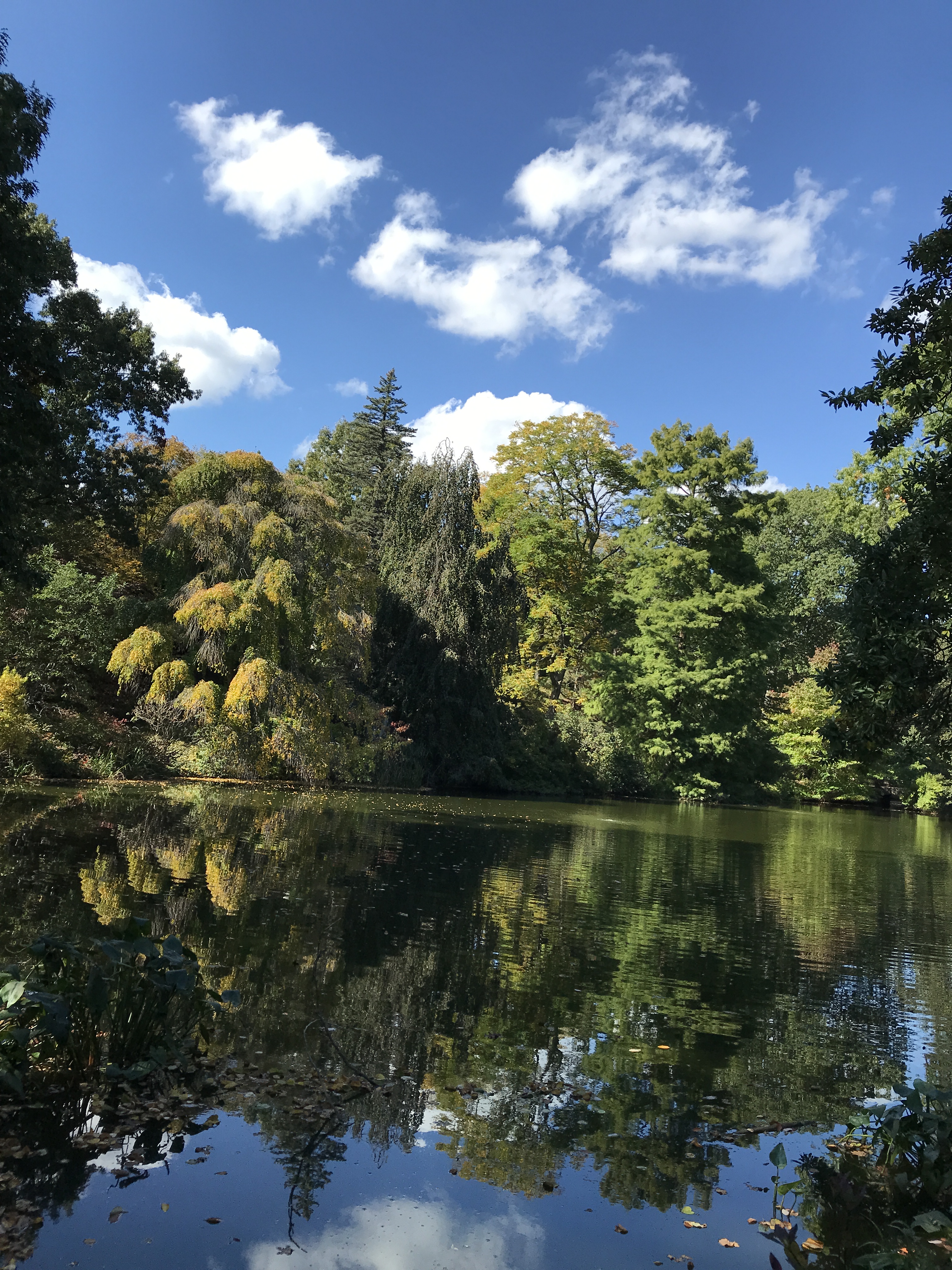
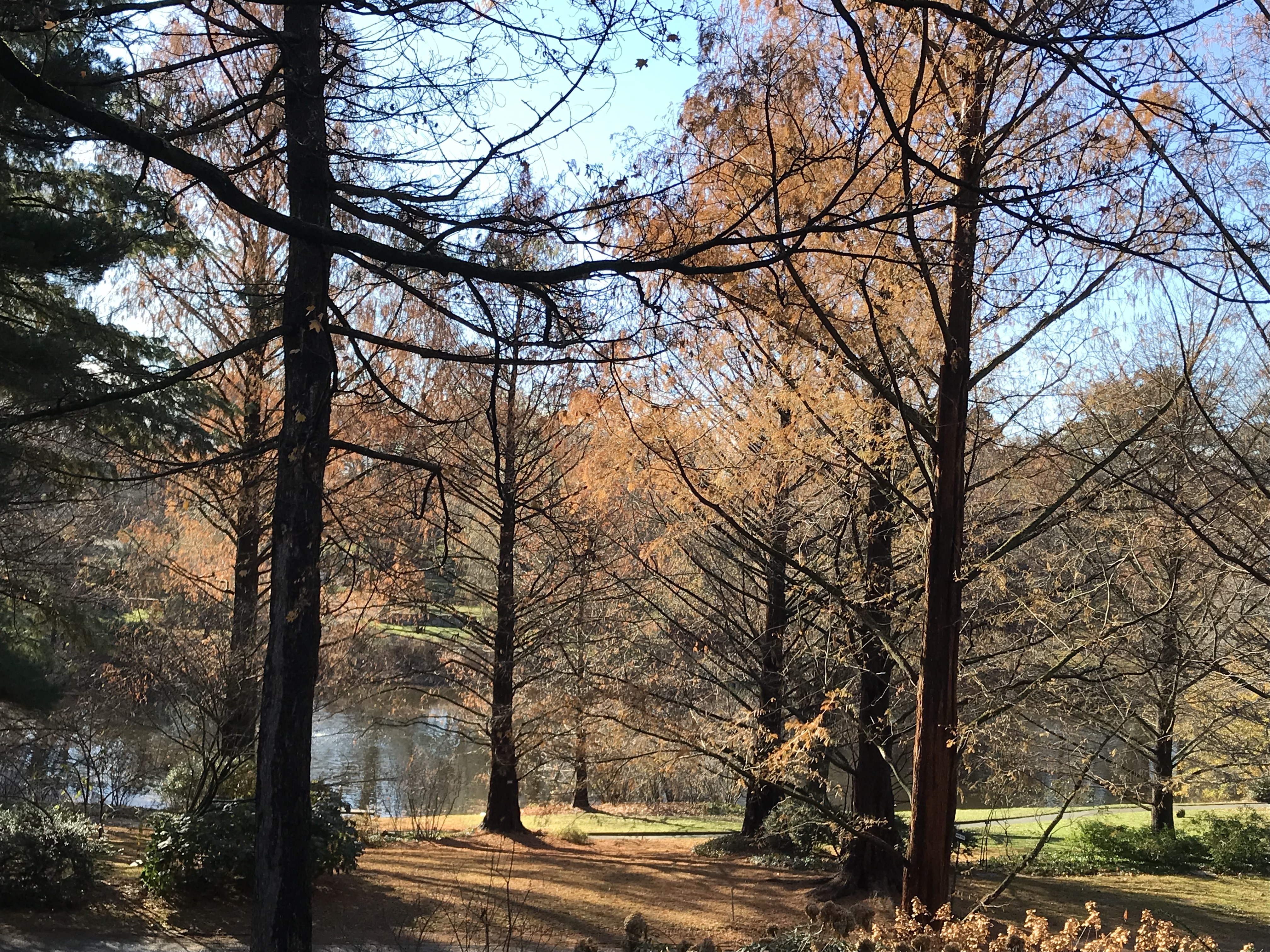
As a walking alternative, I often take the train across town to my favorite nature sanctuary, Mt. Auburn Cemetery. I have been going there for many years to experience a quiet, peaceful oasis in the midst of a semi-urban area. Recently, though, there has been a change in focus at the cemetery. They are trying to encourage more people to visit by organizing events such as solstice gatherings, historical walks, etc. Along with that comes new sidewalks in some areas and the (perceived) need to keep them clean and tidy at all times. Enter leaf-blowers—and the deafening noise that accompanies them. When I visit now, if landscaping equipment is in use, I move in another direction, like the birds.

So, are cars, guns, and leaf-blowers obliterating any chance for silent peace in our contemporary culture? Not necessarily. For me, a spiritual perspective helps. From this view, silence is not solely a surface phenomenon in the external world. It lives inside everything, including each one of us. A friend of mine told me that when he visited India, the noise of the crowds and traffic in the cities was almost overwhelming, and yet he felt a deep silence simultaneously. It arose from a Presence deeper than human activity. And it is everywhere if we become aware of it.

Perhaps the secret is to carry silence with you. If I enter a situation consciously aligned with the silent Presence of spirit inside me (and everything), then that is what I experience. If I accept whatever is before me, I access peace. Every day, I relearn that wisdom. Within that space, there is nothing that can disturb my inner peace and silent soul.

“Relax into the part of you that is always silent, always still, always in meditation.”—Panache Desai


Walking, Everywhere

I’ve been a walker all my life, in a world of cars. I learned to drive at 16 but have rarely driven because I’ve lived mostly in or near cities, where public transportation, biking, and walking were my norm. Even though I grew up in the Illinois countryside, as an adult I gravitated to urban life. There were so many possibilities there, including the freedom that comes from being able to walk everywhere: to work, to stores, to concerts and films, to parks, to nature sanctuaries. To meet friends for tea or dinner or to walk silently in solitude. All of it a gift.

I’ve walked so many places on this Earth. I spent five months hiking and taking trains through Europe after college. (Switzerland, by the way, is a perfect place for walkers—walking/hiking trails everywhere and some villages car-free.) In later years, I hiked Peru’s Machu Picchu and Hawaii’s Napali Coast, as well as throughout the Southwest and Northeast. I walked miles through the streets of cities I called home (San Francisco, Boston). Nothing could keep me from my daily walks. I even walked to/from treatments for breast cancer in the middle of winter in Cambridge, Massachusetts!

Walking is like opening a door for me. On the other side is everything. The sense of awe at the beauty of Nature and the inner spiritual connection when I walk in parks or sanctuaries. The deep feeling of freedom as I explore new areas in the towns and cities where I’m living. The challenge, however, is navigating this freedom in car-centric environments, which includes most places in the U.S.

When Anne and I lived in Florida, we loved the tropical flowers and water birds, but walking, except for short distances, was difficult. It is a world of cars and condos and shopping plazas. Walking is not a priority in most non-urban areas in the U.S. People rely entirely on cars, and sidewalks are infrequent or nonexistent. The town where we live now, south of Boston, presents exactly this challenge. I dash from one side of a busy road to the other in order to access occasional sidewalks—and then turn off into smaller streets of houses to continue walking. The upside though is a winding woodsy lane that leads to our condo community, all of which is pleasantly walkable. I can also take the train to Mt. Auburn Cemetery in Cambridge for car-free walking in Nature.

I walk for many reasons and experiences: exercise, errands, exploration, encounters with people, birds, wildlife. Ever-changing seasons and skies. Mental stimulation and spiritual connection. Walking is a wonderfully expansive way of being in the world. I have been inspired by other walkers whose lives I know of: poet Mary Oliver, who walked each morning in profound appreciation of the natural world on Cape Cod; Henry David Thoreau, who walked through the woods and fields of Concord, Massachusetts, where Walden Pond is located; Neil King Jr., who recently walked from Washington, D.C. to New York City after recovering from two bouts with cancer; and Peace Pilgrim, who spent 28 years of her life walking across the U.S. speaking with others about peace.

I will continue to walk everywhere possible. One of my greatest wishes is for the creation of car-free living zones across the U.S. with easily accessible public transportation, safe bike lanes, and walking paths designed for use by everyone of all ages and abilities, including those with walkers or wheelchairs. In the meantime, I remind myself every day to appreciate the blessing that walking is in my life, wonders visible with every step I take.

The Changing, Yet Familiar, Landscape

I was born in Illinois and grew up in a rural area where farms, cornfields, and scattered houses dotted the landscape. My parents built their home on five acres in the countryside, not far from a small town where I subsequently went to school. My daily life was spent mainly outdoors, playing among the trees, fields, orchards, and gardens my dad planted. It was a small paradise, which I still hold in my heart and have gravitated toward in other places and other landscapes over the years.

As an adult, I’ve lived in or near urban areas (mainly Boston and San Francisco). I’ve loved the convenience and ease of living where I could walk everywhere or take public transportation. Neighborhoods with small gardened spaces and trees around the buildings or houses. Corner stores. But it has been the parks and nature sanctuaries where I have spent much of my time. That was the balance for me, a place to live where I could walk as well as visit natural settings. Easy access to buses, trains, and an airport where I could travel to other places in the world. The towns and yards changed over the years, west and east coasts, but each one seemed to fit my life at the time. Even a few years in Florida recently provided an entirely different experience of Nature.

After moving back to the Boston area three years ago, Anne and I began to look for an affordable place to live, in the midst of rising rents. That meant living further away from the city. We eventually found a place we love, but it has meant an adjustment in how we live our daily lives. There are no neighborhoods or corner stores like those we were used to. Instead, an almost rural landscape stretches around the small group of condos where we live: woods, fields, small houses, roads, and occasional shopping plazas. There is a town about a 50-minute walk away with a train to Boston and Cambridge (which I greatly appreciate!). We are grateful for so much here (birds in the trees outside our windows, open skies clearly visible, quiet), but the walkability factor has required us to let go of previous parameters and expectations.

In doing so, suddenly, one morning I was reminded of my own childhood home. We lived in the country, a rural area not that different (except for the cornfields!) from where we live now. School buses took me in town to school. My parents drove to local markets, etc. Trees surrounded our house. Have I come full circle, returning to a distantly familiar landscape, one I have to accustom myself to but that from that perspective becomes newly interesting?

Life is full of surprises and replays and new beginnings that remind us of past experiences. Everything is both old and brand new in our lives. There is nothing on Earth that has not been lived before in some form or another, and yet at the same time every experience feels like a new discovery. We have lived many lives, within this one and among those in the expansive past of the planet. Often that sense of deja vu touches our hearts deeply and opens us to possibility and a fresh outlook on daily life.

That is where I am now. I am living changes, centered in a new present. Simultaneously, I am being reminded of the rich and diverse past I have already lived. In the distance, a train whistle evokes both past and present-moment awareness. Landscapes shift throughout our lifetimes, and within that motion is the purpose of every life: soul expansion and recognition of our commonality in all experiences and all lifetimes. In that, we realize that every moment, every landscape, is a gift of grace.

Solstice and Light

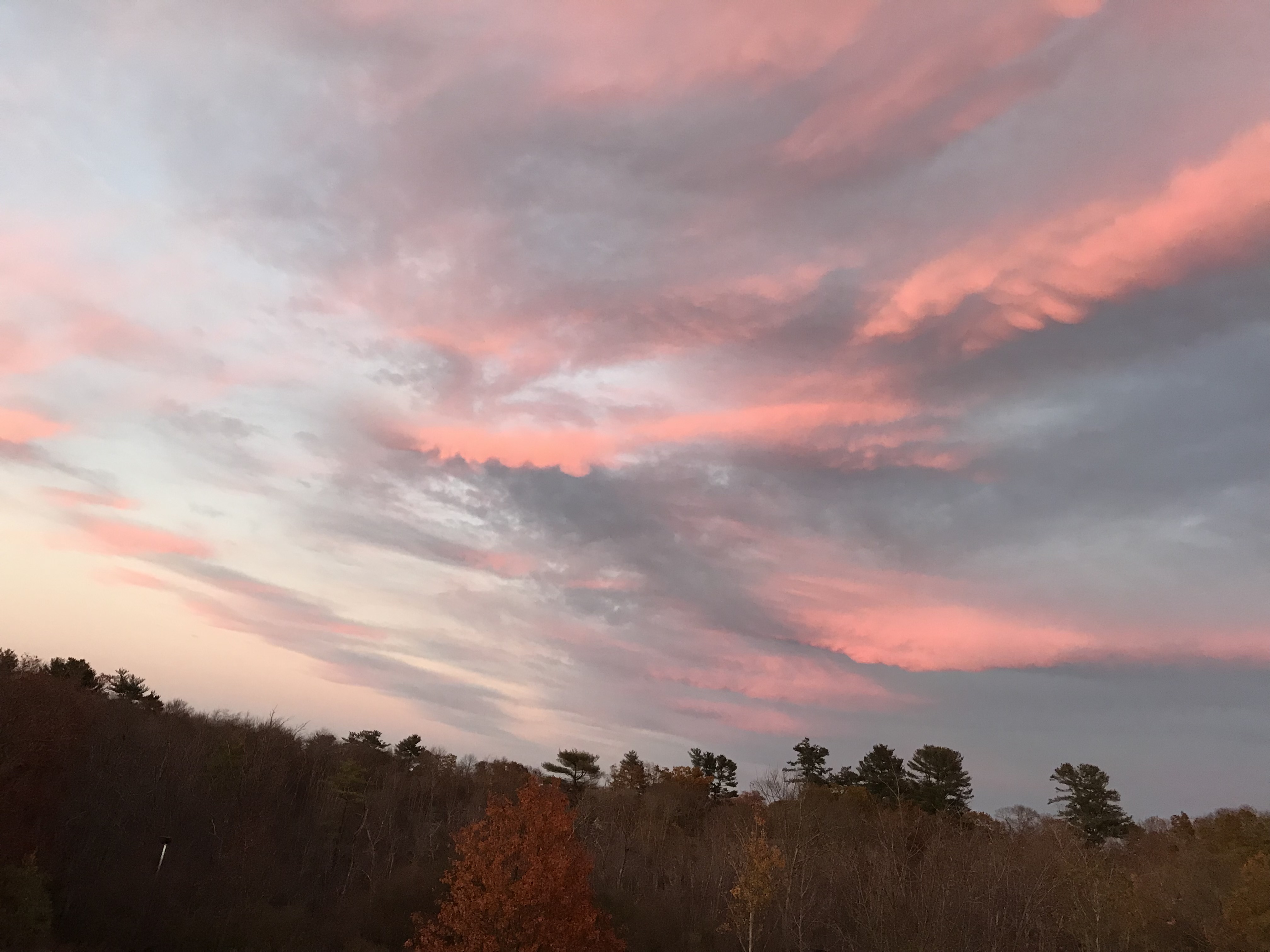
Today, December 21, is the Winter Solstice here in the northern hemisphere, the shortest day (and longest night) of the year. Tomorrow the light begins to increase infinitesimally until it reaches the Summer Solstice fullness in June. The Winter Solstice has been called the “Return of the Light.” An illusion, of course, because the sun never leaves. It is our experience of its light that shifts over the course of a year. And what a miracle it is that our particular planet, Earth, is perfectly placed in our solar system so that life is possible as it rotates and revolves around the sun with mathematical precision each day.

People since the beginning of time have acknowledged and celebrated how light moves through our lives, yearly and daily. Ancient structures like those at Stonehenge in England and Chaco Canyon in New Mexico have been built to exactly show astronomical alignments. I remember when I first saw a film in high school about how the sun appears through a small aperture in the huge standing rocks of Stonehenge exactly at dawn on the solstice. Such amazing alignment and synchronicity! How can you not believe in greater meaning in the universe when you witness such a phenomenon?

Over the years I have always been drawn to magical moments at sunrise or sunset, wherever I lived or traveled. In college in San Diego, two friends and I often drove across town to the beach to see the sun setting into the Pacific Ocean. In Hawaii, I watched sunset through wispy clouds at the top of Haleakala Crater on Maui. Hiking at Bryce Canyon in Utah, Anne and I saw the rock spires magically illuminate like candles as the rising sun touched them. In Guatemala with Maya elders, a group of us rose before dawn to witness sunrise from the top of a Tikal temple, the jungle birds and animals awakening below us. On the other side of the world, the animals in South Africa came to the Olifants River at sunset to drink and eat as we humans watched the sun burn brilliantly red in the evening sky.

All living beings seem to respond to the sun’s light. Our cat Lily used to sit on the back of the sofa in the late afternoon, eyes closed, as the setting sun shone on her face and fur. I have sometimes seen groups of birds sitting in trees watching the rising or setting of the sun. Just yesterday evening, I noticed a dozen or so finches perched at the very top of a tree, facing west, their breasts shining with light, like tiny angels silhouetted against the sky. A perfect solstice alignment—did they know instinctually?

The mystery and power of Light and its relationship to Earth have been part of our collective consciousness for thousands of years. We carry memories of dawn and dusk ceremonies in our genes. Whether instinct or historical memory, we Earth creatures have known that light is at the center of our lives, and we are moved to celebrate it, whether individually on a beach or gathered together at a temple for ceremony. Somehow, deep within us, we realize that we ourselves are made of light. We shine in this world, a reflection of the suns and stars in the greater cosmos we are part of.

Remember

I have just finished rereading the ending of Ann Patchett’s new novel Tom Lake. I am crying—at the poignancy, at the beauty, at the soul wisdom. Last night I watched a 1988 PBS production of the play Our Town, which figures so prominently in Tom Lake, though always in the background (Tom Lake is a summer theater). I wept at that too. There are such deep life lessons in both of them, ones that few remember in their lifetimes. The characters Lara and Emily open to these lessons over the course of events in the novel and play. As does George in the film It’s a Wonderful Life. As are so many of us now at this time on Earth. We are awakening to how extraordinary human life really is.

Don’t miss a second of your life on this remarkable planet. The sadness and suffering as well as the joy and celebration. It’s all such a tremendous unrepeatable experience, like no other in the universe. Each morning, when you wake up, remember. The poet Rumi said it: “The breeze at dawn has secrets to tell you. Don’t go back to sleep,” This is the greatest wisdom of each of our lifetimes, throughout time, and especially now. Don’t go back to sleep. See the living spark of divine light in your partner’s or child’s eyes. Love your friends and family with all your heart. Appreciate them. Love yourself. You are a miracle.

Look around at the beauty of Mother Earth, the birds and trees and flowers. Everywhere there is beauty, even in the smallest detail of the most insignificant blade of grass. Even in a cemetery. A cemetery is a central figure in both Tom Lake and Our Town (and It’s a Wonderful Life). It stands as a coming together point of all life and eventually all the wisdom that arises from living. Spirit lives there. Spirit, which continues throughout time and space.

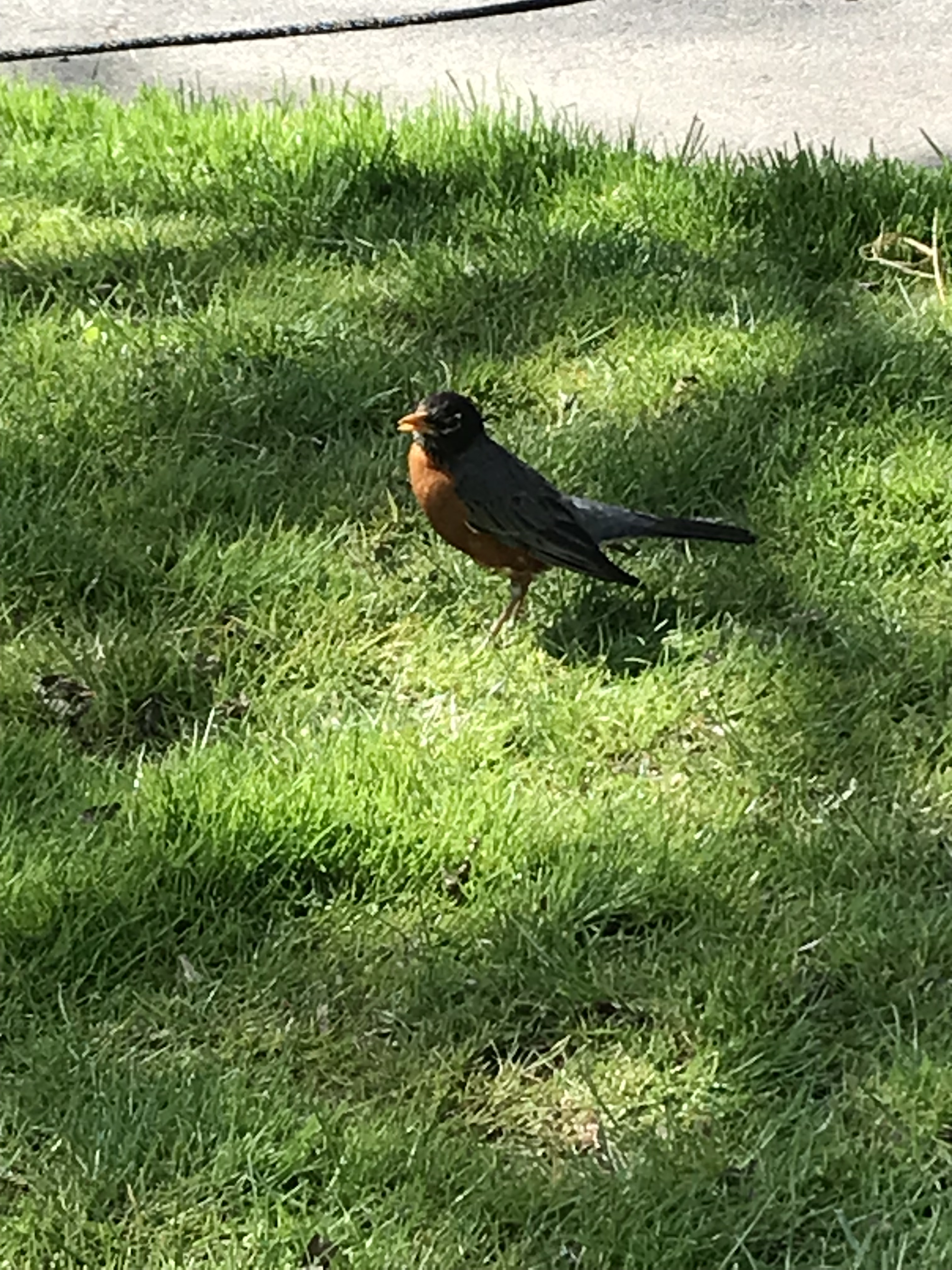
There is a cemetery that is a central figure in my life as well: Mt. Auburn. It is also a nature sanctuary, and for more than 40 years, I have walked there in the sweet silence and sounds of the natural world. I greet the birds each spring as they migrate and sing their lilting songs. Anne and I were married at Mt. Auburn, under the trees by Auburn Lake, the most beautiful day of our lives. I heard about the death of a friend there, tears streaming down my face as a bright red cardinal appeared on the path before me. I felt my mother’s spirit there after her passing, a cardinal singing nearby then too. And I have sensed my dad’s energy in the trees and the crows calling overhead. One cold November night many years ago, Anne and I watched meteor showers streaking across the cosmos in the deep darkness of Mt. Auburn at 3 a.m. Some of my most powerful moments of connection to something greater in the universe (Spirit, the Great Mystery, God) occurred there. All of life and death coming together as One in my awareness.

In Tom Lake, a cemetery on a rural wooded hillside brings everyone together in love and continuity. I feel that at Mt. Auburn. That is why I return, year after year. It helps me remember. We are all finding our own ways to remember now, we latter-day poets and saints of the 21st century. We came to Earth at this time to become fully awake and aware, to connect with one another, and to see the miracles in everything. In life/death, in pure being. Don’t go back to sleep. Remember. It is the gift of a lifetime, of all lifetimes.