This is a question that many of us may have asked at different times in our lives, either from curiosity or in frustration. In this week’s video blog, I talk about both of these ways of wondering about God’s existence—whatever word you wish to use for Source energy or universal consciousness—and my own thoughts on where it can be found.
Are You a Dreamer?
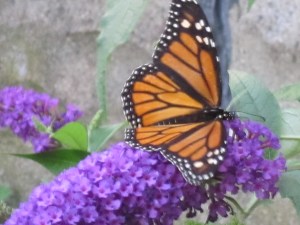
Martin Luther King Jr. had one. So did Susan B. Anthony. And Harvey Milk. Malala Yousafzai has one now. All those who speak out for human rights and freedom have dreams, no matter what country or century they live in. Artists too are dreamers. As are musicians, poets, and storytellers. Monet and Maya Lin. Jason Mraz and Indie.Arie. Toni Cade Bambara and Mary Oliver. Dreamers are visionaries, conduits, soul-speakers. There is a dream within them that has to be verbalized, vocalized, lived out. It can be a yearning or a lament. A celebration or a revelation. Whatever form it takes, it is an expression of the heart and soul that transcends the individual human form it comes through and becomes universal.
In truth, we are all dreamers at the soul level. It is what makes us human—and divine. Each of us carries a dream inside us. When we speak our inner truth and wisdom in the world, we are sharing with others what is unique to us. A special spark of creative awareness that can move mountains and create miracles. Not everyone is Michelangelo, but everyone is their own version of Michelangelo. You don’t have to be famous to live your dream. In fact, fame can be a distraction. All that really matters is that you allow your soul’s voice to sing in whatever form it takes.
How do you make that happen? Well, you can’t really “make” it happen; the key is to allow it to happen. Let life flow through you. In other words, live your life so openly and fully that your soul just naturally expresses itself in all that you say and do. Be a risk-taker; step over the edge of predictability into the unknown. When you do this, you activate the dreamer within who can see possibility beyond circumstance, beauty beyond pain, transformation on the other side of “reality.” The dream that comes from your soul, when expressed fully in the world, becomes humanity’s dream as well. Truly.
The energy of your life affects all other lives on the planet, whether anyone knows your name or not. We are all so connected that every thread in the tapestry of life is interwoven with every other. As in the classic “butterfly effect”: the butterfly that moves its wings on one side of the world changes the direction of the wind on the other. We are all butterflies on this planet, dancing in the wind of our individual and collective destinies. When we allow ourselves to become the dance and the wind, we transform and are transformed simultaneously. That is the magic of becoming one with something greater than your own life. You align with a choice you made before you were born, and suddenly there is nothing that can stop the dream within you from expressing itself.
We are living at a time of accelerated planetary evolution and transformation. Polarities and divisions are dissolving within us and around us as we see with complete clarity the possibilities for harmony, balance, and self-expression in this world. That dream is awakening inside each of us. It is a human dream, a soul dream, however it is expressed and lived out. May we all open to and celebrate the dreams unfolding in our hearts.
Your Soul Plan
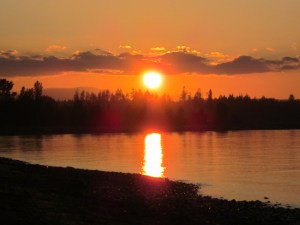
We all forget. It’s part of being human. But life is here to remind us in every experience, every event, every person we meet. We can awaken to the greater overview for our lives and for life itself. Now, during this time of radical upheaval and transformation on the planet, possibilities are revealing themselves in unexpected ways. The veil is thinning between this human world and the Source consciousness from which we came.
That dynamic energy of unlimited potential created this universe, of which we are an integral part. We hold the same unlimited potential for creativity within us. When we stop trying to understand and control the events of our lives, when we let go at the deepest level, we suddenly step into the same energy and power that created the universe. We too are creators. When we allow the flow of life instead of resist it, we become aware of our own divine creative energy, our soul purpose. And we begin to flow with it. We create as God creates, because we are God, every one of us. We just have to recognize the reflection of divinity within and all around us.
I’m sharing this perspective because that is what happened to me. When I let go at the deepest possible level, it was like a clogged drain opened up. Everything began to move forward at a faster, dynamically inspired pace. Quite literally, when I took my foot off the brake, God accelerated! That’s the best way I can describe it. There was a magic to the day-to-day experience of my life. Every choice I made, every action I took, came from a deeper place within me. Thinking and feeling and doing were all part of one soul expression in this world. I became acutely aware of being a spirit expressing itself in human form, part of the greater Spirit of universal consciousness.
“What is” is not a concept, an obscure spiritual teaching. It’s your life. It’s God/dess in physical form. Open to it, accept it unconditionally, and you will begin to experience the miracles you are surrounded with all the time. And now is the time for miracles. The world is on fire with possibility. The old paradigms are shattering all around us, in spite of the desperate attempts of those trying to shore them up. Humans are incapable of building any wall that will keep God out. And God lives in every human on this Earth. Look around; you are surround by angels. Really look in the eyes of the next person you encounter. God looking out at you. In every animal’s eyes, God. In every tree or flower, God. Let all the walls fall down, and remember the true nature of life and of you: limitless being, beautiful in its ever-changing creative uniqueness. A miracle, shining into radiant visibility.
Stop Suffering
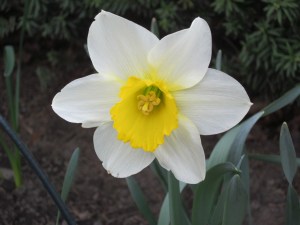
I’ve been learning about the power of surrender for a number of years. The first level for me was to recognize that life is not about one-focus doing, it’s about being, out of which doing arises organically. When you surrender to something that is beyond the mind, beyond the will—whether you call it God/dess, universal consciousness, source energy, the name doesn’t matter—you step into the flow of life. I found that the more I let go of desired outcomes and objectives, the more I felt connected to that flow. Life unfolded perfectly without my even trying. Now, by “perfect” I don’t mean everything was necessarily what I wanted to experience. What was perfect was my letting go of it being perfect! At a deeper level, I accepted all of life’s experiences, not just the “good” ones, those my mind thought should happen. When I did that, I stopped suffering: on some level, everything was “good,” because it was part of a greater soul plan for my life.
Not everyone believes in soul plans. I do—perhaps because I’ve repeatedly experienced the power of that trajectory, that connection to God and soul purpose. Recently, I was working hard at learning a new kind of writing, one that I had never attempted before and knew nothing about: a play. The idea of doing it was exciting; the day-to-day reality was at times intimidating, overwhelming. I persisted because of my own internal commitment to do it, but I proceeded at the level of effort, of difficult daily mental work and figuring things out. There were moments of inspiration, but overall, I was not experiencing the flow that I have come to know in my writing when something beyond my personality self takes over and speaks through me. In spiritual writing, which has been my main focus in recent years, this connection comes easily for me. I am a conduit, and my own particular writing abilities are in service to that. In attempting something new, I felt none of this.
The solution came, of course, in letting go even more. My morning prayers of gratitude and surrender expanded to the point where I was only asking to be of service to God: “If this is what I’m here to do, please show me the way. I surrender to whatever my soul’s agenda is.” Last year, during a health crisis with my eyes, I had surrendered in much the same way, and everything opened up around me. This time I went even deeper, and once again I was lifted out of the entanglements of my own fears and efforting into connection and flow. I began to hear my characters’ voices in my head and transcribed their conversations into the play. I witnessed their lives unfolding, just as mine was. My mind became the tool of my soul and helped me actualize the creative flow I was experiencing. I stopped struggling.
And the miraculous byproduct of this new level of surrender was an even deeper relationship with God, the spirit within that is always with me. The vast loving energy of a universe that is eternally ready to support our soul’s evolution here on Earth. One morning, as I was praying at the end of yoga, on my knees in child’s pose, surrender went through my body like electricity, like a flood, leaving me shaking, with goosebumps all over and tears streaming down my face. The divine connection was so powerful that I felt an inner vibration for days afterward. Now, day to day, I feel even less attached to the outcome of anything, in writing or in life. I’m here to live my soul’s purpose, and I accept wherever that takes me. Suffering or struggle, if it arises, passes very quickly when I remember that one guiding principle.
Amazing Grace—Africa’s Animals
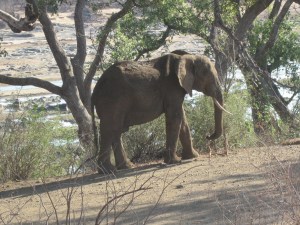
The giraffes too walked in this manner, slowly and purposefully, their elongated necks reaching elegantly out and up to eat leaves from the trees. Like the elephants, their shoulders moved fluidly and powerfully with each step. There was no hurry, no rush to reach a goal. They were just living their lives as they were created to be. When they bent to drink from a river, their legs splayed outward to accommodate the downward bending of their long neck to reach the water source. It looked both awkward and graceful simultaneously because it was real, uncontrived. Living yoga. Meditation in motion.
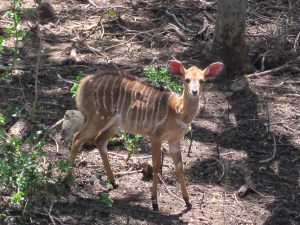
Soon I realized that all the wild animals I saw in Africa moved with this graceful quality—the impalas and water bucks walking or running together in groups; the baboons and monkeys swinging from branch to branch, from tree to tree; the wart hogs trotting along like large odd-looking pigs; the zebras drinking together at a water hole, their heads moving up and down to watch for predators. And even when startled by the possibility of a predator, all the animals ran with fluid grace and focused alertness. No wasted movement. It was if everything had been choreographed perfectly according to some grand design—and of course it was. Life in its natural state has a beauty that defies artifice.
Even at Moholoholo Wildlife Rehabilitation Center, where the animals have been injured or orphaned and live in fenced areas, this quality had not been entirely lost. As volunteers, we were given a tour of all the different animals with a brief history of why they were there. It was difficult for me to see these wild creatures behind fences, but I did understand that their lives had been saved by the center and they were being protected there. Still, at times, my heart went out to them. As we passed a male lion walking up and down within a large fenced expanse, I watched him as he watched all of us. Just a few feet away, on the other side of the fence, his eyes surveyed us, one by one, as we walked by. When his eyes reached mine, they stopped, and I stopped. Something passed between us—awareness perhaps: I was aware of him and he was aware of me, a human and a lion meeting, eye to eye, for one moment in time. Chills covered my arms, and tears came to my eyes. Then we each moved on. Yet I will never forget his golden grace-filled wild lion eyes.
The wild animals of Africa live in our imagination long before we see them in person, if we are fortunate enough to do so. They seem to embody a connection to life’s mysteries and magic, something we have lost in our urban world full of cars and concrete. They walk with a living grace that causes us to pause and remember how precious they are in this world. How precious all animals are, everywhere. Their very being, so different from ours, reminds us of the incredible variety of creatures that we are blessed to share the planet with. Each one is unique, unrepeatable. May we celebrate them by protecting their habitat, their freedom, and their infinitely graceful lives.


You must be logged in to post a comment.