At times, it seems that our lives are moving so fast that we can’t catch our breath. At other times, it can seem that we are stuck, that time is standing still. Yet, past, present, future; birth, life, death; and time itself are all mental concepts, distinctions that we humans invent and superimpose on the world as we try to make sense of it. Beyond the mind’s created parameters is eternity. Occasionally, we touch it with fleeting awareness: In moments of great love or great loss, the mental boundaries fall away, and there is just presence without beginning or end. The deeper we live into life, the more we open to this perception.
Over the course of a lifetime, if we are lucky, there can be a gradual disengagement from the arbitrary cognitive constructs that seem to hold life together but actually keep us from seeing the infinite universe we are part of. William Blake writes of holding “Infinity in the palm of your hand, and Eternity in an hour.” Poets and mystics help us step over the threshold of the world we perceive as real into a limitless open space of sheer beingness where time passing and time standing still become one.
One night last month, for no particular reason, I thought of my parents and the ages at which they had died: 81 and 94. It gave me pause. I don’t often think of my own age, and I usually perceive the future as open-ended. But, of course, we have no idea how long we have on this Earth. I could live to 100+. Or I could die tomorrow. Thinking of my parents’ deaths made mortality more “real” somehow. I asked myself: In the time left to me, how do I want to live? A question I have usually answered in the living itself—embracing the full adventure, aware of each precious unrepeatable moment. The answer evolves as I evolve.
Last year, in the midst of a health crisis, I answered that question with a prayer in which I surrendered my separate human identity to something greater: to divine connection, in service to God/dess. That moment of surrender shifted everything for me and continues to, on a daily basis. When I thought of my parents last month, I surrendered again—to the unknown trajectory of my own life and death as a physical form here on Earth. The human ego, or personality self, struggles to survive at all costs, but our souls are eternal. When the personality surrenders to the soul’s greater wisdom, an inner alignment of human and divine takes place. We start to experience life as beautifully orchestrated, beyond time. We step into a flow of living energy that is limitless and multidimensional.
Only the soul sees this greater universal picture. In recent years, I’ve found that there are some experiences that cannot be described, that elude language entirely. They are encounters of the heart and soul that are primordial and timeless. Only in silence are they fully received. When we are present at a birth or a death, when we hold another close to our heart with love, when we experience God’s presence—these are times of wordless immersion in the mystery of life. Time ceases to exist. These are the truest moments of all, when we know that everything is unfolding exactly as it’s meant to. My life, your life, all of life, is of a piece, a miracle that defies description.
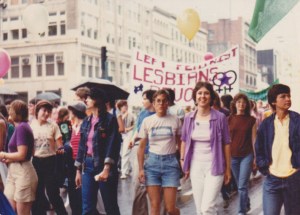
A few weeks ago, I watched the four-part series “When We Rise,” about the recent history of the LGBTQ community in the U.S. and the fight for our basic human rights, including marriage equality. At the end, I felt emotionally exhausted, like I had relived the last 39 years of my life. I lived in San Francisco in 1978 at the time of the California Briggs Initiative to ban gay/lesbian schoolteachers, thankfully defeated, and the shooting death of gay city supervisor Harvey Milk. In 1981, I moved back to Boston, right before the beginning of the AIDS epidemic, which would take the lives of thousands of gay men. Every year I took part in the AIDS Walk to raise money for those with AIDS, and I lost dear friends on both coasts to this terrible disease. In 1987 and 1993, I marched on Washington for LGBTQ rights and freedom, and each year there was a Pride March in Boston (in June, to coincide with the 1969 Stonewall uprising in New York). Those were years of great sadness and loss, and yet the love in our hearts and the hope that together we could bring about change kept us going.
In 2004, Massachusetts became the first state to legalize same sex marriage, and the movement for marriage equality continued to gain momentum. In 2013, the Supreme Court struck down DOMA (the Defense of Marriage Act), and in 2015, it ruled in favor of same sex marriage nationwide. My partner and I, who had been together for 31 years, married in 2014, with family and friends celebrating with us. Suddenly, seemingly out of nowhere, the national consciousness had shifted significantly toward love and inclusiveness over bigotry and hatred. We all had gotten so used to living with secrecy, fear, and the threat of violence that when acceptance appeared, it was almost shocking—extremely emotional and powerful for each of us. But it had not really been sudden; years of activism and private and public “coming out” had brought about the change. The rainbow lights shining across the country on national monuments, as well as the White House, reflected the magical new reality we were all experiencing.
However, today in 2017, a new administration, accompanied by a conservative backlash, is already beginning to whittle away at our hard-won gains, beginning with transgender rights. LGBTQ community members are currently the top target for acts of hatred in the Boston area. We are not done. Freedom, equality, and justice for all people are ideals that must be lived and upheld every single day. We do that by not giving up, by not allowing outrage or depression to overrule the universal compassion and kindness in our hearts. Intolerance still exists, but we are here to live our love, and we won’t stop. Not now, not ever. The music of our hearts and souls will carry us forward.
I have changed in so many ways in the last 39 years, yet the core of me remains the same. I too am here to live love in the world. When I am meditating alone or in spiritual circles, when I am marching in demonstrations, when I am speaking my truth, I am centered in that love. A living prayer for love that includes friends and strangers alike around the world. Our hearts and souls link us together into one family. We are all connected, we very diverse humans on planet Earth, reaching out for freedom, equality, and the right to self-expression. In the deepest part of our being, we are not so different; we all want similar things in this life. Ultimately, it’s all about love. Always.
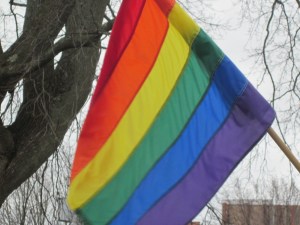
In Memoriam: Gilbert Baker, who in 1978 created the first rainbow flag in San Francisco, died last Friday, March 31, at the age of 65. That first hand-dyed and hand-stitched rainbow flag became the international symbol for LGBTQ pride and freedom.
Because of the current tumultuous political events in this country and worldwide, we need to hold a clear positive vision in our hearts of a more peaceful, compassionate world so that we don’t lose hope. In this week’s blog, which is a video instead of a written article, I talk about the importance of maintaining faith, hope, and clarity in our day-to-day lives. (See other recent videos of mine at Videos on the menu above.)
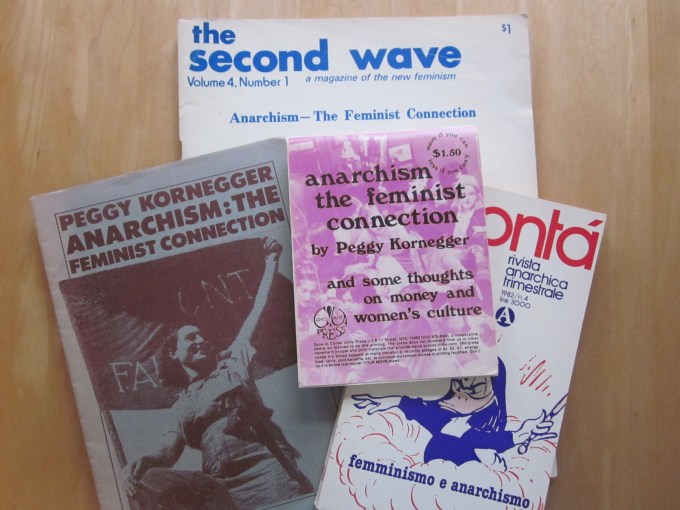
In the 1970s, I was very active in the feminist movement in Boston, Massachusetts, where I participated in various women’s groups, including the editorial collective of Second Wave magazine. During that time, I wrote an article for Second Wave called “Anarchism: The Feminist Connection,” which subsequently was reprinted in booklet form in New York City, London, England, and Milan, Italy, among other places. It was also included in the anthology Reinventing Anarchy and has been read in Feminist Studies classes at the college and university level for many years. A student at Bryn Mawr College in Pennsylvania recently contacted me for an interview because she was writing her senior thesis on anarcha-feminism in the 1970s and 1980s. While I was speaking with her, it struck me how much interest there still is in these ideas. Then a couple of friends suggested that now might be a good time to reprint the article, with an update. So this is the update, and a link to a newly edited version of “Anarchism: The Feminist Connection” appears at the end of this post.
In the original article, I defined anarchism as encompassing three basic principles: elimination of authority and hierarchy, balance between individuality and collectivity, and balance between spontaneity and organization. I also tried to dispel two pervasive myths about anarchists: the bomb-throwing assassin and the impractical idealist. The anarchists I have known are committed to nonviolence (the means create the ends) and are very much involved in the day-to-day practicalities of developing alternatives to the top-heavy status quo. I further described the hidden history of anarchists in France and Spain who effectively lived and implemented the principles mentioned above in their countries (during the French student/worker strikes in 1968 and the Spanish Revolution in 1936–1939).
The connection I made between anarchism and feminism was that radical feminist theory names patriarchy as the key source of hierarchy in our current social and political structures, as well as in our thinking. From the beginning, feminists seemed to embody a kind of intuitive anarchism in their collective and circular group structures (non-hierarchical). The spontaneous arising of consciousness-raising groups, which became the backbone of the women’s movement, was a very anarchist creation, similar to the affinity groups that had developed historically in unions in Spain and France. My feeling at the time was that the coming together of anarchism and feminism and the conscious recognition of that connection would jump-start women into a truly transformative vision of revolutionary change. One in which there would no longer be leaders and followers, but just human beings coming together to live lives in cooperation and freedom.
Both anarchism and feminism are alive and well today, though their forms are somewhat different than they were when I first wrote “Anarchism: The Feminist Connection.” In recent years, strategies that appear in practice to be much like anarchism have informed many protest movements: for example, Occupy Wall Street, Black Lives Matter, and Standing Rock. Direct actions and ongoing “occupations” have often been consciously leaderless and non-hierarchically organized. Probably the most powerful example of the coming together of anarchism and feminism in a new way was the global Women’s March this past January, the day after the U.S. inauguration.
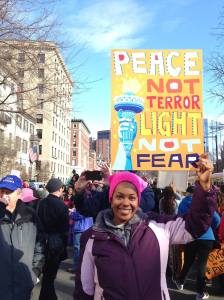
The Women’s March on Washington took on a life of its own with over five million women and men spontaneously marching in cities all over the world. I myself marched in Boston with 175,000 others. Chants of “This is what democracy looks like” filled the air. It was exhilarating and inspiring—energetically very different from any other march I had participated in over the years. The difference was an overall expansive and inclusive feeling of both diversity and unity. People of all ages, races, nationalities, sexes, and sexual identities were represented. And I experienced nothing but cohesiveness and harmony all day. No divisiveness between different groups or between women and men. Both men and women carried signs that read: “Women’s Rights Are Human Rights.” The collective focus and intent was clearly visible in signs like that—human rights.
In the early days of the feminist movement, the marches and events were often “women only,” either from lack of interest (or hostility) on the part of men or from a deliberate decision by women. The misunderstandings, anger, and disagreements of those years seem to have evolved now into something that more closely approximates openness, mutual appreciation, and solidarity of intent. The 2017 Women’s March was the closest I have come to experiencing unity consciousness and oneness outside a specifically spiritual gathering. Perhaps the fact that many of us, myself included, have explored various spiritual paths in the intervening years has lent itself to this energetic shift. So many people are holding a broader vision of our evolution as a human species now. We are transforming on so many levels. As peaceful, nonviolent human beings, we came together, with loving-kindness in our hearts, to speak out for the rights of women, targeted groups like Muslims, and all people.
Ultimately, it is in the heart where unity and oneness come into being, where love triumphs over fear. That was the feeling of the Women’s March. Heart-centered. Power together, not power over. Organized locally and emerging globally, overlapping circles of empowerment and mutual love united the planet. I cried when I came home and saw the photographs of millions of people throughout the world, including Antarctica, who had marched together to support human rights and freedom. It gave me hope, in spite of everything else that is occurring in Washington and elsewhere in the country these days. It takes a determined, vocal critical mass to stand up to authority (and the worst aspects of patriarchy that we are now seeing) and live the alternative to domination and hatred right now. We know the humane, inclusive, love-centered world we want to live in. We can choose it every single day in all that we say and do, just as those individuals did at the Women’s March (and continue to do in their actions going forward).
Generations before us—some among them anarchists, some feminists—have left us beginning blueprints of how to live our lives in a continual movement toward freedom, equality, and global transformation (see link below). We know in our cells how to do this. It is no longer cognitive; it is vibrational. When we change ourselves and our own lives, everything around us changes. The dominant paradigm shifts, and everything begins to rebalance itself. That is what has been happening, and that is why we are stepping into such a vortex of accelerated energy now. The greater shift from the mind to the heart, from selfishness to compassion, from fear to love, is steadily expanding. In this present moment, all possibilities live within us. We are the ones we’ve been waiting for. Let us continue to engage in courageous and compassionate actions as one people, united in consciousness and spirit. Our open hearts will open the heart of the world.
I have discovered that the more I want a situation or person to either change or stay the same, the more I suffer. Yet I have also found that there is a peaceful core within me that understands impermanence and nonattachment. These two Buddhist principles have helped me accept the transitory nature of life. When I am deep in meditation, experiencing profound inner peace, I see clearly the truth of impermanence (nothing, good or bad, ever stays the same) and how letting go of attachment to a particular outcome frees me from the mental/emotional habits of the personality self. At the soul level, all is well, unfolding perfectly for my own expansion and evolution.
Embracing impermanence and nonattachment has been a gradual process for me, over many years. They used to be just concepts that I thought sounded good but I couldn’t really connect to experientially. Lately, however, as my spiritual awareness has deepened, those two insights have risen to the forefront of my consciousness. I often repeat them to myself like mantras to access the peace within me, which they are an integral part of. This is the soul’s peace, which does not judge or have opinions; it just witnesses. And from the witness’s point of view, it does not matter if something or someone changes or not. It’s all part of a greater picture that I, as a human being, have a limited ability to see in its entirety. I just have to trust in my soul’s perception (and in God) and surrender to the power of a divine purpose in everything.
Surrender and trust have also been key to letting go within my own life. They, too, accompany the experience of inner peace that I am connecting to more and more. There is a reason why these principles have been around for thousands of years and have been at the core of the teachings of great spiritual masters. They bring us to a place of flow in our lives, accepting “what is” and aligning with the continuous fluctuations of human existence. This is a time on Earth when the voices and energetic imprints of the greatest teachers are becoming more available to everyone. Their wisdom and beingness within the collective consciousness are here to help us as we move into our own wisdom and life mastery.
Events in the world, and particularly within this country, are now making it essential for us to live in connection with our souls, accessing the deeper truths about life and living. In an environment in which people are being persecuted because of bigotry and prejudice, where is justice? How do we live with this? How do we love all of humanity when some are acting in destructive, hateful ways? This is the challenge of our times: to live in such a way that our own souls’ wisdom and light affect the collective consciousness in a positive way. If we believe that love is stronger than hate, and peace more powerful than fear, then we need to live that in every moment. For ourselves and for everyone who crosses our path. When we shift our own energy out of judgment and outrage, then everything begins to shift around us. The peaceful soul brings peace to the world. As I see it, this is how we are evolving as a people and as a planet within a huge constantly changing universe. May we all help each other find our way again and again to deep inner peace.


You must be logged in to post a comment.