Moments of Grace

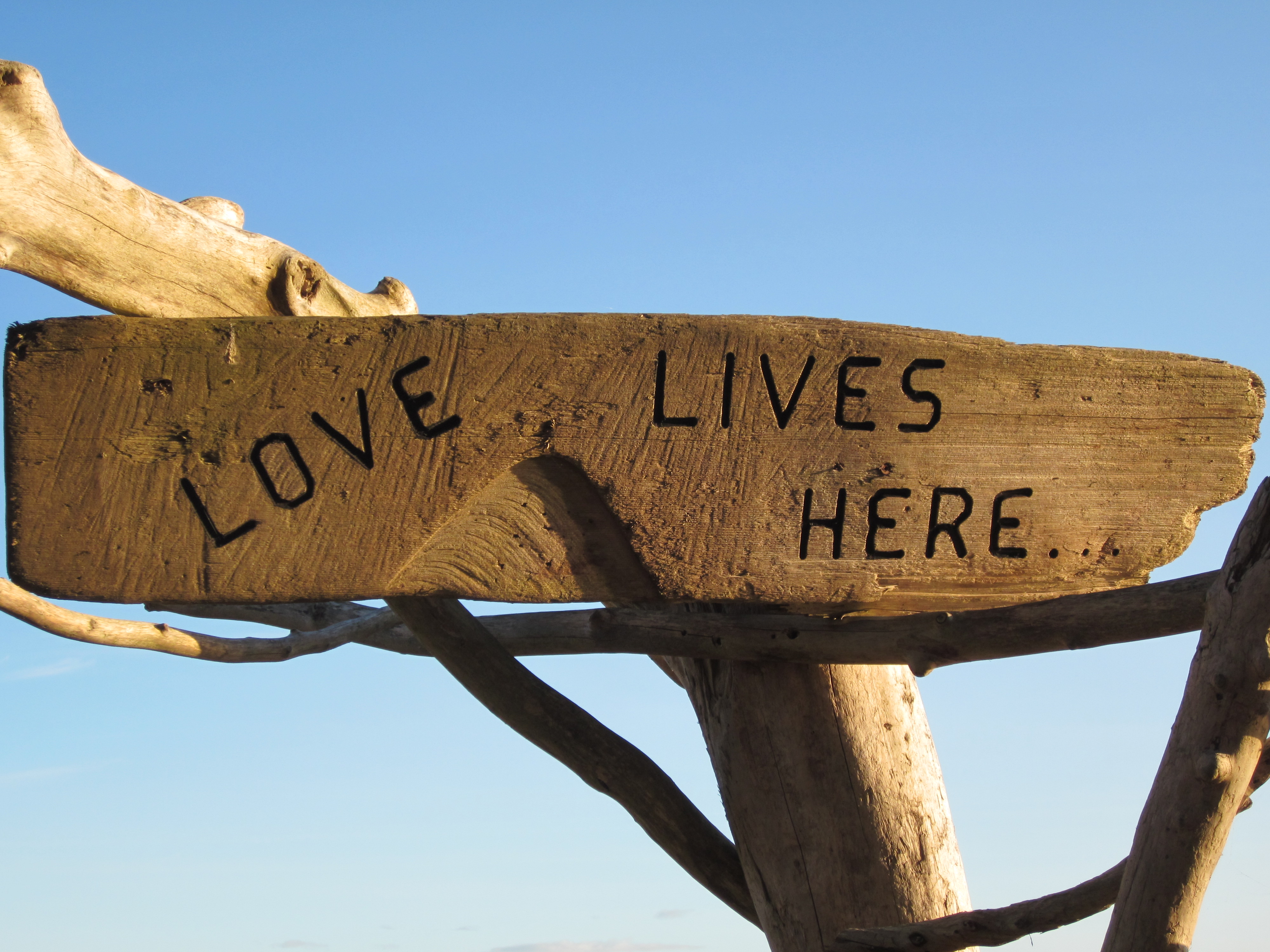
Photograph © 2013 Peggy Kornegger

The word grace has so many meanings, depending on the speaker’s intent. Grace can be flowing movement; a prayer of gratitude; or a blessing. It can also be an act of kindness, mercy, or compassion. We talk about dancers or skaters moving with ethereal grace. Many people bow their heads and give thanks by saying grace before meals. Spiritually, grace is associated with an infinite divine love that envelops all humans regardless of their beliefs. The iconic song “Amazing Grace” describes a man lost and then found through God’s grace. The juxtaposition of human and spirit seems to run through all these meanings. For me, grace has come to mean flowing with life’s blessings and experiencing connection to a greater Presence in the multiverse we inhabit. Grace is always with me, and my awareness of it grows with the expansion of my consciousness.

The Presence I speak of some call God/dess or the Divine. Raised outside of all religious traditions, I have found my way to spiritual connection through various teachers and my own experiences, often in nature. In fact, the closest analogy I can think of to the shining radiance of Spirit is the sun. The sun’s light is powerful and ever-present, whether or not we can physically perceive it. Clouds, weather, or the turning of the Earth may obscure our view of it at times, but it is always there. When the skies clear, or the day dawns, and that light hits us full force, we are energetically and emotionally uplifted. Yet we are not able to gaze at it directly or run the risk of blindness. Our physical bodies cannot visually take in the full force of the sun’s light. The same is true of the Divine. Physically, we are not yet equipped to receive all of that heavenly radiance without blowing out our circuits. This is changing, faster and faster now, however.

At this amazing time of transformation on planet Earth, we are evolving and expanding so that we will eventually be able to continuously perceive/receive the Divine in its full expression of light and love. In the meantime, we are experiencing what I call glimpses of God—flashes, bursts, increasing increments of open-hearted joy, peace, and love. Moments of grace. When we evolve to the point of fully embodying spirit in our human bodies, there will no longer be a separation between inner and outer; all will be the oneness of divine consciousness, of which we are each an integral part. In truth, the only separation that ever existed was in our own limited physical ability to see the entire panoramic view. As the doors of perception open wider and wider, the light of conscious awareness floods our being with infinite grace, and we see as we are seen. God’s vision of us and the world becomes our own.

That is how my own life seems to be evolving anyway. I am experiencing Spirit/Presence in rushes of electric energy and euphoric expansion that repeatedly fill me to the brim with light and warmth, like the sun. The Divine is acclimating me bit by bit to the power of its infinite love. These experiences flow and then ebb but always recur, each time with greater expansiveness and deeper immersion. Is this en-light-enment? Possibly. Not the historically known, sudden individual awakening, but a new kind of gradual collective awakening that we are all experiencing in our own ways, each of us influencing the greater whole. Great spiritual masters through the ages have pointed the way to this time, when all of humanity would embody what they embodied. I never quite knew what that meant until now. That is why we are here, to live this. These are infinitely grace-full times. What a gift to be alive now and experience it all!

The Magic of Springtime

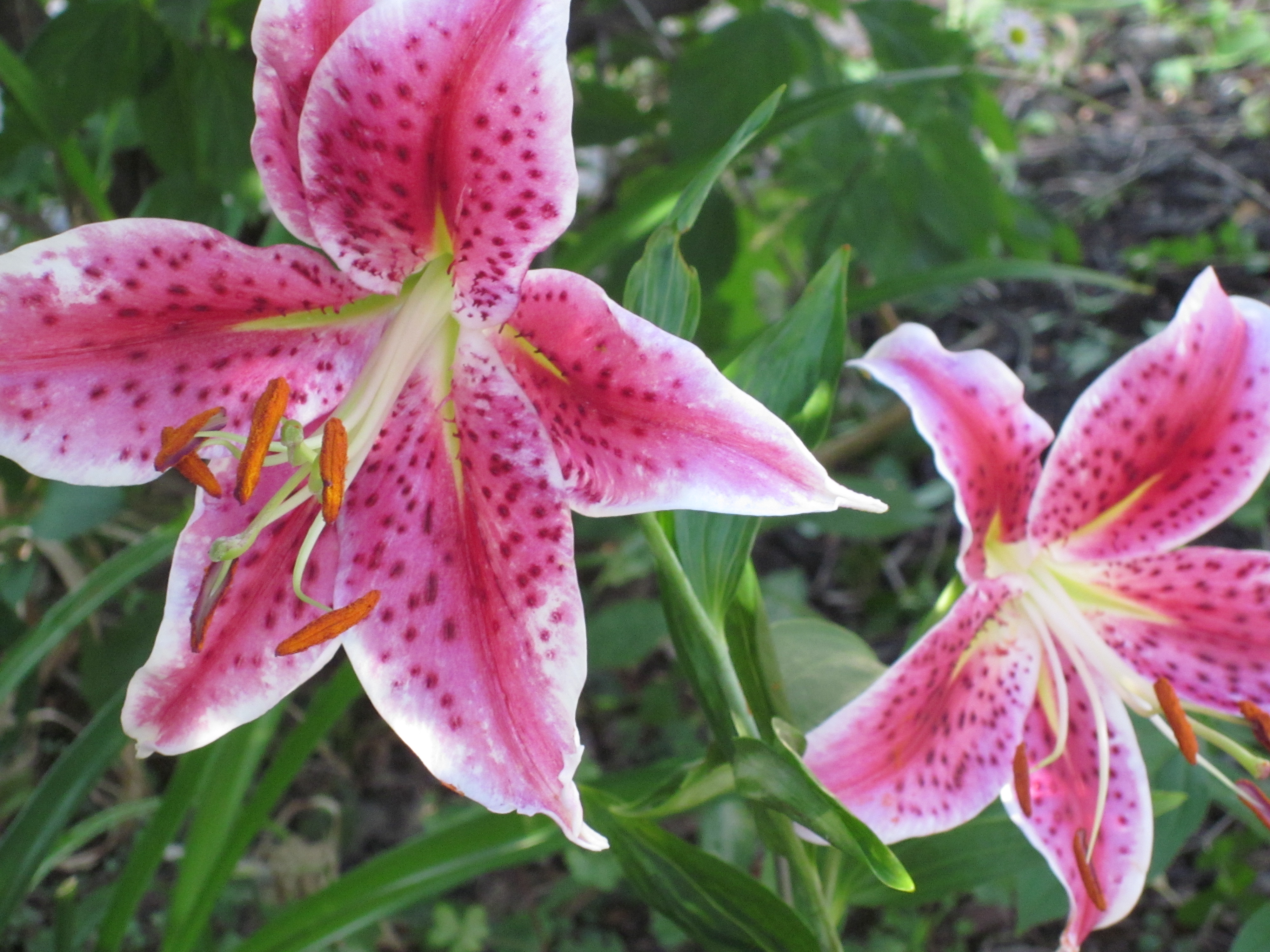
Photograph © 2014 Peggy Kornegger

Every year in early May, I spend three to six hours each morning at nearby Mt. Auburn Cemetery. Why? you may wonder. Well, Mt. Auburn, with its woodlands, lakes, and gardens, is a magnet for songbirds during their annual spring migration. They fly in by the hundreds on the way north from South and Central America. Some of them nest in the cemetery; others continue further to northern New England and Canada. But during the small window of time that they grace our local flowering trees and bushes, birdwatchers are blessed with up-close views of the colorful and musical birds of the tropics. Each year, I see or hear something new: a chestnut-sided warbler and a ruby-throated hummingbird having a territorial faceoff; a flycatcher singing next to a kinglet displaying its usually hidden ruby crown; a Baltimore oriole weaving a hanging nest in a tall maple tree; a wood thrush singing its fluted song on the path a few feet in front of me. These moments are magical—a fleeting glimpse into nature’s secret world.

Equally as exciting at this time of year are the perennial plants and flowers that break through the soil reaching to the light. How do they know when to move upward, when to grow stems, leaves, and flowers from their buried roots? It’s a yearly miracle that I witness both at Mt. Auburn and in my own backyard garden. Tightly furled leaves and flower buds appear first, gradually opening to the sun’s warmth and the longer light-filled days. A plant like Solomon’s Seal begins as a blunt grey/green finger pointing up out of the ground. Day by day, the finger slowly becomes a tall thick stem that bends and arches with opening leaves of fernlike delicacy. Beneath the leaves, along the arching stem, small white buds form and eventually open into a line of belled flowers. Swaying in the wind, Solomon’s Seal is one of the special visual gifts of spring, along with lilies of the valley, violets, grape hyacinth, columbine, and so many others.

Year after year, spring flowers and nesting birds remind me of life’s cycles of rebirth and renewal. After a long icy-cold Massachusetts winter like the one we have just experienced, this is a welcome message. Even in the freezing temperatures, even in the dark, life continues. The birds migrate south and return to raise their families; the plants withdraw into the earth to rest before emerging to bloom again in spring. Humans, too, have their cycles, though many of us have forgotten how to align ourselves with life’s rhythms of rest and renewal. If we look to the natural world, we can see that each living being has its own cycle of birth/flowering, rest/renewal, rebirth. In our over-scheduled, busy lives, we often careen out of control and crash in exhaustion. Yet, if we let go of so much trying and effort and allow life to unfold in cycles of activity, rest, renewal, and rebirth, we will feel so much more in tune with ourselves and all of life.

In spring’s wonders, there is great beauty, but there is also great wisdom, showing us firsthand the ever-turning circle of life/rest/rebirth that we too are part of. Something more powerful than our own attempts to control daily life is at play here. If we surrender to the flow of life that is so stunningly visible in springtime, we open ourselves to both inner peace and connection to spirit.


Looking Back Looking Forward

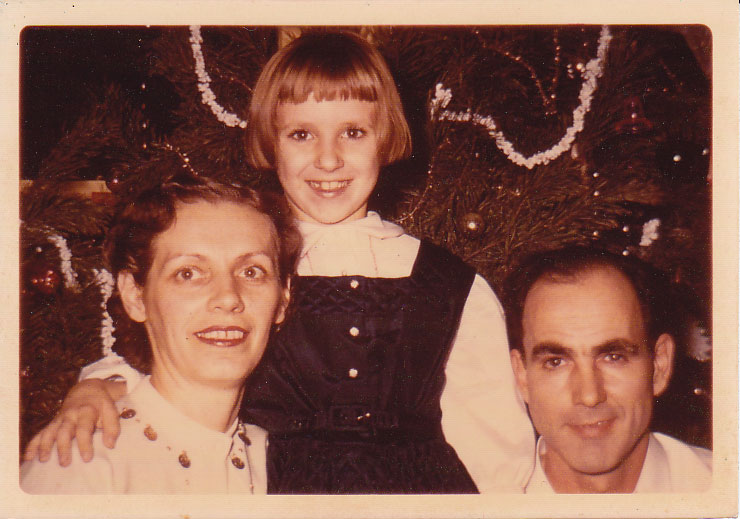
Photo Courtesy of Mike Dubrovich
Recently, a childhood friend posted on Facebook a vintage black-and-white photograph of our first grade class. What a strange experience to look at that picture of unfamiliar school children and slowly begin to see familiarity in their faces. Names from the past popped up out of distant memory. I did not, however, recognize myself. I told my friend that I must have been out sick the day the photo was taken. He wrote back, “Isn’t that you on the far left end of the second row?” I peered at the picture more closely and realized in amazement that he was right. Fascinated, I stared at that blondish little girl with big dark eyes, gazing out into her own future. My future. I looked through her eyes and saw myself looking back. Time ceased to exist in that moment of backward-forward perception.

How often do we stumble across those flashes of memory that stop us in our tracks momentarily, lost somewhere between the past and the present? Some say human life is a series of beginnings and endings out of which we fashion our remembered sense of self in the world. Yet we are so much more than our memories, which are really just a long parade of Instagram photographs that we identify as our personal history, our life’s story. Beyond the mental perceptions of time and our place in it, however, is consciousness itself—an awareness that is greater than any one life. In those brief moments of backward/forward memory jumps, we are given an opportunity to see our life from the soul’s point of view, wherein all time is simultaneous, and everything is occurring now. There is no real distinction between a past, present, or future self. The soul sees one being, experiencing time but not defined by it.

Why would we want to see things from the soul’s perspective? Well, if we completely open to soul vision, we see everything is of a piece, whole. We perceive the oneness at the core of all life. Conflicts, comparisons, and judgments fall away. We can never fail our childhood selves and the dreams they had for the future, because we are those children and we are living those dreams now. We are not lost, nor have we taken a wrong path or made a wrong decision. Everything is unfolding in a way that is perfect for our soul’s growth and evolution.

When I looked back at my childhood self in that photo, I wondered, Where is the “I” that is all of me, girl and woman? My soul answered: I am no where. I am now here. I am present. I AM. Taking a long, deep breath, I felt the wholeness of that “I AM,” a timeless soul presence beyond “where.” No separation—the adult and the child are one. If we open our hearts to the soul’s vision of oneness, we can embrace all possibilities and all selves, and life begins to flow in a less fragmented, graceful way. We are able to see the perfection that is at the heart of our own infinitely expansive lives. Within that perfection, there is no backward or forward; there is just fluid, unbroken, loving presence.

Learning to Listen

Copyright © 2013 Peggy Kornegger

We learn to talk when we are babies, expressing ourselves in sounds and eventually words that make sense to those around us. Speech and verbal communication are encouraged and celebrated. What an achievement that first word is—a rite of passage in the human journey! Listening, however, is not given quite the same emphasis or encouragement. In school, we take classes in speech but not in listening. Within the context of polite behavior, we are told to listen and not interrupt, but learning to be silently present with focused attention in a variety of situations is not part of the curriculum. Neither is quiet time spent in meditation or contemplation. Western society is noisy and wordy and very distracting, and we learn to live with it in whatever way we can, often to the detriment of our inner spirit.

As an only child, I played quietly by myself as much as with friends, but I didn’t begin to learn the true value of silence and of listening until I was well into adulthood. Although from a rural background, I acclimated easily to the novelty of living in cities and thought little of urban noise for years. At some point, however, I began to notice, and then couldn’t stop noticing, the lack of quiet everywhere. I sought out silence—in meditation classes, in parks, on vacations to natural settings away from the city. I took up bird watching as a way of immersing myself in nature, and it was then that I really began to learn how to listen.

In order to observe birds closely, you have to be willing to stand or walk in absolute silence, your senses of sight and hearing keenly attuned. When you are silent and motionless, the natural world gradually resumes its normal activity, which it had ceased at the appearance of a noisy human. What a miracle this was to me when I first experienced it. The more I listened, the more I heard: birdsong, bees buzzing, squirrels chattering, chipmunks scampering through the bushes, the wind rustling tree leaves and creaking branches. My soul was in silent communion with everything around me. Over the years, my listening deepened to the point where I felt I could actually hear flowers growing in my garden in the early morning stillness. Sounds fantastic, I know, but when you quiet yourself enough and truly listen, the world opens up its secrets to you.

Birds and flowers weren’t the only ones to teach me about listening. The elder parents in my life also taught me this sacred life lesson. Both my father and my partner’s mother experienced memory loss and related dementia in their later years. What you learn first in that situation is not to rush or finish the other person’s sentences, but to allow them time/space/silence to find the words they want to say. And if they don’t find the words, so what? Really the words themselves are unimportant. You learn to listen to the spaces between the words to hear what is really being communicated. I listened with my heart, with my soul. The last time I saw him, my father and I shared a lifetime of love just by looking in each other’s eyes. When he spoke, I heard his heart’s voice beneath the words. And during the afternoons when my partner and I sat quietly with her mother listening to 1940s tunes, we experienced together the beauty of the songs as well as the silence between the songs. Our spirits were connected in that peaceful space.

Perhaps what I am describing can’t really be taught in school, but only in life. We learn to listen as we learn that there is more to this world than the physical dimension. The longer we live, the wider our perception and awareness grows (if we are fortunate), and the closer we come to the essential stillness that is at the core of being and at the center of the cosmos. Out of silence, sound is born, life is born. When we listen deeply enough, we hear the sound of silence itself. And that is the place where our souls speak to one another, without words.


Simply Being

Photograph © 2011 Peggy Kornegger

As I meditate for longer and longer periods of time (1­–2 hours) at daybreak each morning, I am finding complexity and simplicity are merging into one flowing experience. Seems contradictory, I know, but only because of the constraints of language. Put another way, layer upon layer of awareness is opening up within me, yet all the layers are part of one whole, one seamless state of being. I’m discovering it is possible to feel inner peace at the same time that I’m feeling sadness or distraction. I am aware of silence at the heart of all sound, of light at the center of darkness. Beyond the illusion of separation, there is wholeness. Within complexity itself is infinite simplicity. Perhaps the best way to describe all of this is oneness, feeling one with everything, at times just resting without thought in simply being, in simply breathing.

Various spiritual traditions speak of such moments. The Sanskrit word samadhi refers to union or merging with God or the Divine, and the Hebrew word devekut describes intense melding or deep communion with God in prayer or meditation. Humans have tried with words to approximate an experience of Divine union or universal oneness that really defies description. Yet we try.

Because I am a writer, I have always felt a deep compelling urge to describe my own spiritual journeys. Yet, the deeper I dive, the harder it is to find the exact words to replicate what I am feeling. Indeed, during one of my deepest inner experiences of infinity (in a session with Panache Desai), I completely lost the desire to write or describe at all. For several hours, I remained in a state of infinite peace. My journal lay untouched nearby. Lately, as I spend longer periods of time in meditation, this same experience is recurring. Words are unnecessary within pure being, the soul silently witnessing. Language arises from thought, and when thoughts float by without attachment or disappear, there is no need to speak or write. Only, later, as I come to the surface from these depths, do I reach for my pen.

This is not to say that the goal of life is to give up speaking or writing. I guess that what I am getting at here is that the experience of peaceful oneness without words changes you. I perceive the world a little differently. The need for constant intervention and effort diminishes. Events seem to flow of their own accord without my monitoring them. There is a recognition of a higher intelligence at work, an intricate tapestry of which I am but one fiber. And my purpose, as that fiber, is to simply be myself, not orchestrate the entire universe. There is a humility in this, a letting go. It doesn’t mean lack of doing; it means doing that arises from being—a softer, less frenetic approach to life. When I write, the words flow from my soul more than my mind.

Am I in this space all the time? No, of course not. I am human. My mind gets busy, and I start to make lists, feel rushed, etc. But those experiences are becoming more transitory, less all-consuming. My soul self knows better, and that connection grows ever stronger. All of us have that connection, and we are gradually learning its importance. There truly is an inner core of peace. When we open to that peace, one breath at a time, it simplifies everything.