Infinite Intelligence

I like the term “Infinite Intelligence” as an alternative to “God,” which some people find too religious.* I appreciate the expansiveness of those two words, seeming to cover everything visible and invisible in the universe, and not associated with any one spiritual tradition. There is an overarching inclusiveness within them. To me, Infinite Intelligence can be used to describe everything: the stars and planets; humans and animals; bees and birds; stones and flowers. If we could see every living being and every so-called “inanimate object” as part of an intricate fabric of intelligence and light, maybe we would drop many of our preconceptions and assumptions.

About animals, for instance. Until recently, most humans did not give them credit for any intelligence. Their behavior was all based in “instinct.” Yet, if we look and listen closely, we will recognize great intelligence among these creatures who do not speak our language but very clearly communicate, with one another and with us. They live their lives with both intelligence and profound awareness, which is the basis of their relationship to the world. They move within it in a kind of intuitive flow, as if they are responding to highly developed directional cues that are invisible and inaudible to humans.
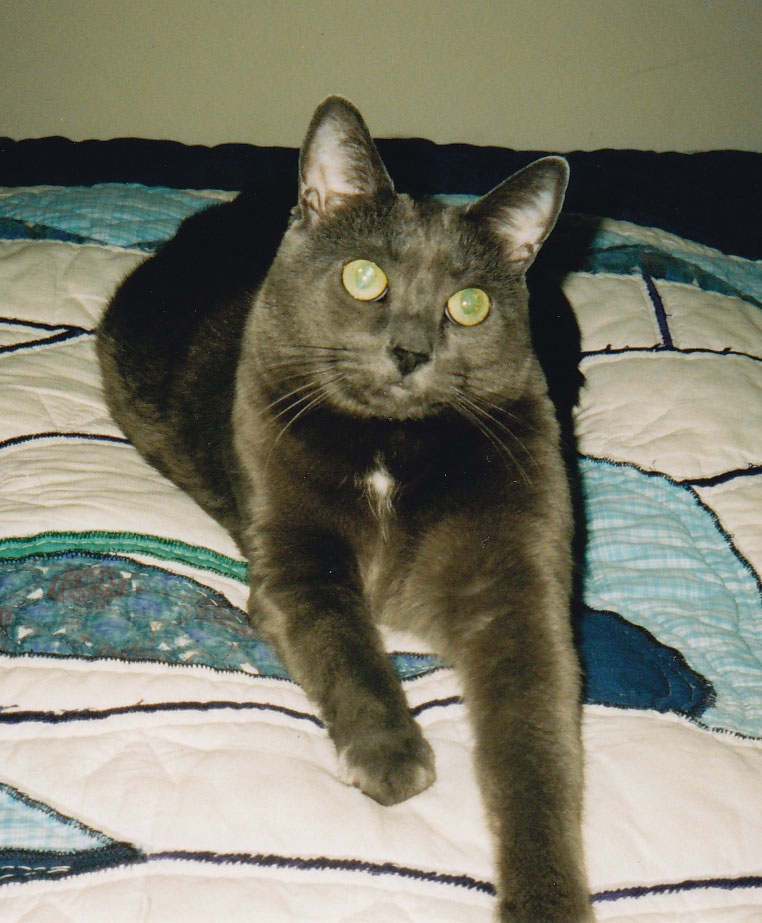
Throughout my life, I have experienced animal intelligence, love, playfulness, and humor. My dog Pepper was my constant childhood companion, and we invented countless imaginative games to play together outdoors. When I was an adult, my cats Edward and Lily repeatedly displayed their cleverness and sense of humor. Edward would remind me it was time for his breakfast by making chewing noises next to me as I slept. Lily would make me laugh if I was sad or upset by hiding behind the window shade and reaching around with her paw to ring the wind chimes. She often did yoga with my partner, Anne, and me, teaching us the best “cat poses”!

So-called “wild” animals also have intelligence and playful humor. A squirrel and I once had a “disagreement” when he removed a plastic flower from the hummingbird feeder and carried it to the top of a tree. As I scolded him, he looked directly down at me, licked the sugar off the flower methodically, and then dropped it at my feet. I had to laugh at this mischievous response. One summer, a family of raccoons nightly took turns jumping into our neighbors’ hammock and swinging back and forth. It was clearly a shared game that they enjoyed. 

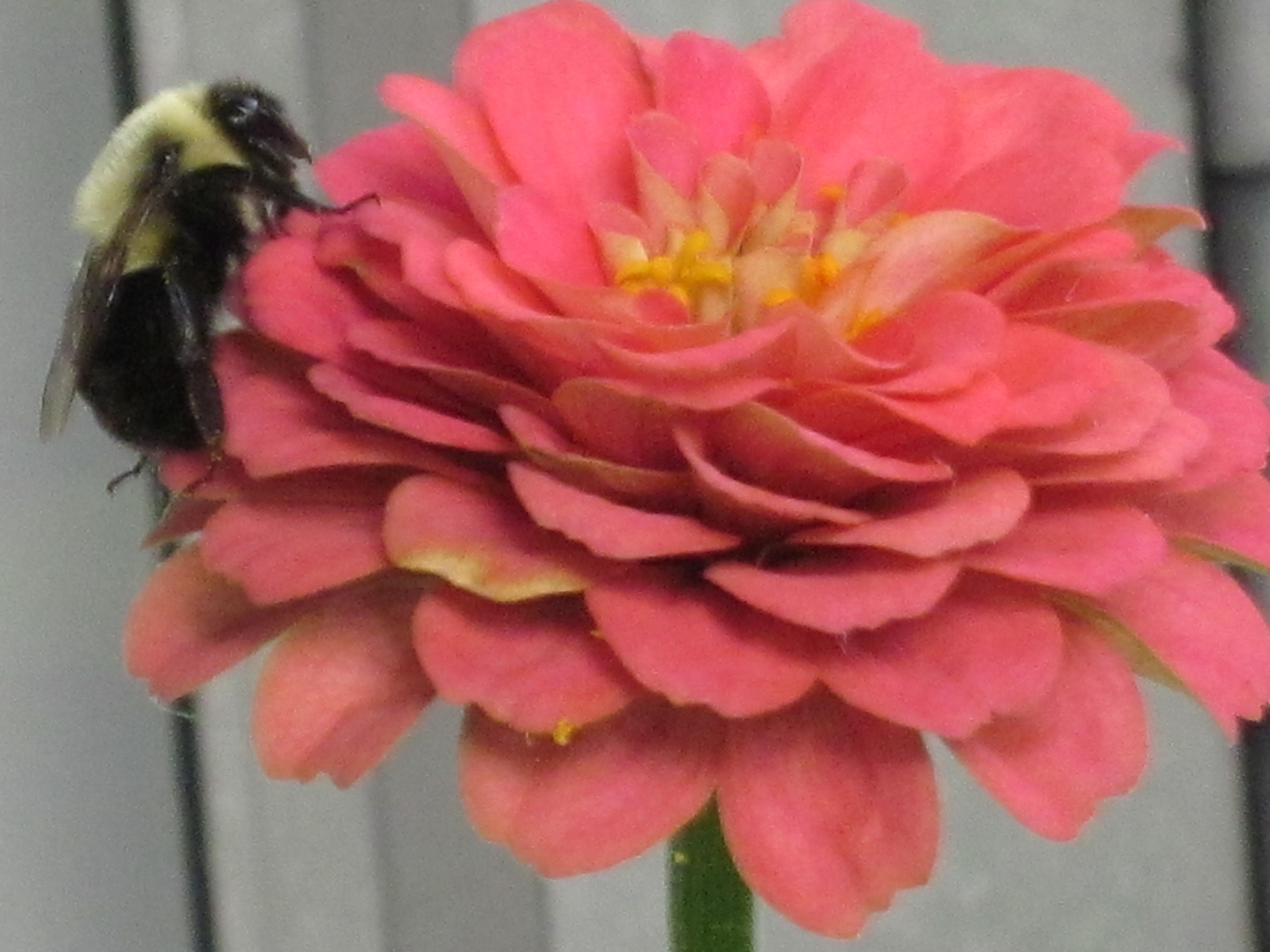
Robins can become daily backyard companions with their cheery singing presence. One used to sit on a tree branch above my garden each morning and call to me insistently if I hadn’t refilled the birdbath with water soon enough. As I watered my flowers, I would often see a bumblebee “sleeping” there, nestled in the petals. One day, I leaned over to say “good morning.” The bee raised its front leg as if in answer. When I repeated my greeting, it repeated its response. A bee-to-human conversation!

Among themselves, birds and animals constantly communicate, both audibly and visually. I’ve heard two crows carrying on a “conversation” as they flew side by side high overhead. In a nearby park, I watched two dogs excitedly run to greet each other like old friends and immediately begin to play and chase each other as if in an improvisational skit. I’ve also seen wild dolphins playing and swimming together in perfect synchronicity in the ocean, often including me and other nearby humans in their water dances. It was like being immersed  in an amazing nonverbal connection arising from eye contact and shared thought/feeling transmission.

Moments like these, in my own backyard or beyond, reinforce my belief in the intelligence of all beings in this world. If we are open to it, we will see it. Infinite Intelligence is everywhere, within each of us and within the farthest reaches of the multiverse. Ultimately there really is no inner and outer, just a vast miraculous infinity that includes us all, heart to heart.
———
*Thank you to Carol Bedrosian for our conversation about this.
A Timeless Morning

We can find many entry points to Presence in the course of our lives. Presence: the experience of oneness with all things; timeless awareness; Spirit. It could arise unexpectedly in the midst of crisis or celebration, sound or silence, solitude or community. We each cross the threshold to Presence in our own way, in our own time. Yet, we all reach it at some point, and if we are fortunate, our hearts open wide enough to live there permanently.

For me, Nature is the eternal gateway to Presence in my life. In small glimpses or panoramic views. Green trees and blue skies outside my window. Distant snow-covered mountains seen from an airplane. Or, walking in a nature sanctuary as the seasons change throughout the year. I have often written about Mt. Auburn Cemetery in Cambridge, which is my bird’s eye view to the natural world. And I mean that literally: the birds are always part of my walks there. But then, honestly, so is everything else: flowers, trees, ponds, hills, dells, butterfly gardens and native plantings. To me, it’s paradise on Earth. It renews my spirit and feeds my soul.

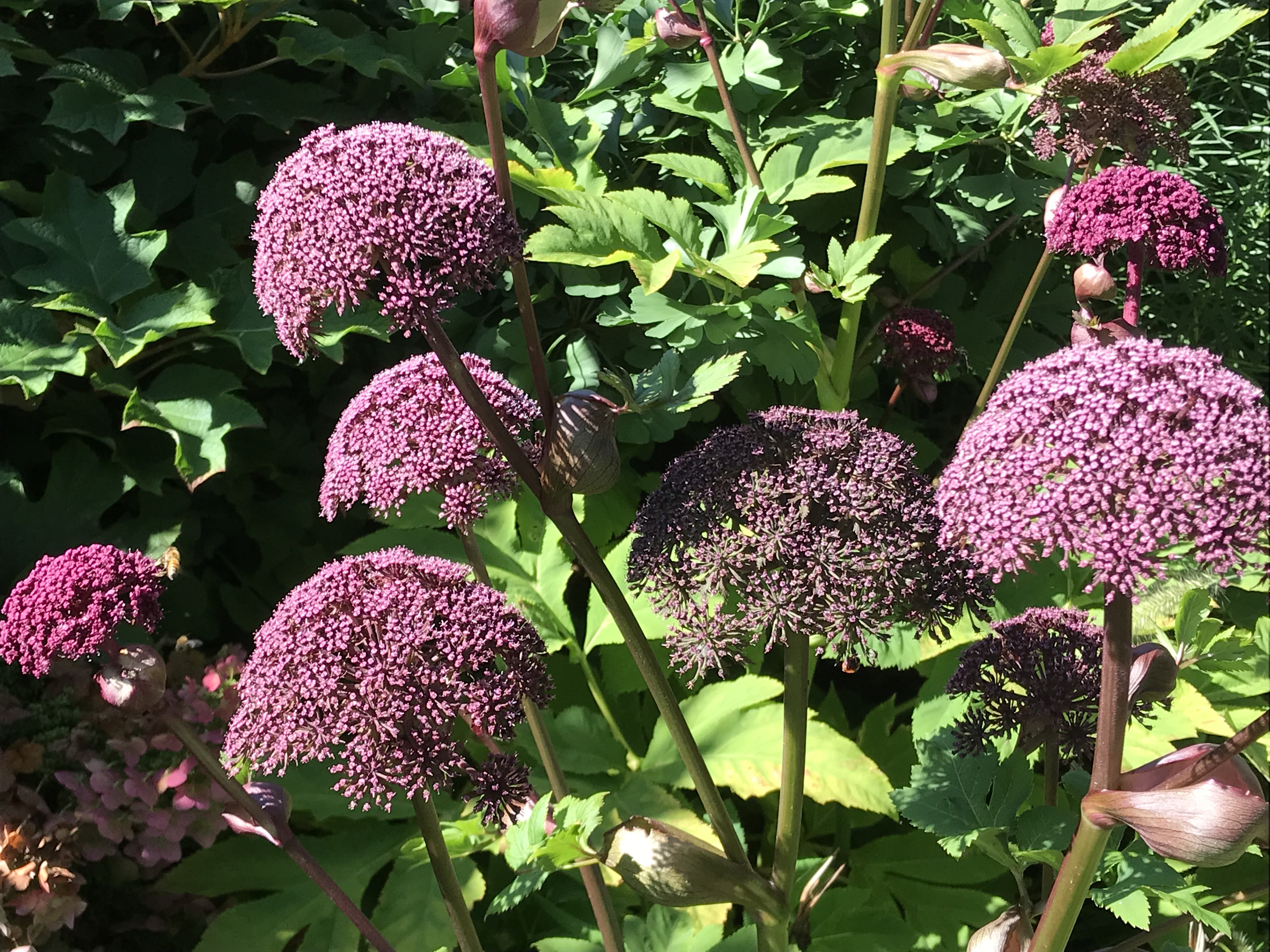
One morning this past August, I walked through Mt. Auburn’s gates and was immediately immersed in Presence. I could feel a powerful vibrancy of life everywhere I looked. The late summer flowers (hydrangea, Angelica gigas, Joe Pye weed, phlox, black-eyed susan) blooming in the Asa Gray Garden were stunning, and they were surrounded by dozens of bees dancing through the air, flying from one to another, collecting pollen. Tiger swallowtail and monarch butterflies floated by as well, as did dragonflies. I stood mesmerized by the beauty, the sun making everything around me sparkle with light.

As I walked farther, I heard familiar bird calls in the trees and bushes: catbird, white-breasted nuthatch, downy woodpecker, flicker, robin, cardinal. Bright yellow-and-black goldfinches were fleetingly visible, calling and swooping by like an avian Cirque du Soleil. The chirping and buzzing of crickets and locusts was also part of this symphony of natural sounds, as was the occasional scolding of a squirrel or chipmunk. At one point, I stopped and stood silently listening, eyes closed. When I did so, I realized that for more than an hour, I had been completely One with all I heard and saw, no separation; my mind had stepped aside entirely. Time was absent. It was a glorious feeling of sacred connection and complete alignment with the world around me and within me. Presence. Tears of gratitude and joy filled my eyes.

I have had similar moments before in Nature, but this particular expanse of timeless Presence seemed especially all-encompassing and beyond the realm of language. The closest I can come is to say that my individual “I” had disappeared into the eternal “I Am,” the center of all being in the cosmos. I was one with the music of the spheres as it played out everywhere around me. Later, I realized that from the soul’s view, this is what is occurring all the time for every one of us. 

For the Love of Bees

Photograph © 2012 Peggy Kornegger
Now that winter is over in New England, and spring bulbs are blooming in my garden, I am filled with sweet anticipation for the coming months of summer flower abundance. My life has increasingly revolved around the change of seasons since I moved to a house with a yard a few years ago. Although I have always filled my apartments with houseplants, I had never really gardened outdoors before. I read up on which flowers and bushes would bring butterflies and birds to the garden and slowly began to learn how to become a “midwife” to plant life.

Soon, butterflies and birds did indeed begin to frequent the flowers and bushes in my yard. Unexpectedly, though, it was the bees that completely stole my heart. I discovered that there were at least 5 or 6 different kinds that visited the flowers, including honeybees and bumblebees. I watched them all and learned more all the time, just by observing their behavior. The evening that I discovered a bumblebee curled up for the night on the petals of one of my zinnias, I fell in love. I felt such tenderness, as if it were my own child.

Over the weeks and months, I found that bumblebees also “slept” on blanket flowers, bachelor buttons, pincushion flowers, sedum, cosmos, and the butterfly bush. Their most interesting bed, however, was the 6-foot-tall Joe Pye weed, which has large clustered fluffy pink blossoms. In the late evening, I would often find 8 or 9 bees on the different levels of flower clusters, snuggled into their own down comforters. When it rained, they would hang beneath the flower clusters, using them as umbrellas while they rested.

In the mornings, if it was cool or damp, the bees would often “sleep in” until the sun warmed the air. Sometimes I would see a bumblebee slowly stretching its legs, one by one, as if limbering up after its night’s immobility. I always wished them good morning and good night, and I believe they were aware of my presence as a “friend,” occasionally buzzing up to my face in greeting. I’ve had butterflies behave in a similar fashion, sometimes even landing on my chest or arm to sit in the sun. It was a beautiful life lesson about the conscious intelligence of all beings.

Bees, which many people hardly notice, provide irreplaceable support to the cycles of life on Earth by pollinating the flowers. The massive deaths of honeybees and bumblebees in recent years have been heartbreaking. The probable cause: pesticides and herbicides used by agribusiness, landscapers, and often homeowners as well. It is my hope that people will begin to understand the wisdom and urgent necessity of gardening and eating organically, for the health of our bodies, our planet, and all the creatures that inhabit it. You only have to fall in love with one flower, one tree, one animal, or one bee to feel the interconnectedness of all life. In one(ness) is the survival of all.

Note: A reader has reminded me that GMOs are another likely culprit in the collapse of bee colonies. Thus the key importance of the current consumer campaign against GMOs in the U.S. For more information, visit: http://www.organicconsumers.org/bees.cfm.