Limitless Love on an Evolving Planet

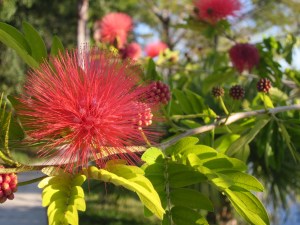
Photograph © 2019 Peggy Kornegger
Is love on a global scale, for oneself and others, possible? I believe it is, despite evidence to the contrary. Let’s face it. The current planetary paradigm that we inhabit is based in limitation. From a very early age, we are taught to curtail our heart’s desires for fear they will be crushed within a skewed social matrix that does not allow universal self-fulfillment and growth. Most social constructs in our world are organized on a top/bottom basis. Whether you are at the bottom or top, your life is limited by the very fact of inhabiting a limited paradigm. What would it take to shift that paradigm, to make it inclusive instead of exclusive? How about a complete transformation in global consciousness? Because until the collective consciousness changes, we are all caught in a web of limitation.

So how do we transform consciousness in such a way that it affects everyone on the planet? The answer can’t be found in political parties, social revolutions, or individual changes. For as Emma Lazarus once wrote, “Until we are all free, we are none of us free.” All the attempts by humans down through the ages to create a “better world” have moved us along and opened possibilities but have not eliminated all inequities. We are living in a time when all that changes. The reason? We are moving into a greater awareness on this planet, one sourced in the heart not the head. Our evolution as human beings is reaching critical mass as we open to the heart’s transformative energy. Love will break through all limitations and separations and bring us home to ourselves and to each other.

When we look into our neighbors’ eyes and see brothers and sisters, that is when the world shifts. It is a collective phenomenon. Together, we love a better world into existence. Together we recognize that anything is possible. Together we become limitless. It’s not an individual endeavor or solo struggle. Now is the era of soul family and soul family reunion. We came to this planet to carry love in our hearts and see it through to its ultimate earthly manifestation: universal connection. One after another, we recognize one another as family, and the circle expands. No one is left out this time around. No one rises up while others fall behind. It is the collective heart of humanity that is opening.

Even when it looks like hatred and fear predominate in the world, see it as the last breath of a dying paradigm. Know that nothing is stronger than love, in any dimension. We are here to live the ageless wisdom of the heart in all that we say and do in our lives. We are here to collectively shift consciousness throughout every dimension. It is already happening—in every act of kindness and compassion worldwide. Together we are embodying limitless love on an evolving planet. Now.
________________
*Many of the ideas expressed here are expanded further in my book Lose Your Mind, Open Your Heart, available online at Amazon and Barnes & Noble.
Middle Earth

Photograph © 2019 Peggy Kornegger

In Lord of the Rings, J.R.R. Tolkien used the term Middle-earth to describe the land where his stories took place. Situated somewhere between angelic and demonic realms, the inhabitants struggled to hold to the light. Sometimes I feel that is where we live now. Opposing forces are mobilized on all sides. All around are compelling reasons to believe that “evil” is on the rise and that “good” people are increasingly victimized by those in power. Yet holding to the light within darkness means we cannot succumb to what the prevailing belief systems would have us accept as truth. We may live in Middle Earth now, but it is just a way-station on the way to the New Earth. The challenge and balancing act is to accept and live in the present moment while also embodying a new vision for the future.

When I was in my 20s, I began to catch glimpses of this “New Earth.” Like many others of my generation, I envisioned where we were meant to evolve and how we were meant to get there. The where and the how were both Love. It sounds like a Beatles song (and it was), but it was/is so much more. “All You Need Is Love” is the oldest wisdom on Earth, handed down in every spiritual tradition for thousands of years. Compassion, loving-kindness, generosity of spirit, oneness—all names for love, for living as if there were no separation between any of us (and there isn’t, at the soul level). If “otherness” falls away, fear and suspicion also fall away. War and violence fall away. Hatred and abuse fall away. If you see every being as just like you on the inside, then how could you hurt them or turn away in aversion and rejection? If you look in another person’s (or animal’s) eyes without preconceptions or guardedness, there is only God looking back at you.

That is the vision we had so many years ago, and I still hold it in my heart. It is a dream that becomes real as we live it. Equality; respect for all ages, abilities, races, and religions; gender fluidity; shared resources and abundance; love for and protection of nature and the environment. Kindness, compassion, and gratitude as the basis of all interactions. No privileged classes served by others or elite groupings that exclude the “undeserving.” No higher and lower. No kings or presidents or top dogs. No hierarchy. All remnants of the patriarchy will fall away, to be replaced by ever-evolving circular structures that support both individual and collective creative growth and flowering. A living social agreement that changes with the always changing awareness and potential of those who are part of it. Our lives will be defined by infinite possibility and vision, not dead-ended rules and laws that only benefit those who make them.

Some may consider all this utopian fluff, not grounded in the real world. But every dream is considered unrealistic and impossible before it manifests into reality. We begin with the dream and we dance it into existence. Right now, we are in Middle Earth, seemingly stuck somewhere between the old and new paradigms. We haven’t yet crossed the line of “critical mass,” at which point, momentum picks up and impossibility gradually becomes possibility, becomes “reality.” The key, the secret, the incentive, is to live now as though it has already happened. Because it has—in our hearts. Every single one of us was born with love at our core. When the layers get peeled back and the masks fall away, that’s all there is. At some point, we will stand soul-naked before one another and realize at the deepest level who we are and why we are here.


Birdsong: Don’t Let the Music Die…

Photograph © 2019 Peggy Kornegger
In 1962, Rachel Carson called it the “silent spring,” the time when pesticides would destroy birds and other wildlife and leave humanity existing in a half-life of stunned silence. Her work was the impetus for the environmental movement and has influenced millions of people worldwide. Yet today, more than 50 years later, pesticides are still very much in use, and we are facing the slow, agonizing fulfillment of her prophecy. In September, the journal Science published the results of a comprehensive study of North American bird populations. The results: Since 1970, there are nearly 3 billion fewer birds singing their spring songs, a staggering 29% gone from the Earth. Bird experts and conservationists are calling it “a full-blown crisis” and “the loss of nature.”*

The day I read these figures, I wept. I could feel my heart breaking. The losses are so huge. Beloved warblers in all their colorful variety: 617 million gone. Two of my all-time favorite birds: Baltimore orioles, 2 in 5 gone; wood thrushes, 6 in 10 gone. It is hard to fathom. Almost unbelievable. The birds that I eagerly anticipated seeing and hearing each spring are vanishing and may one day be gone forever. What would spring be without birds? Without the robin’s cheery song and the redwing blackbird’s flashing colors and ringing call? Dead air, everywhere.

Everyone who knows me knows I am an ardent lover of birds. I grew up in rural Illinois surrounded by countless birds nesting in our yard and visiting our feeders. Birdsong was an integral part of life, like the rising and setting of the sun. As an adult, I became a more focused birdwatcher. For more than 35 years, I was blessed to live near Mt. Auburn Cemetery in Cambridge, Massachusetts, where the spring bird migrations are well-known, even beyond New England. Birders there are often blessed with more than 100 species passing through. I visited Mt. Auburn at all times of the year and knew it as intimately as I knew the 5 acres where I grew up. Almost every tree and bush held a memory of a bird sighting or song. The brilliant red of scarlet tanagers and the startling orange and black of orioles. The husky song of the rose-breasted grosbeak and the ethereal trill of the wood thrush.

The wood thrush—a bird that touches my heart in the deepest possible way. Each spring I waited to hear it, not just see it. Standing quietly in the early morning silence in the Dell at Mt. Auburn, listening—and suddenly I would hear it, a piping flute-like call that gently echoed among the trees. Tears always fill my eyes at the sound of the wood thrush, a miracle of sweet music offered to the world, for free. Virtuoso performances daily by all the spring migrants. Each bird’s song unique and irreplaceable. Each one a miracle upon the Earth. A friend of mine refers to the “unreasoning cheerfulness” she feels when she sees or hears birds.

And this beauty is what humans are destroying so carelessly. Correction: big business and agribusiness are destroying it, with ruthless intentionality. Mega-corporations like Monsanto (now owned by Bayer) have spent decades laying to waste wildlife and human life throughout the world, making their products ever more lethal, from Agent Orange to Roundup. Not only birds, but butterflies, bees, and other insects essential to our ecosystems are dying in huge numbers because of herbicides and pesticides sold by these companies. Thousands of lawsuits have been brought against Monsanto by individuals who have gotten cancer from using Roundup, and at last the courts are beginning to decide in their favor.

The question is: Will it stop Monsanto and the other businesses? And if it does, will it be in time? The birds cannot bring lawsuits. They can only continue to do what they have done so beautifully since the beginning of life on Earth: sing. The planetary songlines they have created vibrate the world into being. We are the blessed recipients of their musical gifts. The very least we can do is reciprocate with gratitude and love by speaking out and taking action to save their lives: by not using poisons on our lawns and gardens, by always buying organic, and by donating to and joining advocacy groups for birds and other wildlife: https://abcbirds.org/; https://www.audubon.org/. My greatest hope is that the number of birds rebounds and that we are able to hear their songs for years and years to come.
_______________________
*Other factors, such as habitat loss, air and water pollution, collisions with power lines and glass skyscrapers, also contribute to the overall losses. On a more hopeful note, a growing number of cities have passed ordinances to use bird-safe glass and lighting practices and designs. And activist groups like CELDF (https://celdf.org/) are working at community and state levels across the U.S. to protect the “rights of nature.”

Step Out of Line!

Photograph ©2018 Peggy Kornegger
In her recent Emmy acceptance speech for acting, Alex Borstein told the story of her grandmother, who courageously stepped out of a death line in a Nazi concentration camp and thus survived. So, she advises, “Step out of line, ladies, step out of line.” All around the world, women, often young women, are doing just that. Their strong voices and brave actions are inspiring others as they stand up, speak out, and “step out of line.”

Greta Thunberg started alone, sitting in front of the Swedish parliament every week, striking to call attention to the dire emergency of climate change. One year later, in September 2019, millions of people around the world joined this passionate and articulate 16-year-old woman in a global climate strike, protesting destruction of the environment. She is the latest in a long line of dedicated environmental activists.

More than 20 years ago, Julia Butterfly Hill also started alone. In 1997, at the age of 23, she began living in an old-growth redwood tree to protest the logging of these forests in California. She endured two years of attempts to break her resolve, including helicopter harassment. In the end, the tree was saved, and Julia has continued her activism, co-founding groups to work for social change. Greta appears to be carrying her legacy forward.

In the halls of Congress, where the wheels of change traditionally move very slowly, a new generation of vocal and nontraditional political women is being heard. As the youngest woman to be elected to Congress at age 29, Alexandria Ocasio-Cortez has challenged the status quo with her Green New Deal aimed at phasing out fossil fuels and transitioning to renewable energy. She is a consistently strong voice for both environmental protection and social change, “speaking truth to power.”

Greta, Julia, and Alexandria are forces of nature. They can’t be stopped. Like Pele, goddess of fire in Hawaii, they are both creator and destroyer. Creator of possibilities and destroyer of lies and illusions. It is the age of the return of the Goddess. Fiery women are rising up everywhere, speaking fearlessly and courageously to the patriarchal power structure.

Born the year Julia Hill began her tree action, Malala Yousafzai defied the Taliban in Pakistan (and was shot for it) when she spoke out against banning education for girls. She recovered from the attack and soon became an international activist for all children’s education. In 2014, she was the youngest-ever recipient of the Nobel Peace Prize at age 17.

In 2018, Parkland shooting survivor, high school senior Emma Gonzalez confronted politicians in the U.S. Congress for making deals with the NRA and allowing gun violence to escalate. Insisting that “it’s time for victims to be the change,” she continues her activism to push for stricter gun laws. Also in 2018, Olympic gymnastics medalist Aly Raisman testified about being sexually abused by the team’s doctor (more than 150 other young women also testified), thus expanding the “Me too” movement to women’s sports: “The tables have turned. We have our voices and we are not going anywhere.”

These young women are only the proverbial tip of the iceberg. Across the nation and the world, women of all ages are stepping into the spotlight and onto podiums to demand radical changes that include the end of gun violence, environmental destruction, and sexual abuse. “Time’s up!” has become a rallying cry of a generation now coming into adulthood. Greta Thunberg calls for politicians, businesspeople, and all citizens to “wake up” and face the “biggest crisis humanity has ever faced”—global warming and climate change. And to take action. No more pretend “solutions” and words that sound good but do nothing. This is the message of all of these women: Stop pretending to believe in change while protecting your own privileges. Help to create a world that supports all people as well as Mother Earth. Step out of line!

The End of Philanthropy: A Re-Vision

Photograph © 2019 Peggy Kornegger

In U.S. history books, well-known philanthropists such as Carnegie and Rockefeller are described as generous and charitable. They donated part of their great wealth to good causes such as building schools and libraries. However, what is often overlooked in this version of history is that the very basis of their philanthropy was inequality. Their fortunes were built on the backs of working people, whose labor and minimal wages allowed those at the top to accumulate large amounts of money, which they used to build mansions for themselves filled with extravagant possessions. They gave a portion of their money to good causes. Meanwhile, those who were the actual source of their wealth often could barely afford to feed themselves and their families. This scenario continues today.

The United States was created as a radical departure from the rigid hierarchy of kings, queens, and royalty, and the accompanying servant class. Democracy, an equal society based on individual freedom and shared resources, was an experiment that many thought would fail. It hasn’t failed, but it hasn’t fulfilled its promise either (perhaps because slavery was part of it). We still have hierarchies in place, not based in bloodlines but in fierce competition that pits individuals against each other to garner a place at the top of the economic and social pyramid. We don’t have kings, but we have billionaire entrepreneurs and entertainment moguls instead. And we have a collective consciousness, promulgated by those in power, which encourages the average person to admire the rich and famous and strive to be like them.

The cards, however, are stacked against ordinary citizens because of an unequal economic system that rewards individuals who climb to the top at the expense of others. These individuals (mostly white and male) build organizations that garner them profit and those who work there a minimum wage. They often have two or more homes and an excess of possessions while their employees struggle to make ends meet. This is not democracy. This is self-centeredness disguised as freedom: the “right” to make money—so-called free enterprise.

Some would argue that philanthropists have made major contributions to crucial causes that affect our lives, such as protecting the environment. Here in Southwest Florida, a vast expanse of coastal estuaries and mangroves was saved almost single-handedly by philanthropic contributions. Certainly a wonderful accomplishment, but these areas wouldn’t have needed to be saved in the absence of big business and land development. In an egalitarian social structure, the well-being of all, including plants, animals, and ecosystems, would be paramount in every decision that affects the collective. Isn’t it about time to flip the dominant paradigm?

How about a society based on sharing, reciprocity, and environmental awareness? One where people together build organizations, schools, libraries, and parks and then share them; where everyone has a part in creating the world they live in and everyone has equal access to its benefits. Collective social wealth in which each person has a place to live and enough to eat instead of individual wealth that gives a very few a life of privilege while many are homeless and hungry. This was the possibility that democracy promised, and finally we are evolving to the point of fulfilling it. The extremes of wealth and privilege are becoming glaringly visible, and people are beginning to see alternatives: the circle instead of the pyramid, an equal society in which philanthropy would be obsolete because everyone would have enough.

This transformation is what we are living into now, and it involves a shift in awareness—from self alone to self among others, from me to we. If people were truly compassionate and their hearts and minds were completely open, they couldn’t even imagine having an excess of anything while others had virtually nothing. The process of giving and receiving would be part of daily life. Generosity would be second nature, not an afterthought. And no one would be held back or forced into mediocrity. Each person would live their best life in close connection with others living their best lives, in alignment with the natural world.

Looking around, we see a huge division between the haves and have-nots and ruthless and calculated attempts to keep that division intact. However, these extremes are destined to die out. Underneath the surface of inequality and separation is a movement toward something different: a truly equal and shared life for all beings on this planet. It is a transformation in consciousness and an opening of the heart, which is the source of all love and generosity, engendering a total re-visioning of our world.