Married!

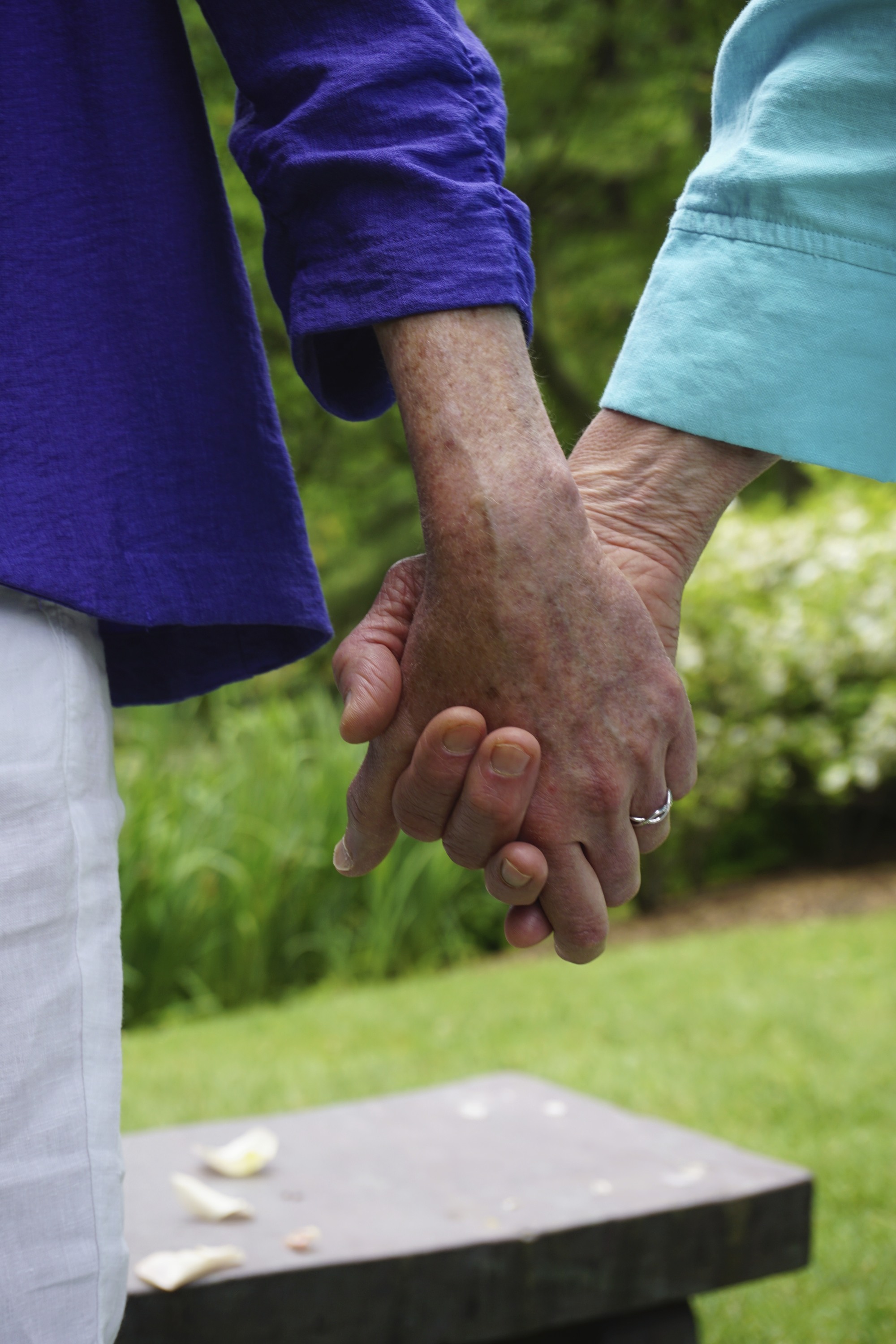
Photograph © 2014 Helen Morse
On June 22, almost exactly one year after the defeat of the Defense of Marriage Act (DOMA), my partner Anne and I were married in a small ceremony in Cambridge, Massachusetts. In so doing, we became part of a tidal wave of ongoing historic change in the United States. May and June, in particular, are significant months for the gay/lesbian community. On June 28, 1969, demonstrators spontaneously took to the streets and fought back against a police raid at the Stonewall Inn in New York City. Stonewall became the pivotal rallying focus for the beginning of the gay rights movement in the U.S. A year later, on June 28, 1970, the first annual Gay Pride marches took place in New York and other cities, spreading around the world in the decades since then. In May of 2004, Massachusetts became the first state to allow legal marriages of same-sex couples. Ten years later, here we are, a married couple, after 31 years together.

People often wonder why we waited ten years. Well, primarily because of the tax complications—we would have had to file differently for state and federal since only one recognized same-sex marriage until DOMA was struck down. Also, marriage had never really been on our radar. It wasn’t something that mattered to us, and we had never thought about it as remotely possible. Over the years, we watched state after state and then the federal government pass acts and laws banning same-sex marriage. We both attended national marches on Washington for gay/lesbian/bi equal rights in 1987 and 1993. Finally, unbelievably, the tide began to turn, thanks to the activism of groups like GLAD, as well as countless courageous individuals, well-known and unknown, who came out in their lives and helped to shift public consciousness. In 2004, marriage became an option for those of us in same-sex relationships in Massachusetts.

As Anne and I attended the weddings of gay and lesbian friends, we were deeply moved by the open-hearted love, sharing, and support that took place. We began to consider the possibility of marrying, not so much for legal reasons but for sentimental ones—to share our love with friends and family. We didn’t want to come to the end of our lives and regret not having experienced something so special and really quite sacred. We also wanted to be part of the amazing, expansive energy that was transforming the world around us. So in January of this year, we decided to get married.
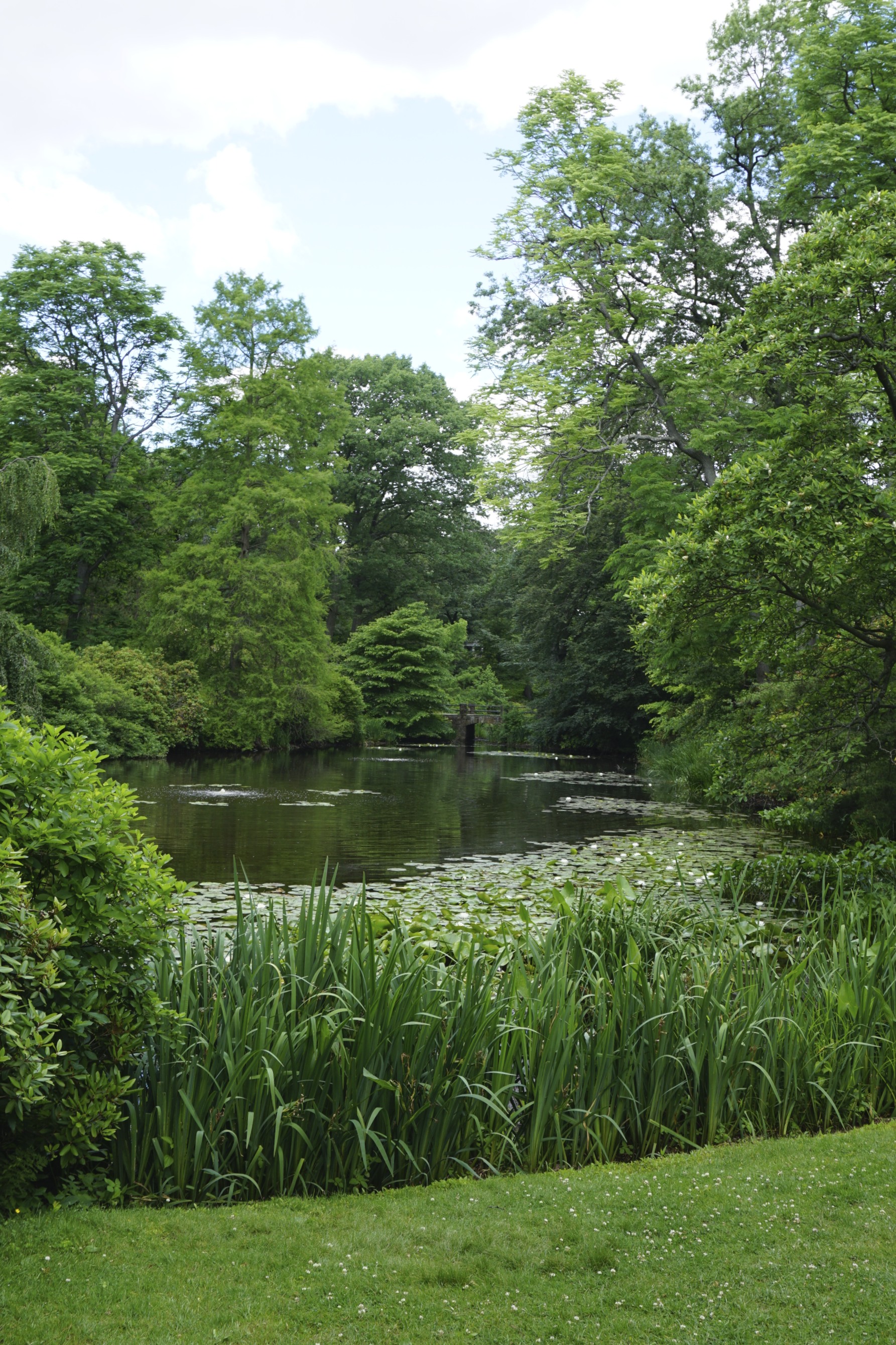
Photograph © 2014 Helen Morse

Almost immediately, magic began to stream into our lives. Our dear friend Ji Hyang,who had just moved to California, told us she could fly in and marry us on June 22. Mount Auburn Cemetery, a beloved nearby nature sanctuary, was available for an outdoor wedding ceremony on that date. From California, Nevada, Illinois, Washington, DC, New York, and Massachusetts, friends and family told us that they “wouldn’t miss” being there. So many people offered to help with the wedding and backyard reception that we were moved to tears of gratitude again and again by the generosity and genuine happiness everyone expressed. Even the two clerks at our town hall were excited and welcoming when we applied for our marriage license. They took our picture and sent us off for celebratory ice cream.

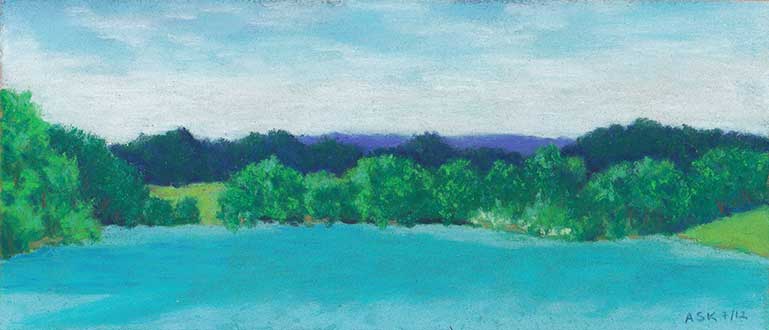
So, on the day after the summer solstice, Anne and I awoke to a morning of the most perfect weather imaginable. Blues skies and lush green foliage framed Auburn Lake, where the ceremony took place. Friends who hadn’t seen each other in decades came together in joyful reunion to celebrate our wedding. The ceremony we had created played out in the most wondrous of ways: flute, guitar, songs, poetry, metta (loving kindness), reflections, and vows flowed seamlessly into an exquisite tapestry of love and light. Looking out at the radiant, loving faces that surrounded us, Anne and I felt like we had been lifted to a higher vibration, our hearts overflowing with love. Every hug, every word spoken, every tear shed, was a miracle that opened up into yet another miracle. Toward the end of the ceremony, a sudden strong wind moved powerfully through the trees overhead, as if Spirit were mirroring back our feelings and blessing each and every one of us. It was a day unlike any I have experienced in my lifetime. A day of the extraordinary and the miraculous—and, as several friends told us, “the most beautiful wedding ever.”
Winter’s Spring Song

Photograph © 2014 Peggy Kornegger

The cardinal is a favorite bird on Christmas cards—that startling red presence against the white snow. But for me, cardinals are always linked in my heart to the first sign of spring in a frozen winter world. On some random day in mid- to late February, the male can be heard heralding the coming seasonal change with his “cheer, cheer, cheer” spring song. Sitting on a branch at the very top of a leafless tree in the bright winter sunshine, he sings of the coming of warmer, light-filled days, of flower bulbs pushing up out of the ground, of grass turning green. And of the spring migration of birds who have wintered in Central and South America.

House finches and chickadees begin singing their spring songs in February too. Soon, over-wintering robins and returning red-winged blackbirds, goldfinches, and phoebes are part of the morning chorus. By late April and early May, migrating birds are passing through New England in large numbers. This is what we in Massachusetts dream of and look forward to during winter’s months of snow, ice, and freezing rain. Especially those of us who will soon spend countless hours with binoculars pressed to our eyes, craning our necks upward in order to catch a glimpse of migrating warblers, orioles, tanagers, and thrushes.

This has been a challenging winter. The frigid temperatures and seemingly endless snowstorms, coupled with heavy layered clothing indoors and out, have made me daydream longingly of California and Florida. Better yet, Costa Rica, where many of our migrating birds spend the winter, and others live year-round. Still, here I am in the Northeast, and I am reminded that loving “what is” is part of living each moment to the fullest on planet Earth, wherever you happen to be. The sun rises and sets in an extraordinary display of color and light in any given month, no matter the weather. The cardinals brighten our days all winter long. Their very existence holds the promise of spring.

And, on that February day when the male cardinal begins to announce his territorial presence with song, all other thoughts recede into the background. Spring is coming, no doubt about it. The earth is giving birth to life one more time. How can you not celebrate with such a steadfast harbinger of hope and wonder—the bright-red, cheer-full cardinal?


Letting Go into Flow

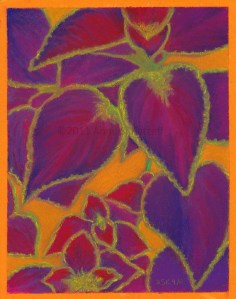
© 2012 Anne S. Katzeff / Artist
The idea of surrender, or letting go completely, has been key for me in opening to the larger universe and to a connection with Spirit. As I practice this in my daily life (embracing what is occurring in each moment), my awareness of an even deeper meaning has grown. Accepting “what is” is only one part of surrender. In allowing everything in my life to unfold organically—without trying, without judgment—I am also learning to trust in a universal intelligence greater than my own mind. Within that process is a subtle but significant shift: I am moving from ego-centered living to soul-centered living.

When you let your soul guide your life, you are connected to essence, the source of all that is. Whether you call it God/dess, Spirit, the Divine, or no name at all, it is the cosmic energy of which we all are a part. As I live and expand outward from the time/space line of my life, that connection becomes increasingly important to me. Some time ago, I spent several intensive weeks on retreat focusing on my wish to be in continuous communion with Spirit. What I came to realize is that that soul connection is always present within me, and when my heart is open, I become fully aware of it. My soul speaks to me through my heart.

What I also found is that gratitude immediately opens the heart. Love follows. The more I appreciated everything in my life, the wider my heart opened, and the deeper the soulful communion/connection became. My soul, through my eyes, saw miracles everywhere, in every moment. Tears rolled down my cheeks, and goosebumps covered my body. Because I perceived miracles, miracles were what I experienced. Granted, this has not been a completely uncommon experience for me in recent years as I open more and more to Spirit, but the desire for the communion to be continuous shifted everything into high gear within me. It was as if my soul and the Divine were celebrating my wish for constant connection. And all of life became a celebration.

Soul-centered awareness comes into being when you let go of control and allow something greater to guide you, trusting in the eventual harmonic resolution of all things. Soul awareness grows whenever you feel grateful for the world around you—every person, every event, every experience, whether or not your mind/ego labels them “good” or “bad.” When you let your heart sidestep your brain, your soul can move to the forefront and shine its light. Other people will see the light in your eyes and feel the unconditional love radiating from your open heart. That light and love will open their hearts too. Thus is global consciousness shifted, one person at a time.

I believe there is a small child within each of us who longs to let go, to surrender the need to try so hard to control everything. When we were very young, our souls guided us daily in effortless flow, but fear-based social conditioning often blocks that connection. To recover it is not always easy, but it is increasingly possible in a world whose collective heart is gradually opening, just as ours are. Surrender is not a one-time event, though. It’s an ongoing prayer or desire, which unfolds into deeper and deeper layers of letting go. Our longing creates the connecting doorway, and gratitude and love open the door.

Present-Time Paradise

Photograph © 2012 Peggy Kornegger
Years ago, Stevie Wonder wrote a song called “Pastime Paradise,” which described people who lived their lives glorifying the past or longing for a different future. We all have that tendency because our society fosters dissatisfaction and discontent. The advertising industry feeds on it, as do our social and political institutions. Yet, the quieter voices that whisper “live in the moment” and “count your blessings” are growing stronger and more widespread. If we shift our focus to the present and look at what we do have instead of what we don’t, life is suddenly full and abundant beyond measure.

Personally, I have no doubt that I live in paradise. I love my life. My partner and I live in an apartment in a two-family home with a yard, front and back. Our small-town neighborhood is friendly and quiet. We like our neighbors, and our landlord is kind and responsive. I have freedom to grow flowers, plants, and bushes in the yard, and this is my greatest joy. I spend hours in my garden every day, sometimes working, sometimes just drinking in the colors and light. Hummingbirds visit the red tubular flowers of the native honeysuckle, goldfinches cluster about the hanging thistle feeder, and butterflies and bees fill the air around the large purple flowers of the butterfly bush. What more could one ask of life than moments like these?

Don’t get me wrong. I have experienced my share of life’s heartaches too—the death of loved ones, the end of relationships, loss of jobs, physical pain, etc. But all of it has been part of life and has brought me to where I am today. If I step back and look at my life as a whole, the miracles outnumber the tragedies, and even the tragedies had hidden miracles within them. Events that I feared all my life such as my parents’ deaths ended up being extraordinary spiritual experiences because I was fully present with them as they transitioned. Losing my job late in my editorial career allowed me to step into the freelance world for a couple of years and then gradually move into full retirement. I now have the time and freedom to write and garden whenever I want instead of squeezing it in on the side.

What I have discovered is that paradise is a state of presence, not an aspiration. I truly believe that I came to this planet to have all the experiences I could possibly pack in and that each one allows me to expand more and more as both a spiritual and a human being. Everything that has occurred has enabled me to become more fully myself, my soul self. And I am grateful for every single bit of it, the tears as well as the laughter. It’s a miracle to just be alive. Really. Look at your physical body—how did that happen? You can’t help but be in awe of the infinite complexity of the tiniest aspect of every part of life. Or at least I am. And I think that’s where we’re all heading. Collectively, we are shifting from suffering to celebration, from dismay to full-hearted appreciation for the gifts each day brings. Paradise is with us, within us—now. It really is.

From the Heart

© 2011 Anne S. Katzeff / Artist
People in the United States (and Canada) have set aside Thanksgiving as a day for being grateful and counting our blessings—literally,“giving thanks.” Taken to the next level, however, gratitude for life’s blessings also means sharing them with others. At the heart of gratitude is giving. The potlatch or giveaway ceremonies of various Native American nations, predating the arrival of Europeans, exemplify this value. Historically, these indigenous families gave away or shared their own “wealth” or possessions with others in the community as part of the potlatch. Both the Canadian and U.S. governments banned the practice for many years, but it never completely disappeared and has experienced a resurgence since the bans were dropped.

Many other groups in the Americas have included generosity and gratitude within their living traditions. The Andean peoples of Peru practice a form of mutual aid called ayni, which is based on both cooperation and generosity—in essence, helping others who will in turn help them when they are in need. The Maya in Guatemala believe in living in balance with giving and receiving. They make offerings to life, toq, in the form of prayers of gratitude or acts of service, for all that life gives them—air to breathe, water to drink, food to eat.

In the United States, being grateful has not always moved people to share what they have with others. In fact, American beliefs in rugged individualism and competitive economic growth have led to just the opposite. Still, generous impulses have not entirely vanished, and I truly believe that they are making a comeback. We are living through a time of radical shifts in values, from “me first” to sister/brotherhood, from cutthroat competition to generosity of spirit. The old ways that separate and pit people against one another are slowly disintegrating. Once we become fully aware of the web of light that connects all our hearts, there will be no need to speak of giving as a desired value or behavior. Within oneness, there is no separation, and sharing is a part of living, just as automatic as breathing.

We are evolving to a future in which we won’t have to be reminded at special holidays to be grateful or to give generously. We will wake up each morning with thank you on our lips and fall asleep each night counting our blessings. We will live in gratitude, oneness, and sharing. We will live from the heart. That future is Now.