The Maya Cosmovision: Beyond 2012

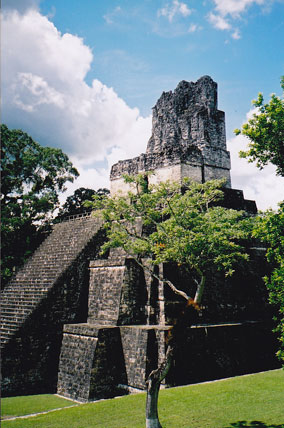
Tikal © 2007 Peggy Kornegger
“The Maya Keepers of Time know the opening of this new cycle to be transcendental, as it is the beginning of the Fifth Sun and brings with it the possibility of great spiritual awakening, insight, and realization for all of humanity.”—Nana Mercedes Barrios Longfellow, Maya Mam elder

Contrary to what you might hear or read in the media, the Maya never predicted that the world would end on December 21, 2012. Never. That’s a complete misinterpretation of the ancient Maya teachings, which have been handed down and preserved by indigenous Maya lineage carriers. The Maya cosmovision brought forward by the Maya elders of today speaks of the end of one cycle or Sun and the beginning of another, one filled with light. This is a time of transition, possibility, and expansion, not apocalypse.

Over the past eight years, I have had the opportunity and honor to learn about the traditional Maya teachings from Nana Mercedes Barrios Longfellow and other Maya elders from Guatemala. A number of us have traveled with the elders to Guatemala and participated in traditional fire ceremonies at Maya sacred sites there. Gatherings and fire ceremonies with the elders have also taken place in the United States, often at Rowe Center in the mountains of western Massachusetts.

Nana Mercedes’ teaching always involves a discussion of the Cholqij, one of the twenty sacred Maya calendars. The Cholqij is used as a guide for the spiritual growth and evolution of human beings, thus its particular importance at this time. The calendar consists of a 260-day cycle, each day of which carries a different frequency. In Nana Mercedes’ words, “Spirit speaks through the energy of the day. If we attune to the frequency of the day and begin to obey the laws of the universe, that day that sacred energy will fully support us.” Using the calendar on a daily basis helps humans to live with a conscious awareness of the larger cosmos that we are a part of here on Earth.

Over the years, I have learned so much from Nana Mercedes: about slowing down and getting in touch with the flow of each day’s energy (through meditation/prayer); about living life with humility and respect for all beings; about being of service to others and being grateful for the blessings we receive every moment on this beautiful planet. To spend time with Nana Mercedes is to experience a deep connection to a profound and wise way of living in the world. “We are one heart,” she has always said, and for me that is one of the most beautiful of the Maya teachings. I feel it profoundly when I am present at a Maya fire ceremony and also when a group of us—some longtime friends, others new friends—comes together to hear the wise teachings that have been handed down for thousands of years.

In September, about 30 of us spent four days at Rowe Center with Nana Mercedes and Nana Regina (who is also from Guatemala). Afterward, my heart was full, and I felt the ancient wisdom and light embodied by the Maya, and other indigenous peoples, shining forth powerfully and helping with the global awakening of all beings to universal oneness. More and more, I see evidence of that awakening, in spite of the huge challenges the planet faces today. The Great Shift—this transition to a new era, or new Sun, which the Maya have foreseen—is with us now. And it’s not about one date, or even one year. As we release old ways based in separation and fear, the cosmic energy will carry us forward beyond time and space into full immersion in the realm of the heart. As Nana Mercedes herself has said, “We are destined to be evolved beings, living in harmony, with great gratitude for the miracles of life.”
From the Heart

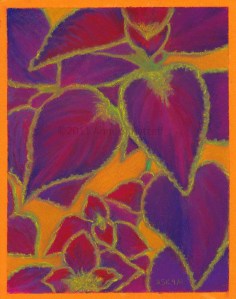
© 2011 Anne S. Katzeff / Artist
People in the United States (and Canada) have set aside Thanksgiving as a day for being grateful and counting our blessings—literally,“giving thanks.” Taken to the next level, however, gratitude for life’s blessings also means sharing them with others. At the heart of gratitude is giving. The potlatch or giveaway ceremonies of various Native American nations, predating the arrival of Europeans, exemplify this value. Historically, these indigenous families gave away or shared their own “wealth” or possessions with others in the community as part of the potlatch. Both the Canadian and U.S. governments banned the practice for many years, but it never completely disappeared and has experienced a resurgence since the bans were dropped.

Many other groups in the Americas have included generosity and gratitude within their living traditions. The Andean peoples of Peru practice a form of mutual aid called ayni, which is based on both cooperation and generosity—in essence, helping others who will in turn help them when they are in need. The Maya in Guatemala believe in living in balance with giving and receiving. They make offerings to life, toq, in the form of prayers of gratitude or acts of service, for all that life gives them—air to breathe, water to drink, food to eat.

In the United States, being grateful has not always moved people to share what they have with others. In fact, American beliefs in rugged individualism and competitive economic growth have led to just the opposite. Still, generous impulses have not entirely vanished, and I truly believe that they are making a comeback. We are living through a time of radical shifts in values, from “me first” to sister/brotherhood, from cutthroat competition to generosity of spirit. The old ways that separate and pit people against one another are slowly disintegrating. Once we become fully aware of the web of light that connects all our hearts, there will be no need to speak of giving as a desired value or behavior. Within oneness, there is no separation, and sharing is a part of living, just as automatic as breathing.

We are evolving to a future in which we won’t have to be reminded at special holidays to be grateful or to give generously. We will wake up each morning with thank you on our lips and fall asleep each night counting our blessings. We will live in gratitude, oneness, and sharing. We will live from the heart. That future is Now.

Mud in Your Eyes

Photograph © 2012 Peggy Kornegger

What do you do when life events hit you hard, knocking you to the ground, facedown in the mud? When you lose your job, your home, or your health? When a hurricane, flood, or other environmental disaster devastates your city or town? Does “oneness” or “universal love” have any relevance in a world full of pain and suffering? Having faced job loss, financial uncertainty, and health challenges myself in recent years, I know there are no simple answers to such difficult questions.

Some events, like birth and death, are part of all life cycles on Earth, but others, like war, economic turmoil, or global warming, are linked to human constructs and beliefs. We live on a planet currently experiencing extreme polarity and imbalance. Yet, within this seemingly chaotic tension, there is a glimmer of hope. The dissolution of rigid hierarchical forms that do not serve all of humanity is on the rise, and possibilities that did not exist in the past are coming to the forefront of human consciousness. We are finding the will to survive, and prevail, in our relationships with one another.

If you turn aside from the mainstream-media interpretation of world events and look instead at local community alternatives grounded in acknowledgment of the connection between all beings, you will see a new Planet Earth being born. If you pay attention to the lesser-known stories about individuals and groups stepping up to help others in life-threatening circumstances or dire need, you will witness compassion in action. We have not reached critical mass as yet, but the energy of transformation is expanding daily.

Countless people around the globe have envisioned and worked tirelessly for this transformation, and continue to do so. It takes tremendous courage to see clearly both what is and what is possible and remain centered in hope and love. But it is what we are being called to do at this time. If we don’t do it, who will? We stand at the very edge of possibility. We hold a vision of universal loving-kindness and generosity of spirit in our hearts. We truly are the change we wish to see in the world.

As the saying goes, it only takes one candle to light the darkness. We are that light, each of us and all of us. Loss is part of life, but love makes it bearable. Even when we bow our heads in sorrow or pain, we are never really alone. Look up, wipe away the muddy tears, and see the light of those who share the Earth path with you and who may be experiencing exactly what you are. Reach out to a stranger, and you may discover a commonality that bridges all seeming differences. It is oneness and universal love that creates that miracle of connection.


Surrender, Dorothy!

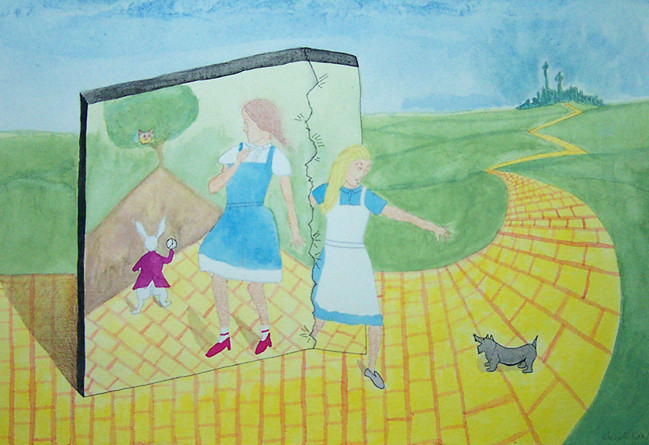
In The Wizard of Oz, there is a classic moment when the Wicked Witch of the West sky-writes a warning to the little girl from Kansas: Surrender, Dorothy! Most of us have always thought of that as an ominous threat. What if we look at it instead as wise and magical advice: surrender. Dorothy doesn’t surrender to the witch, but she does surrender to the power of her own journey, which finally brings her back home. Don’t all of us who are on life journeys come up against that ultimate challenge—letting go and trusting in something greater than our own individual lives? A surrender that will bring us “home,” to ourselves and to the heart of the universe.

“Dorothy and Alice” © 1995 Anne S. Katzeff / Artist

In the past year, I have faced this in my own life. Never having been raised in a religious tradition of any kind, surrender was a foreign concept to me. Yet, the deeper I went within my own uniquely eclectic spiritual journey, the more I found surrender to be the key to opening the door to a greater expansiveness in myself and a profound connection to the cosmos. Not to mention, the key to a greater ease in living life.

Synchronistically, messages to that effect began to appear everywhere in my life. On an Oprah show that I tuned in to, Shirley MacLaine offered one piece of advice: “Surrender to a highly sophisticated Divinity.” A friend of mine described a comic strip with the punch line: “Resign as general manager of the universe.” It was Panache Desai’s ideas about “allowing and receiving,” however, that really struck a chord within me: in essence, flowing with everything that comes into your experience.

I’ve discovered that for me surrender isn’t a mental decision or a set of prescribed steps. It’s an ongoing process of emotionally letting go and embracing all of life, over and over. Part of me wants to hold on, wants to be in control, and it gets scared if I consider releasing that tight grip. Gradually, though, I’ve learned to relax and open to a wider vision of my life and my place on Earth. Like Alice, who discovers another world “through the looking glass,” I too have found that this physical reality is only one piece of the multilayered dream we call life. And it’s nothing I have to “control.” It involves trusting that my life as it is unfolding is exactly what I need in order to grow/evolve and that all that I perceive is part of an intricate tapestry of universal meaning and infinite love. As I have more and more experiences (within the physical realm and beyond) of the web of connection that we are all a part of, my trust grows, and I allow my life to flow with greater ease.

Surrender, then, is ultimately an opening of the heart: surrender in joy, surrender with tears and laughter. Fall in love with the world! Surrender to the dance of life. Step through the looking glass, put on those outrageous, sparkling ruby slippers, and click your heels together! You’ll be home in no time.


Growing Up Godless

I grew up outside of organized religion. In a small Midwestern town, this was unheard of. I knew no one else like me; all my friends dutifully went to church every Sunday. My parents didn’t want to impose any one set of religious beliefs on me, so they basically left the door open. They told me that God might exist or might not; it was not provable, all based on belief—the agnostic’s view. So I was left with a question mark and a feeling of “differentness” among my peers. I can remember feeling very uncomfortable whenever the topic of church or God came up at school, fearful that I would be “found out.”

When I was about 9 years old, my parents took me to a Unitarian church service in a nearby town, after which I commented, “I’m glad that’s over!” Clearly I wasn’t longing to go to church as much as I was longing not to be different. When I reached college age, all my new friends were rejecting their religious upbringing, and I found myself ahead of the game since I didn’t have a religion to reject. But still I was searching for something, as were so many others of my generation. The meaning of life perhaps, or the secrets of the cosmos. At any rate, I gradually began to look for answers in diverse spiritual books and teachers, not really wanting a guru or one answer, but rather a tapestry of truths that resonated with me.

My search for meaning was partially driven by a deep-seated fear of eternity/infinity, which I had carried within me since childhood, possibly because I had no superimposed God image to block the fear. The void, or an endless universe in which “the world went on forever and ever,” was very real to me. Eternal life and eternal death seemed equally frightening. Still, in spite of this, I was a happy child for the most part, nurtured and supported both by my parents’ unconditional love and by the natural world outside our rural home. It was only at night that my fears about the infinite universe arose.

These night fears continued throughout adulthood, even after I came to believe in Spirit, or a greater sacred presence in the universe. After many years of spiritual exploration and growth, it was in an individual session with Panache Desai that I had my first tangible experience of infinity as an expanse that was both peaceful and comforting (see previous blog post “Infinity). Months later, during Panache’s webcast series “Mother, Father, God,” I faced my long-ago religionless past. As he instructed listeners to embrace the image of God they had grown up with, until it disappeared and became one with them, I felt disconnected, alone, different, stuck in my Godless childhood. But when he said, “The Divine in essence is formless and nameless and is in fact love,” I suddenly realized that I was already at “disappeared,” and God/Spirit had always been a part of my life, as love. I felt old fears dissolving as I also realized that I had never really been alone. God, or the Divine, was always there, at my very core.

Looking back, I see how what seemed my greatest challenge as a child was in fact my greatest blessing. What I experienced then, through my parents, through nature, and within my own heart, was Divine love in its purest form, undiluted by human concepts of an external God. Now, in my present life, as I continue to have extraordinary experiences of Spirit and infinity, I am so very grateful for my parents’ openhearted love and wisdom which allowed me to follow my own path when it came to matters of the spirit.

“Look in your heart for God, for truth, for the answer. Feel that heart space—that is where you and infinity can meet, because your heart is not limited, but ever expansive.”—Panache Desai